

Akame Ga Kill is an incredible anime. One of the best of the best, in fact. However, what is it that makes the show so incredible? The rather stellar animation, or the uniquely engaging soundtrack? Could it be the eclectic cast of memorable heroes and villains alike, or maybe the entertainingly choreographed fight scenes? Perhaps the humor and heartbreak of characters fighting and sacrificing for what they believe in?
Honestly, it’s probably all of that plus some. At the same time, I think one element of Akame Ga Kill stands head-and-shoulders above the others and elevates the show to heights not reached by much anime. That element, if you’ve read the title of this article, is: Subverting Expectations. Akame Ga Kill is absolutely incredible at subverting the expectations of the audience…but what exactly does that mean?
In recent years, the concept of subverting expectations has been given a bit of a bad reputation (thanks, Rian Johnson). A lot of people believe that subverting expectations means to do whatever it takes to surprise the viewer by making absurd or out-of-the-blue creative decisions. This will certainly subvert the audience’s expectations, but not in any satisfying way. The viewer is left confused, upset, and at worst, angry.
See, the real trick to subverting expectations is to imply your plot or character arc is going in one direction, while simultaneously laying the groundwork for a sudden shift later down the road. Then, right when your viewer expects one outcome, you hit them with the complete opposite in such a way that, instead of feeling cheated or frustrated, the audience realizes “oh my gosh, this is even BETTER than what I’d been thinking!”
Akame Ga Kill understands this core principle better than any anime I’ve ever seen. To top it off, Akame Ga Kill also has the courage to take its story and characters to unexpected places for the sake of more earnest, emotional storytelling. Let’s face it: the anime industry is filled with predictability and cliché. However, this show stands as a stark outlier, breaking tradition and boldly forgoing established tropes in creative ways that are wholly earned, not as last second plot twists.
At its heart, Akame Ga Kill is a grim show. To summarize the plot, I would say this: a sprawling empire in a fantasy world has grown increasingly corrupt and vile over the generations. In response to this corruption, a group of highly talented assassins have begun targeting key imperial officials who are perpetuating this corruption. Their goal is to reform the empire, one death at a time.
These assassins are our protagonists, and as such, one might expect that the foul villains they kill are treated as celebrations. They may be assassins, but us viewers can overlook that because they’re the heroes, right?
Wrong. Almost immediately, the cast establish themselves as fully aware of how their violent actions aren’t necessarily better than the corrupt empire officials they are assassinating. Each is aware of the pain they inflict on others, but their shared desire to seek reform has pushed them onto this path. None of them have any illusions about being some shining hero.
This is a shock to protagonist Tatsumi, and it’s a shock to the viewer as well. Just one episode into the show and some expectations are being subverted. The show is far from done.
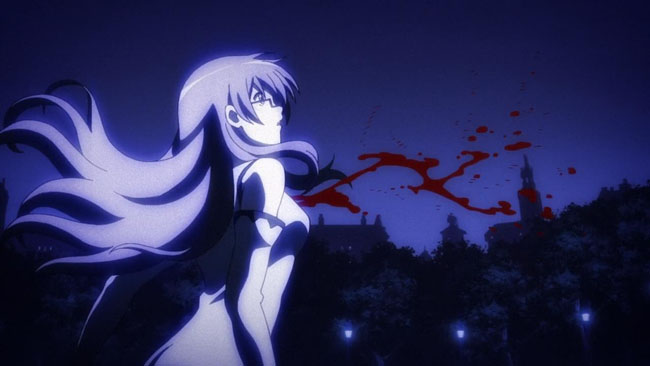
Akame Ga Kill is a twenty-four-episode show, and proves it isn’t going to be holding back a thing. Episode Six features two of the protagonists, Mine and Sheele, doing battle against a fiercely devout imperial officer, Seriyu. The fight includes all of the flashy (literally) animation and epic music you’d expected from an anime confrontation, and the score reaches a crescendo as the plucky assassins grasp for victory…
…and then Sheele is shot in the back and ripped apart, dying at the height of her hope. Mine barely escapes with her life, and Seriyu is left victorious. The villain wins.
As the episodes continue, more and more death piles up. Good guys and bad guys alike die in gruesome and heartbreaking ways, each side suffering extreme loss. Death is a real threat in this show, and no character is safe. Tatsumi, the main character, has to fight dearly to hold on to the purity he’s held since the first episode. As his friends die for the cause all around him, his own personal goal of protecting and saving the innocent takes center stage.
I mentioned villains dying, and in your typical anime, it would not require much more than a passing thought from the viewer before they move on. Villains are meant to be disposed of by the heroes…in your typical anime, at any rate. Akame Ga Kill, par for the course, bucks this tradition by introducing Wave.
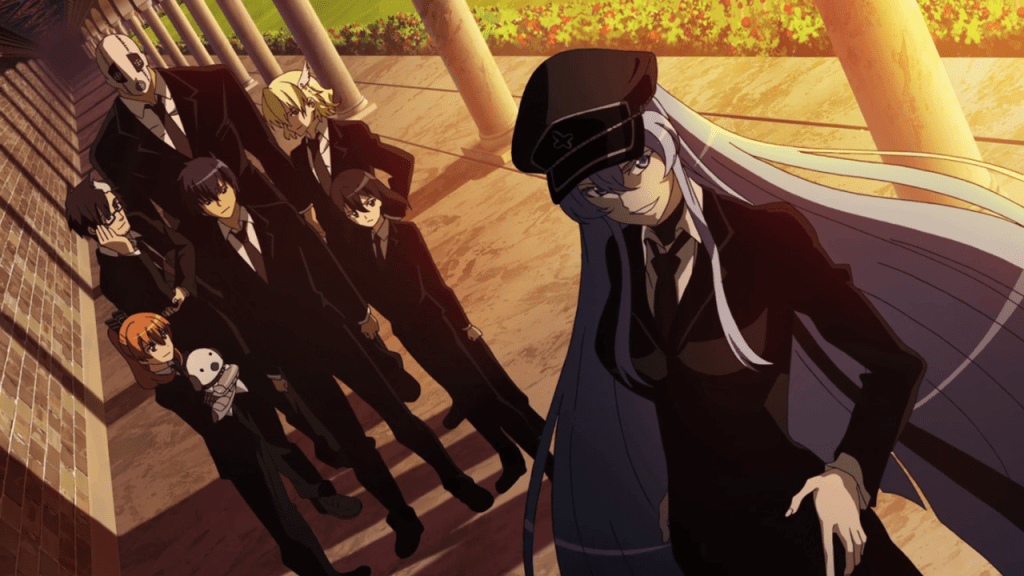
Nine episodes into the show, a young man of similar origin and abilities as Tatsumi is brought into the show…except he joins the empire. Wave is brought into a group of imperial assassins dedicated to taking down the protagonist assassin faction. Just like Tatsumi, Wave makes friends with the villains of whom we as viewers had only gotten surface-level glimpses at. As more and more episodes dedicate screen time to Wave’s perspective, the imperials are humanized to the point of eliciting genuine sadness when they pass away.
Though its roots begin in comedic and coincidental hijinks, another masterful subversion of expectations arises as the show progresses. The central female character, Akame, is a soft-spoken and extremely powerful swordswoman. Anyone with an anime-watching background already expects her to end up with Tatsumi. His naivety and overall joy balance out the hardened heart she’s grown from years of killing.
This does not come to pass. Akame is great, but she’s not the one who truly completes Tatsumi. She’s not the one with the most chemistry with Tatsumi, the one sent on the most missions with Tatsumi. For perhaps the first time ever in all of anime, it isn’t the female lead who pairs with the male lead. It’s Mine, a major character in her own right, who falls in love with Tatsumi, and he with her.
Mine is an incredible character worthy of a blog article all to herself, but all I’ll say here is how perfectly she and Tatsumi grow closer. They start as rivals before transitioning into friends, and finally, in their most vulnerable moments, embrace. It’s lovely, which is why the tension and stakes double when Tatsumi is captured late into the show, and Mine launches a rescue mission without hesitation.
Mine fights the hardest battle of her life, defeating her opponent and saving Tatsumi, but also sustaining serious injuries of her own. No big deal, right? Par for the course for anime, the heroes always get a bit beat up before winning, and as Tatsumi carries her back to the assassin base, the viewer breathes a sigh of relief in tandem with Tatsumi…
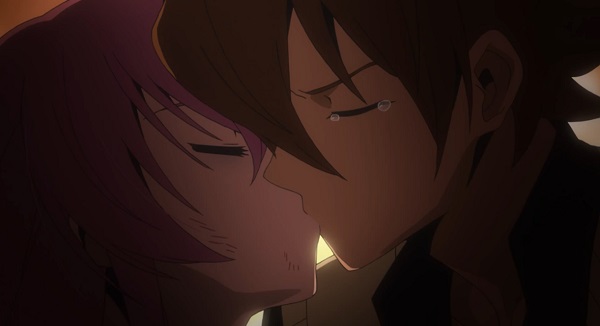
…only for Mine to beg Tatsumi to stop and lay her down. She’s not okay. She’s dying.
In her final moments, Tatsumi cradles Mine’s body as she confesses her love to Tatsumi, and her belief that he can carry her hope into the future in their battle for peace. They share a kiss, and she dies. The romantic lead dies. The cruelest subversion of expectations in the show? Perhaps, but darn if it isn’t the most beautifully executed.
By now, the show is almost over, and I haven’t even mentioned the main antagonist, General Esdeath. Esdeath is an incredible character, and I’ll be writing a full analysis article on her later, but for now, I’ll discuss how she too subverts the audience’s expectations.
Through a rather hilarious series of coincidences, Esdeath meets and falls hopelessly in love with Tatsumi. He is, of course, apprehensive to return the affections of the empire’s most powerful and violent warrior, but his belief in the goodness of others inspires him to try and convert her to his side.
Over the course of several episodes and multiple lengthy conversations, Tatsumi and Esdeath engage in a battle of philosophical wits, comparing and contrasting their world views. Try as he might, Tatsumi is simply unable to sway Esdeath. The power of love does not redeem her. At the same time, as we explore her background in flashbacks, it becomes clear that she’s a victim of the cruel world she was raised in, and that somewhere deep inside of herself, Esdeath wished for the release from her metaphorical chains via a normal life with Tatsumi. She admits as much as she lies dying in the series finale.
Speaking of series finale, I would be remiss if I didn’t mention the biggest subversion of expectations in the entire show. The one thing almost no anime (or standard television show, for that matter) has ever done. It’s a bold, monumental decision, and one that fits perfectly into the theme of the show while complementing all of the established character moments that built to it.
Tatsumi, who through thick and thin has managed to hold onto his hope for a better future, has always placed the lives of others above his own. His behavior is sometimes reckless, but it’s made abundantly clear he’ll do anything to save innocents. So, in the second-to-last episode, when a giant structure is about to fall over onto a group of injured refugees, Tatsumi throws himself into the path of the object, grabbing it and slowing it down even as he himself is crushed under it.
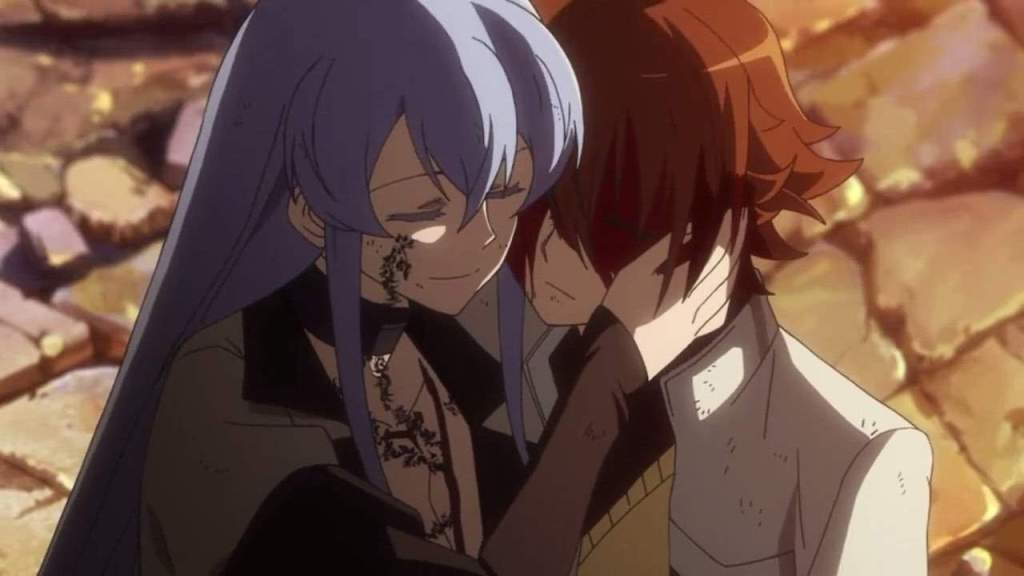
The people live…but Tatsumi, Akame Ga Kill’s main character, dies.
What other work of fiction in the entertainment medium sets up its own main character to die, and sacrificially at that? Laying his own life down to save people, because that’s what he set out to do when he left his small village in episode one. It’s a one hundred percent “Tatsumi” thing to do, and I couldn’t be happier that the show writers went through with it. It’s heartbreaking, to be sure, but also hopeful, in a way. After all, Tatsumi dies with a smile on his face. He saved the refugees. He died so that they could live. It’s what he wanted to do from the very moment he became an assassin.
The final two episodes bring a whirlwind of minor expectation subversions, each in quick succession. All of the imperials pulling the strings are defeated, the young child emperor is executed (a startling but realistic death, as the revolution needed the closer of seeing the empire ended once and for all), and Akame stands as one of the few remaining characters left alive.
Her boss stays behind to help form the new government, and Wave becomes a key figure in maintaining the peace. But the celebrations and joy in finally achieving peace aren’t for Akame. Hers is a different fate.
In the final moment of shifting expectations, Akame walks away from it all, disappearing into the shadows. Though it’s an unpleasant task, she takes the blame for the killing and the assassinations all upon herself, becoming public enemy number one so that the fledgling revolution can build itself up with clean hands. With a final farewell to her boss, Akame vanishes, unable to take part in the bright future she helped build, but content knowing her dream, and the dreams she carried from all her fallen friends, has been achieved.
The show ends on a starkly atypical happy ending, but I would still call it happy. Most of the characters are dead, and Akame vanishes into she shadows for eternity. The actions of the group of protagonists are known by few and will be remembered by none in the centuries to come. Even still, they all gave their lives willingly in service to their shared dream of a bright future free from the corruption of the empire. That goal was reached, and for that, the viewer still finds themself smiling as the credits roll, even if through their tears.
No other work of art has yet captured the technique of subverting expectations as well as Akame Ga Kill, and I’m doubtful anything else ever will.
But hey, that’s just my opinion!
 The Contrarian Corner
Wow. That article was terrible and way off base and I would never say that you are one of the smartest, sensitive, and most talented writers I’ve ever known…see how I subverted your expectations there?…
#olddad
LikeLike