

If you spare Xenoblade Chronicles just a cursory glance, it doesn’t appear to be anything special. It’s yet another fantasy/sci-fi JRPG, albeit one released on a system with staggeringly few JRPGs. This 2011 game came and went without any particular fanfare, perhaps due in part to the impending release of the Wii U the very next year. It was a GameStop exclusive release, and to this very day it is difficult to procure a physical copy.
However, to simply gloss over Xenoblade Chronicles is to commit a horrible mistake. After all, Xenoblade Chronicles resides in a very elite category that only a select few video games ever released have achieved: it’s perfect.
After all, Xenoblade Chronicles resides in a very elite category…it’s perfect.
Of course, perfect is relative, and no video game (or other form of art, for that matter) will ever truly be perfect. Still, in my opinion, Xenoblade Chronicles gets closer to that unattainable goal that any other game had before, or since. It really IS that good.
For starters, the game is a technical marvel. You’ve got to remember that this game released on the Wii, which was only about as powerful as the PlayStation 2. Sure, plenty of Wii games are very visually appealing, but the system still lagged behind the Xbox 360 and PlayStation 3. Even still, what Monolith Soft (the developers of Xenoblade) managed to accomplish is commendable.
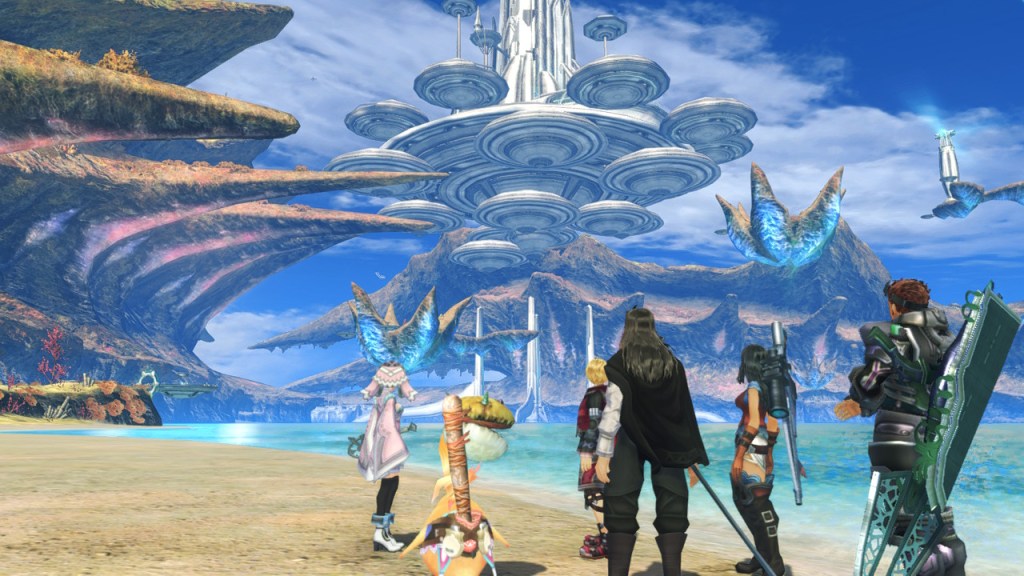
The main party, NPCs, and enemies all look great, but the environments look astounding. The world design of Xenoblade is already one of a kind, with the entire game being set on the bodies of two monumentally hughmongus titans. The visuals really sell that sense of scale and depth. Trust me, you won’t soon forget the first time you peer off the cliff near Colony 6, and actually see your starting hometown of Colony 9. The consistency and presentation is amazing.
The game also has blisteringly fast load times, all things considered. You can fast travel to anywhere in the world, and once you’ve spawned into whatever map you’ve chosen, you’ll face no more loading screens for the entirety of that map. It’s all rendered at once, which is really exhilarating when it comes to immersion and exploration. You could spend hours upon hours in the large maps like Bionis Leg, Makna Forest, and Valak Mountain, all without going through a single, short loading screen.
The localization of this game was handled by Nintendo of Europe, which lead to the all British voice cast that fans of this game love so dearly to this day. It helps that, charm factor aside, the voice acting is just incredibly good. All the characters burst from the screen with memorable personalities thanks to their respective actors/actresses, and Adam Howden (the voice of Shulk) deserves as many awards as can be given for his performance.
The soundtrack, a collaborative effort between gaming mainstay Yoko Shimomura, Manami Kiyota, and ACE+ deserves a shoutout for being one of the best video game soundtracks ever produced. It’s a lengthy soundtrack, and every single track is incredible. Whether it’s the upbeat daytime exploration themes, the melodious nighttime exploration themes, the dramatic themes for tension, or the numerous frantic fight themes, the soundtrack is bursting at the seams with wonder and amazement. I’ll specifically point to the MAIN THEME, UNIQUE ENEMY THEME, and GAUR PLAIN THEME, if you’re inclined to give them a listen.
But what’s a game without it’s gameplay? Thankfully, Xenoblade does not disappoint in this regard, either. Simply running around the sprawling environments is fun all on its own. Your control over your character is snappy and quick (and can be enhanced further through Quick Run abilities), and you posses a jump ability for some minor platforming from time to time. The camera works nicely, especially on the Switch remaster, and every button has an assigned purpose that doesn’t get too confusing.
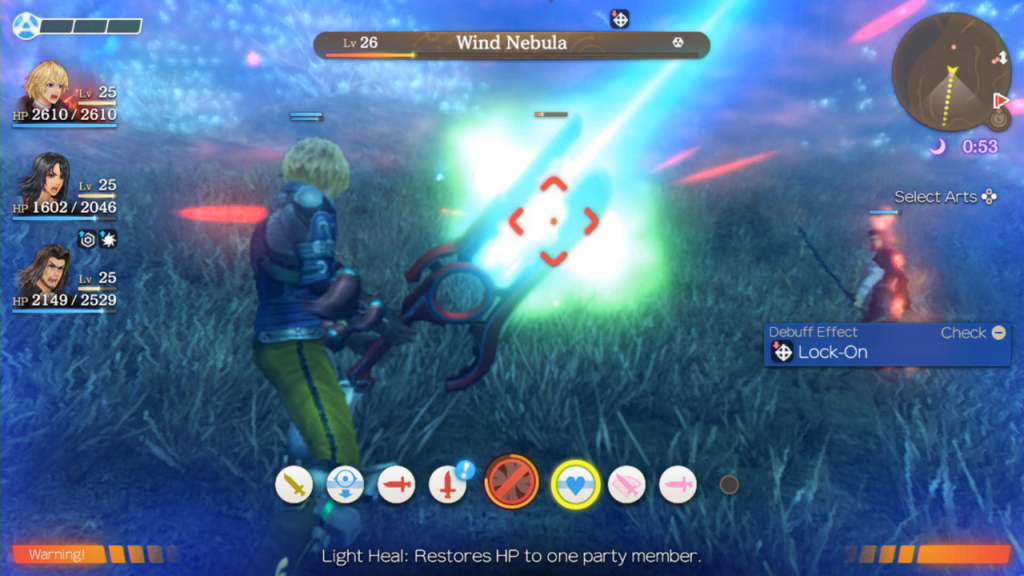
Battles against vicious monsters and merciless machines makes up the majority of this adventure, but the style of combat is not turn based (not traditionally, at any rate). Aggroing a monster begins an immediate battle right then and there (no separate loading screens or random encounters). You control whoever is in your lead party position, and your other two teammates act on their own, though you can issue a few general commands.
Customizability is a strong suit of the Xenoblade series, and it all started here. You select a palette of moves to bring into battle, alongside whatever gear, passive skills, and equipable gems you’d like. You can then use those abilities to whittle down each monster’s HP. Some skills draw enemy attention to you and off of your mages, some deal crazy damage, and others inflict buffs and debuffs. Since you have full control of your motion, positional awareness plays into combat. Where you stand often affects your skills and your chances of being attacked. You can even run around to give orders to party members mid-battle, help them out of stuns/traps, and encourage them if they’re feeling down.
A few hours into the game, Shulk develops to ability to see into the future. This has obvious ramifications on the plot, but it also manifests during combat through visions of an enemy’s attacks. If the boss you’re fighting is about to unleash a move that will kill your party, you’re given a glimpse of it, and then about twenty seconds to do something to change that future. Top up your healing, cast a shield, or rush to finish off the enemy, whatever else. Changing the future opens the enemy up to a counterattack, and kicks the music into high gear.
This sort of active influence during combat really engages you in each and every single battle. At the same time, if challenging combat isn’t your thing, the game provides plenty of ways to level up and strengthen your characters outside of battle. You can explore the huge worlds to discover landmarks and secret areas (there’s something around every corner), tick off achievements from a giant list, and help townspeople with their problems.
Your party works around an affinity system, wherein the more you battle together with certain party members, the tighter your bond becomes. This enhanced bond powers up the effects of Chain Attacks (your party’s super move), helps you to fight more efficiently, and unlocks sweet, heartfelt optional conversations between group members. However, you can also grow your affinity with the towns and cities you discover, along with their inhabitants.
Every single NPC in the entire game lives their own life outside of your adventure. They have a name, personality, unique character model, and schedule. Xenoblade runs on a twenty-four hour day (in-game, each hour takes one minute), so you can explore the world in the day, evening, night, or anywhere in between. What this means for NPCs is that they each have a set time they get up and leave their house, then they go about their day through town, before returning to sleep at night. It’s incredible to see this level of immersion in action. It makes the game feel alive.
It’s incredible to see this level of immersion in action. It makes the game feel alive.
Still, this wouldn’t be an RPG if the townspeople didn’t ask you to go get five bat fangs or slay seven wolves. Many side quests have simplistic objectives, but the circumstances around them are anything but normal. This game has over four hundred side quests, but they all end up meaning something. Some side quests give absolute bucketloads of experience and gold, while others reward you with rare armor and weapons not found elsewhere. If you’ve played this game, I bet you still remembered the drug trade side quest. THAT was a trip!
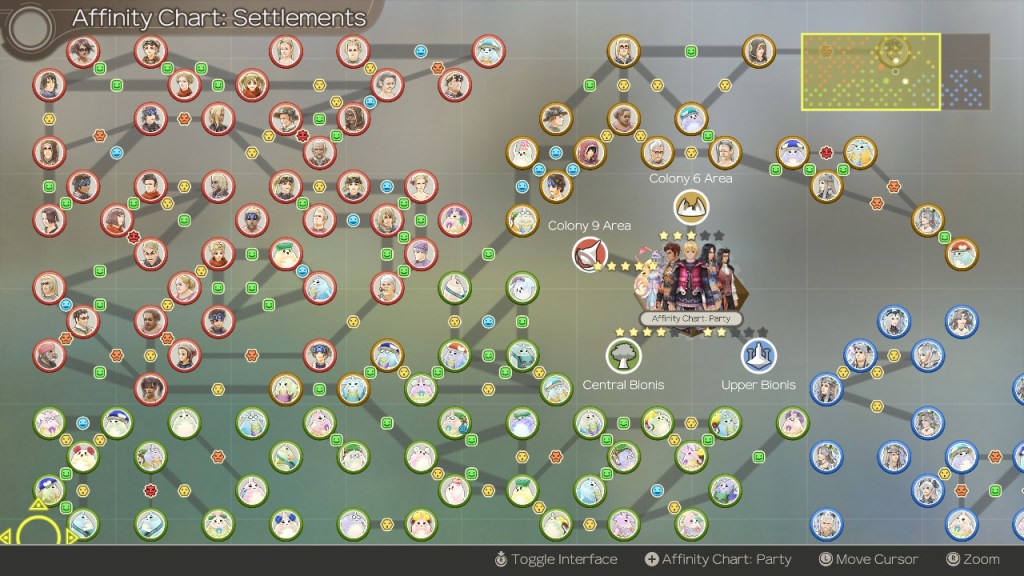
On top of this, every side quest you tackle adds the NPC who gave you the task to a wide-reaching web known as the Affinity Chart. As you assist neighbors and allies through this hundred hour epic quest, your Affinity Chart balloons to massive sizes. You soon gaze upon an interconnected assortment of over one hundred named characters you’ve helped, and you can see their relationships and attitudes toward the other NPCs. Your actions in side quests influence the world and its inhabitants, even outside of the main story.
How is the main story, though? For that matter, how good are the characters in the main and supporting cast? Well, for anyone who knows me and my opinions on video games, you’ll know that I care about plot and characters first, and gameplay second. At the same time, in a review such as this, I like to save the best for last…which is why I will now (as brief as I can force myself to be) talk about the plot.
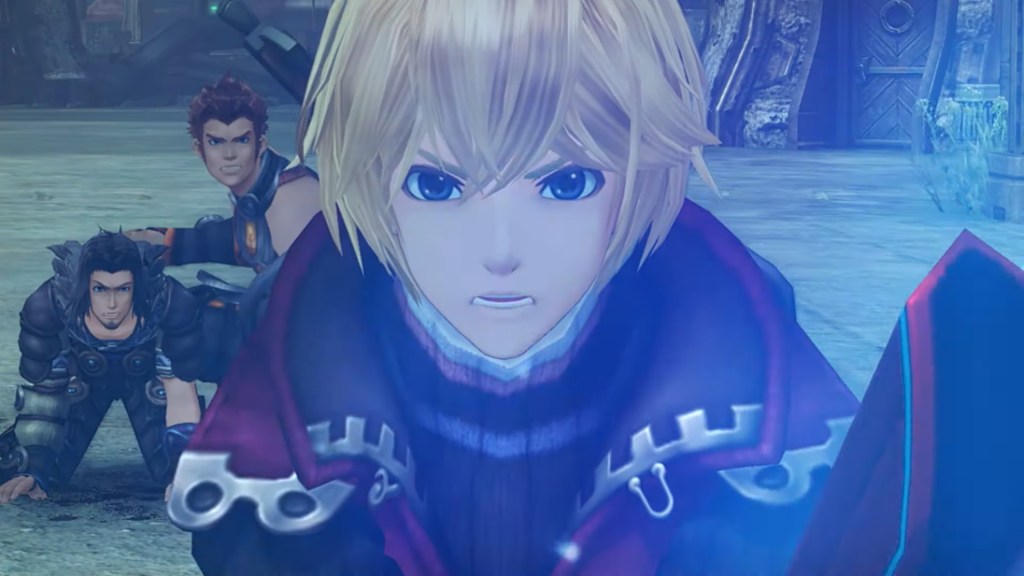
To say the plot of Xenoblade Chronicles is a masterpiece in gaming storytelling is true, but also barely scratches the surface of the greatness this game has to offer. Somehow, this game manages to balance extremely solid writing, realistic character development, emotional turmoil, sympathetic villains, and plot twists so incredible you’ll never see them coming, while also kicking yourself over how you should have seen them coming.
Shulk is a phenomenal main character, embodying the most human of emotions all at once. He’s a bit awkward, a bit nerdy, but extremely intelligent and helpful. He wants to learn the secrets of mysterious sword, the Monado, and eventually discovers he can wield it quite efficiently. The Monado even grants him visions of the future. Unfortunately, even with that power, he is unable to save his best friend from a gruesome death.
It appears that, sometimes, the future simply cannot be changed. Or can it…?
Shulk is a deconstruction of the “chosen one” trope in storytelling. His goal through the first half of the game is blind revenge, pushing himself to destroy those responsible for his friend’s murder. At the same time, he buries this turmoil under his usual nice demeanor. He’s constantly unsure of what to do next, hesitant to use the full power of the Monado, and unwilling to get his friends involved. It takes a while for him to begin lowering his guard.
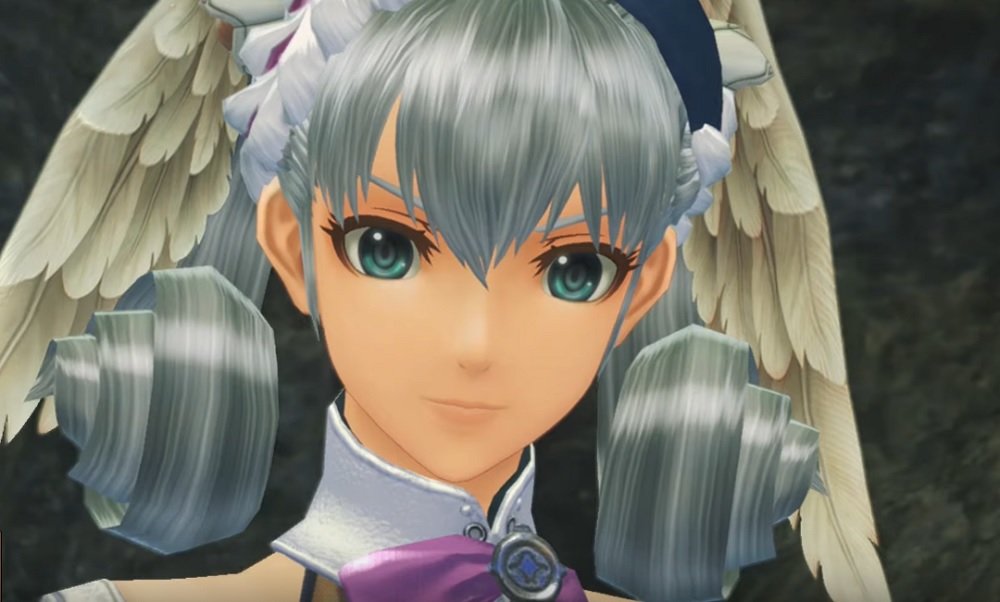
His best friend Reyn sets out on the journey with him, and later a medic named Sharla and Shulk’s hometown hero Dunban. A little longer still, adorable fuzzball Riki, and the stoic, winged princess Melia. Through optional heart-to-heart conversations and structured story beats, each cast member is given time to grow and develop, forging bonds that will never be broken.
It appears that, sometimes, the future simply cannot be changed. Or can it…?
The course of the game goes through a rollercoaster of emotional ups and downs. In one moment, you’ll be laughing, the next you’ll be crying, and the moment after you’ll be pumping your fist in excitement. This game is a journey, sometimes literally, as the characters explore the massive titans the game takes place on. By the end, you’ll feel attached to each and every party member like they’re your own friends.
There are over ten hours of cutscenes in the game, and frequently you’ll lose track of time just sitting back and watching events play out (it’s movie quality stuff). Despite the length, no single plot thread or story arc overstays its welcome. Side characters come and go as their reasoning demands, and each is as fleshed out and critical to the plot as the next. The villains are also great, ranging from hilariously over-the-top hammy, to tragically flawed people, past the point of no return.
As the gorgeous ending theme, BEYOND THE SKY, plays over the heartwarmingly happy ending, you’ll be both desperate to jump back in a play again, and a bit disappointed knowing you’ll never experience any game this perfect ever again. Or at least, that’s how I felt. As the credits rolled, I knew that Xenoblade Chronicles had just become my favorite video game of all time, for all time. If you give it a shot, you may feel the same way too.
But hey, that’s just my opinion!
 The Contrarian Corner