

QS stands for “Quickshot”, a series of short form review/preview/opinion articles.
I’ve been a big fan of indie games for years (games created by smaller studios and independent developers). By their very nature, indie games have to work several times as hard as big budget AAA games in order to receive the same magnitude of publicity and recognition. Some indie games are awarded for their efforts through an avalanche of praise and sales (Celeste and Hades are two big ones in recent memory). Other indie games are destined to pop up, garner a small fanbase, then vanish (don’t worry Iconoclasts, I still love you).
It’s a difficult thing to try and review an indie game. On the one hand, you have to take into consideration the budgetary constraints and restricted employee count inherit in a smaller studio. On the other hand, it would be disingenuous to handwave genuine issues and flaws in a game just because of the hardship an indie developer may have faced in bringing their vision to light. It’s also worth considering what genre of game has been crafted, and how well that goal has been achieved.
This brings us to No Straight Roads, a mid-2020 3D action game with an emphasis on music and rhythm elements. This game garnered attention through its banging soundtrack, stylish visuals, and clear charm. Then it came out, players got their hands on it, and…well…let’s get into it.
Oh boy.
For starters, both sides of the gameplay fail to click in the way that the developers clearly intended. A vast majority of the game is spent battling the same three enemy varieties in empty hallways as you work your way towards the level boss. No Straight Roads claims to follow the beat of the music, but this is only true in the vaguest terms. Enemies attack on the beat, yes, but WHAT beat and WHAT attack they use can be different whenever they feel and however the song feels like changing. You’re left floundering for an opening, and are better off just trying to duck and weave through visual cues.
Neither of the protagonists (guitarist Mayday and drummer Zuke) control horribly, but neither do they control particularly well. They each have a string of basic combos achieved by mashing a single button, and a few special moves you can switch between. This simplicity in the combat lends itself to lengthy stretches of tedium, interspersed with frustration at the mind-bogglingly inept camera. You CANNOT move the camera in enemy combat levels, even if that means being hit from offscreen laser fire, or having to make a blind jump over a bottomless pit. Unfathomable in a 2020 video game, but here we are.
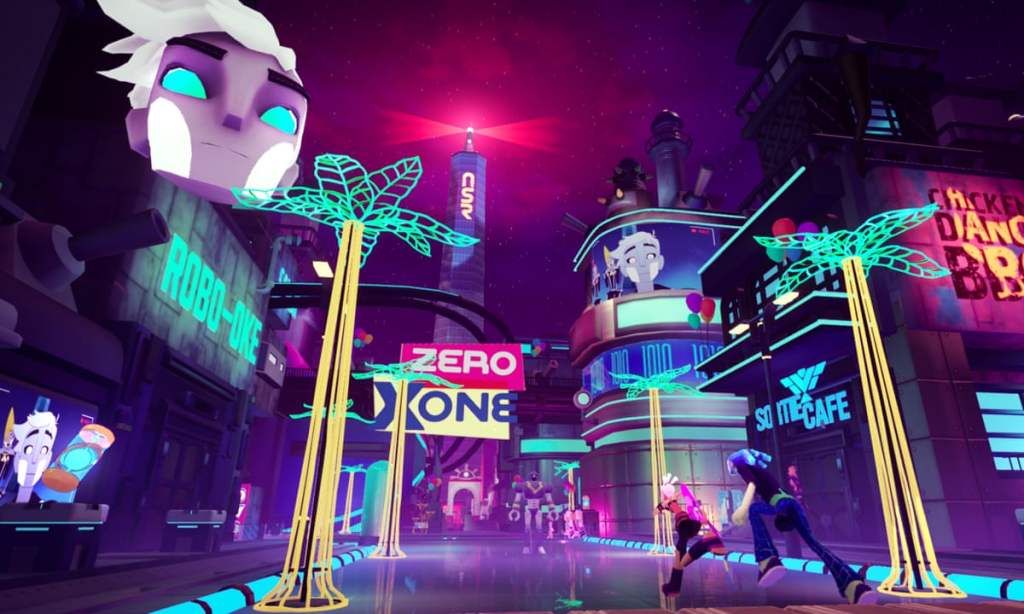
When you aren’t fighting, you’re exploring the bright and flashy world of Vinyl City. I very much appreciate that optional NPC conversations and fun collectibles can be found on rooftops and behind dumpsters, but Vinyl City still feels a bit lifeless. Invisible walls gating you off are inconsistent, and the layout of the city is quite linear. Also, this is as good a time as any to mention the excruciatingly long load times that No Straight Roads is saddled with. They make traversal between city districts and boss fights a chore.
A slew of other tiny issues pile up as your playtime with this game progresses. The framerate slows down during the hectic boss battles, audio sometimes cuts in and out, and major graphical glitches are rare but not unheard of (in my game, the final boss cutscene audio mixed itself up, the boss’s third phase repeated itself three times before escaping the broken loop, and a character’s animated portrait was glued to the screen for the entire fight and cutscene, obscuring what was going on).
So, wait…is there anything positive about this game? Yes, yes there is.
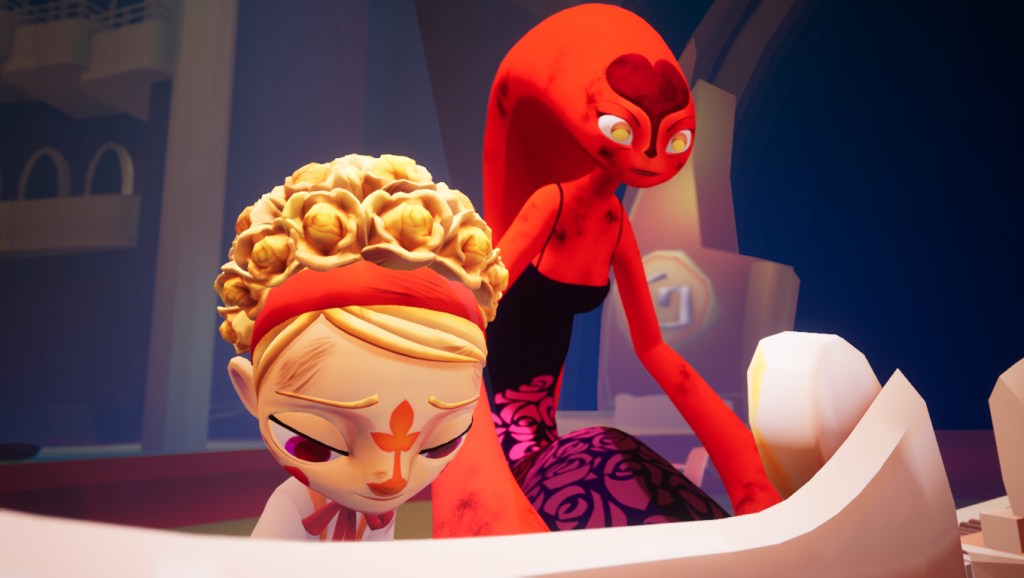
Music is a big part of this game, and it shows. On the audio front, this game is excellent. The soundtrack is consistently amazing across the board, and the voice acting is solid and quite funny. The story is simplistic but charming and gets the job done, and when everything gels together the game is still fun to play. Especially noteworthy are (most) of the boss fights, which is when the music and gameplay collide into a crazy memorable spectacle (Yinu the piano prodigy is easily the standout). The game is also blessedly short, so any egregious flaws don’t particularly wear out their welcome.
Should you play this game? Eh…that’s up to you. If you’re still interested and can find it on sale or rentable from somewhere, give it a shot. Just make sure not to expect too much, outside of the soundtrack, the charm, and serviceable but repetitive combat.
5/10
 The Contrarian Corner