

Doki Doki Literature Club (DDLC), which debuted in 2017, released to relatively little fanfare. This is because it was a PC-only, totally free game by an independent studio. It was the studio’s first game at that. The anime aesthetic and cutesy art style frames DDLC as your typical light-hearted visual novel affair, not unlike the hundreds of other dating simulator games available on the market. Still, because it was free, people gave it a try…and were greeted by the very first message that appears upon starting the game:
This game is not suitable for children, or those who are easily disturbed.
With that singular message, gamers across the country were hooked, and the popular of DDLC experienced a meteoric rise practically overnight. How could a game that, on the surface, appeared to be so cute and charming deserve such a shocking disclaimer? What secrets were lying in wait behind the veneer of adorable anime girls and silly high school antics? Also, how disturbing could the game really be? Surely nothing that hadn’t been seen before on the internet!
People severally underestimated what DDLC packed into its approximately three-to-four hour runtime, and soon the internet was abuzz with praise, adoration, and occasionally abhorrence for what they found. Always ready to chase the newest trends, popular YouTubers and streamers jumped onto the DDLC train, propelling the game into the public eye, and granting it the popularity and presence it so richly deserved.
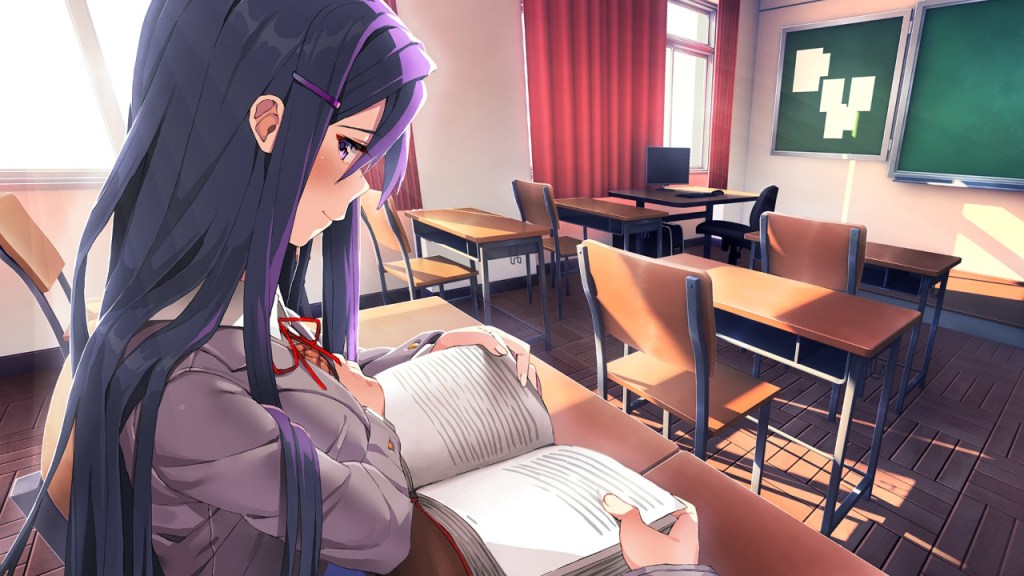
In case you aren’t in the know, DDLC is incredible, and absolutely worth every second of your time, provided you’re strong enough to make it through to the end.
The core concept of the game is rather simple to understand. You play as, functionally, yourself, an average high school loner whose only friend is the eternally bubbly and cheerful Sayori. It’s the start of a new school year, and Sayori (under promise of delicious cupcakes) coerces you into joining the literature club with her. The other three members of the club are the bookish and withdrawn Yuri, the sweet and sour Natsuki, and MMMMMMMMMMMMMMMMMMMMMMMMMMMMMonika.
Sorry, that was weird.
Anyway, the opening two hours of the game proceed at a leisurely but consistently enjoyable pace. As this is a visual novel, 90% of the gameplay consists of reading and clicking through dialogue. Thankfully, the writing is engaging and frequently humorous, and the interactions with each of the girls do a great job in endearing them to the player. The literature club is a lively place, and as long as you are okay with slow burn stories, you’ll find a lot to like in this half of the game.
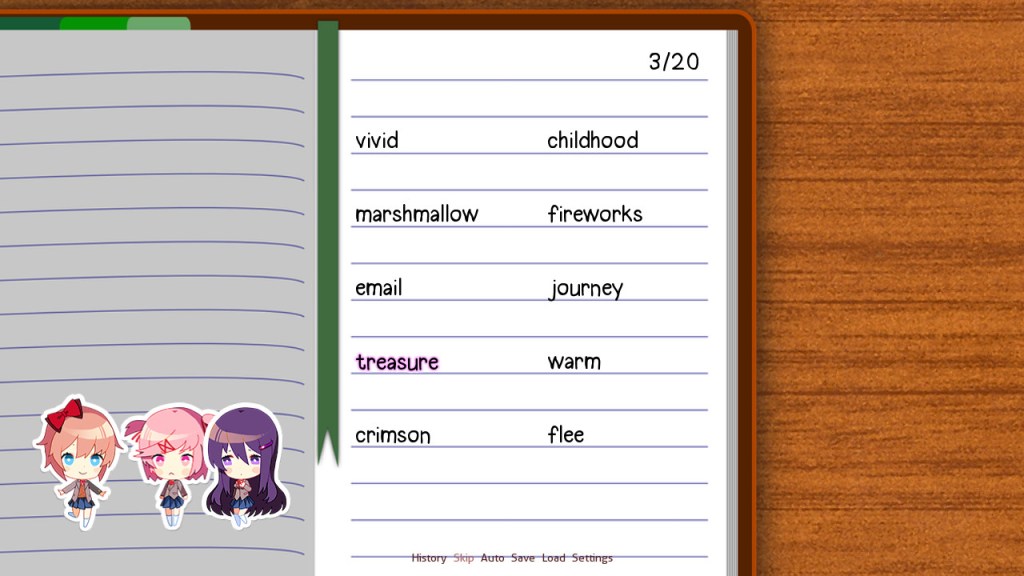
The last 10% of gameplay is relegated to a unique little poem crafting game. You have to choose 20 words from a randomly shuffled list of words to craft a poem, but the gimmick is that certain words impress certain girls more highly. Thus, you need to be careful in creating your poem so that you impress the girl you are most interested in. Impressing a girl leads to hanging out with them at the literature club and during after school hours, letting you learn more about them and shifting you closer to an ending related to them. There is much replayability to be had in DDLC if you are willing to undergo multiple playthroughs (thankfully, all dialogue can be fast-forwarded).
Inevitably, you reach the big twist at the half-way point of the game, and the seams holding DDLC together unravel beautifully. Normally, I wouldn’t care about spoilers in a Contrarian Corner article, but for the intent of this review, and the fact that DDLC is both short and free, I will refrain from drastic plot spoilers.
Just know that DDLC more than lives up to its “disturbing content” disclaimer when you launch the game. This game is not for the faint of heart, and it contains both heavy depressive themes and graphic violence. The last two hours of the game are a whirlwind of emotional twists and turns, and you will constantly be on the edge of your seat. I highly recommend playing this final portion in a single sitting, as it is so consistently addicting and horrifying that you’ll hardly be able to think of anything else until the credits roll.
Major props need to go to Dan Salvato, the primarily solo developer responsible for this title. He pushed the visual novel genre to its definitive apex, squeezing every last drop of uniqueness and quality out of the medium that he could, plus some! This game will interact with its own system files, pepper you with visual glitches, and otherwise interact directly with you in the real world, seemingly breaking through the constraints of its programming. No other visual novel is as viscerally immersive as this.
Every aspect of this game is great, and shockingly so. The game’s central story and visual novel gimmicks are the main hook, but the other areas of the game do not drop the ball in the slightest. The graphical style is cute and appealing, and the fully rendered CG drawings are a delight. The soundtrack is bouncy, light, and sure to become an earworm once you’ve finished playing, and the music is wonderfully distorted in the second half of the game.
Each of the characters are great in their own regards, and you really come to care for each of them and their personal struggles. Sayori’s hidden depths are the first sign that DDLC will not be your typical game, but Yuri and Natsuki both bring intriguing angles to the story with regards to their personal stances on literature and friendship. DDLC tries to make a lot of solid philosophical and emotional points throughout its run time, and it honestly lands each of them. In more ways than one, this game will stick with you long after you finish.

My favorite character has got to be Natsuki Monika Monika Monika Monika Monika Monika Just Monika Just Monika Just Monika Just Monika Just Monika Just Monika Just Monika JUST MONIKA
Okay. I swear I didn’t write that. Huh.
I would also be remiss if I did not mention the recent remaster that this game received just a few months back, known as Doki Doki Literature Club Plus (DDLC+). Though this updated version does cost money (thirty dollars to be exact), the updated content more than justifies the price tag. The size of the soundtrack as doubled, the number of gorgeous drawn CG art pieces has doubled, the length of the game has practically doubled with the addition of seven side story adventures, and there is a sizable portfolio of concept art and secret sketches to unlock. The ability to play DDLC+ on the big screen is a definite plus (get it?), and the extremely unique way in which the game utilizes the features of its presentation has to be seen to be believed.
The side stories are the big draw in DDLC+, and they are exceptionally stellar. They envision a world in which the literature club did not lose its collective marbles, and the focus is on friendship, acceptance, understanding, and love. The four girls pour their hearts out to each other, and each learn to grow as better people and better friends. These are occasionally emotional stories (I did tear up twice), but they end up leaving you with such a fulfilled, heartwarming sensation. They take a few hours to read through, but the minutes fly by. Amazing stuff!
All in all, Doki Doki Literature Club is a superb indie game that I strongly encourage everyone to give a shot. It’s practically flawless, with its only true negative being that the core experience loses some of its charm upon knowing all of its tricks and twists. Still, that first playthrough is unforgettable. Download the game here: LINK
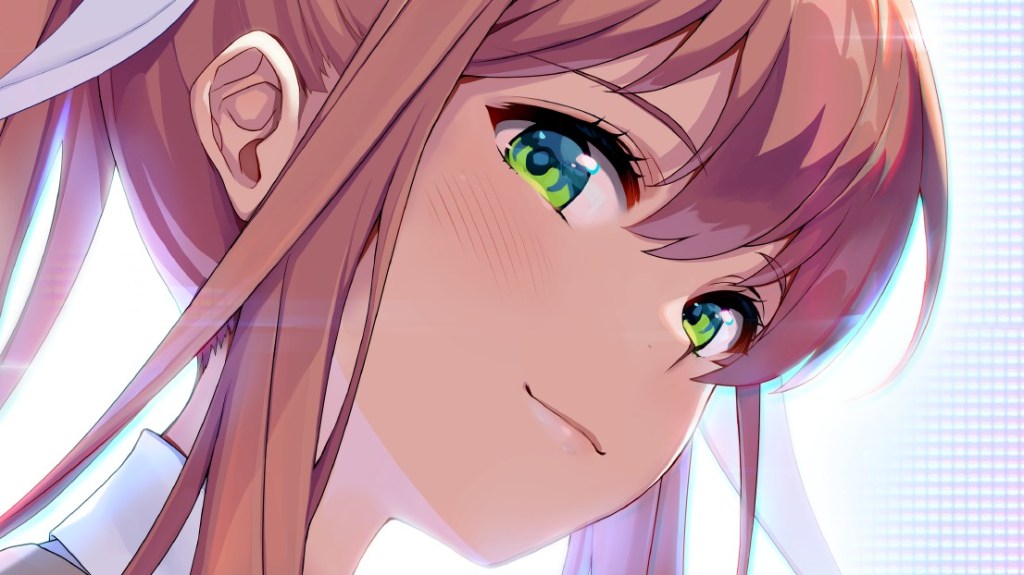
But hey, that’s Just Monika Just Monika JUST MONIKA!
 The Contrarian Corner