

Let me tell you what: The 3DS was an incredible gaming system for the RPG genre. Whether it was JRPGs (Japanese Role-Playing Games), ARPGs (Action Role-Playing Games), or SRPGs (Strategy Role-Playing Games), there was a little something on the 3DS for everyone. You had your Fire Emblem trio of games, Kid Icarus Uprising and a few Legend of Zelda titles, and some classics like Stella Glow and Lord of Magna: Maiden Heaven.
Okay…no one but ME actually played Lord of Magna: Maiden Heaven, but still!
With regards to the specific sub-genre of JRPGs, however, none reign more supreme on the 3DS than the Bravely Duology, a pair of games consisting of Bravely Default and Bravely Second. These were brand new IPs when they launched, and its always a rocky prospect to kickstart a whole new series. Luckily, gamers and reviewers caught on to how good Bravely Default was, and the game received its due reward in terms of review scores and copies sold. It was certainly enough to justify a direct sequel, Bravely Second, a few years later.

The Bravely Duology was not universally accepted, however, certainly not to the level of praise and hype that I believe the games deserve. There were a fair share of mixed reviews for Bravely Default, with criticisms aimed at a few of the more unorthodox gameplay systems introduced in that title. Other critics seemed to only play the game at a surface level, and came away unimpressed. Bravely Second suffered a similar fate, though it also, for reasons I couldn’t quite explain, moved a rather lackluster amount of copies. Perhaps the 3DS being slowly phased out in favor of the Switch is to blame?
Well, let’s shove those reasons aside for the moment, because I’m here to praise the Bravely Duology, not reminisce on their shortcomings in the public eye. These games are both incredible, and consistently present fresh ideas and innovative, daring mechanical systems in a genre frequently derided as being trite and predictable. Bravely Default and Bravely Second are anything BUT predictable, so let’s jump right into two back-to-back mini-reviews on these unforgettable JRPGs.
Bravely Default – The Four Heroes’ Quest
The story of Bravely Default starts simply enough, though with the interesting aspect of being told from four different perspectives. You have Agnes Oblige, a shrine maiden with the power of the Wind Crystal, who is being hunted by the militaristic Duchy of Eternia. You have Edea Lee, the daughter of the Duchy’s leader, who questions her father’s methods. You have amnesiac wannabe playboy Ringabel. And, finally, you have humble farmer Tiz Arrior. Circumstances quickly bring these four heroes together.
Tiz’s village is swallowed by a sinkhole, the cause of which is mysterious but certainly related to the encroaching forces of darkness and the four magical crystals losing their power. He encounters Agnes, fleeing from the Duchy, and defends her from the Duchy’s forces. This commotion draws in Ringabel, who tries to play the hero and partially succeeds, and the violent methods the Duchy is practicing finally push Edea to defy her father and fight against him.
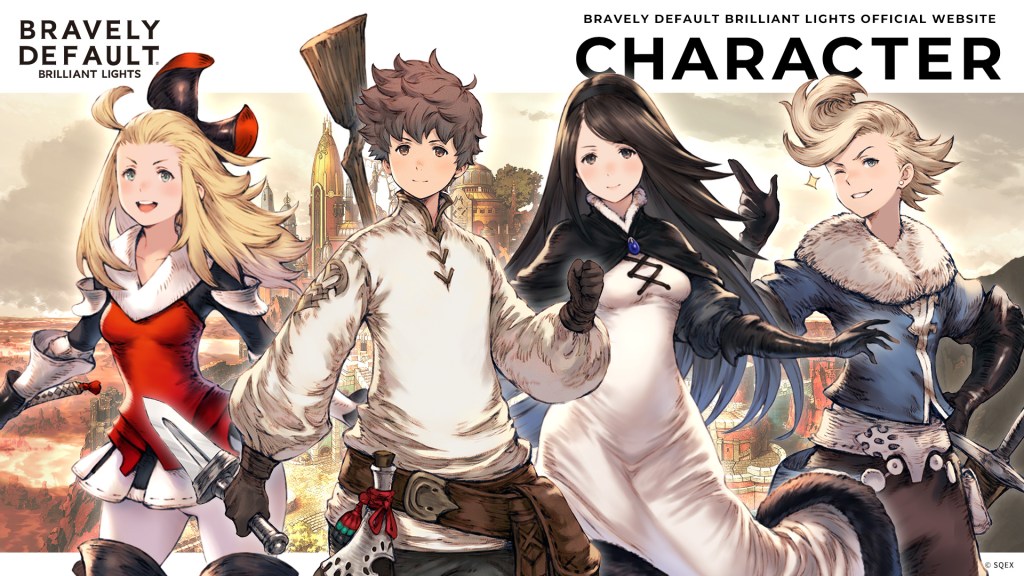
Your merry little band of four heroes here is overseen by Airy, a magical little fairy that is bonded with Agnes, and she helps to give your party guidance and encouragement. Standing in your way is a veritable onslaught of Duchy officers and enforcers, each of whom have their own characterizations and motivations, but all want to see the Duchy’s grand design succeed and the magic of old fade away. The odds are definitely stacked against your party of adventurers, but who doesn’t love a classic underdog story?
This narrative framing is a tale as old as time, but it doesn’t take long for the twists and turns in the plot to start popping up, revealing this tale to much more than meets the eye. For example, after a lengthy globe-trotting adventure, you’ve pushed the Duchy back to the brink and have saved the four magical crystals from destruction. A giant portal opens in the middle of the sea, and Airy explains that you must fly through it. Upon doing so, however…something extremely unexpected happens.
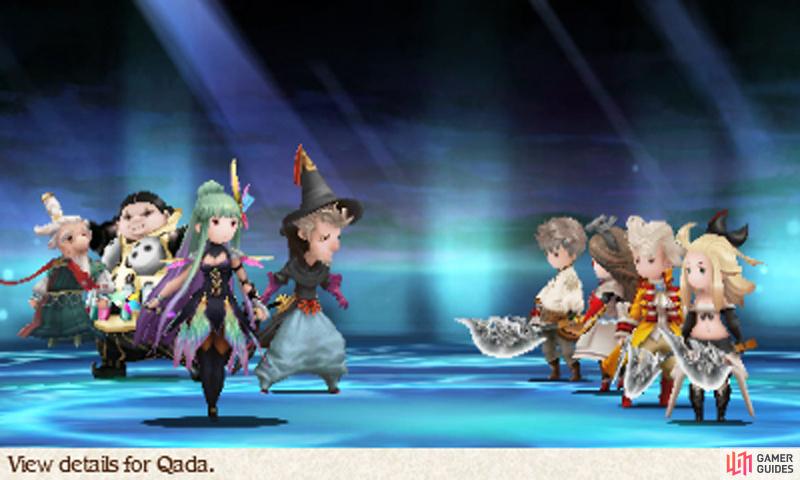
Your group of four is back where they first met, on that starting continent by the seaside village, facing off against low-rank Duchy soldiers. Time has, seemingly, reversed itself. Your party of four still have their memories and abilities, but everything else in the world seems to have been reset back to where it was at the start of the game. A flustered Airy explains that it must’ve been an unintended side effect of purifying the darkness from the four crystals, and suggests just repeating the steps again (albeit faster, since you have all your gear, skills, and flying airship).
So you DO repeat the steps. Again, and again, and again, and one more time for good measure. All the while, you begin to realize that things aren’t exactly the same each loop. Characters behave differently, certain plot interactions are tweaked, and most of the villains are given a lot more depth. On top of this, a wise old sage and immortal vampire (two side characters who help you out from time to time) seem aware of the resets, but are just as confused as you about why they are happening.
Extremely astute players (or more likely, people on a second playthrough of the game) might notice another very odd detail. Airy has big, beautifully ornate wing patterns, but on closer inspection, they seem to form the number “5”. Then, after your first trip through time, her wings now seem to show the number “4”. And then “3”, “2”, and “1”. That…surely is a good thing, right? Airy would never steer your group of heroes wrong, right? After all, you ARE heroes, right?
And then the other shoe drops, and Airy reveals herself as one of the most sinister and efficiently manipulative villains in gaming. All this time, you weren’t purifying the crystals. You were repairing their connection to a sadistic celestial god that Airy works for. And those travels through time? They weren’t travels through time at all. You were moving through alternate universes, connecting each and every one of them to Airy and her master. Now, the multiverse itself is linked to that evil being, Ouroboros, and it’s all your fault for blinding following the orders of your cute RPG mascot character.
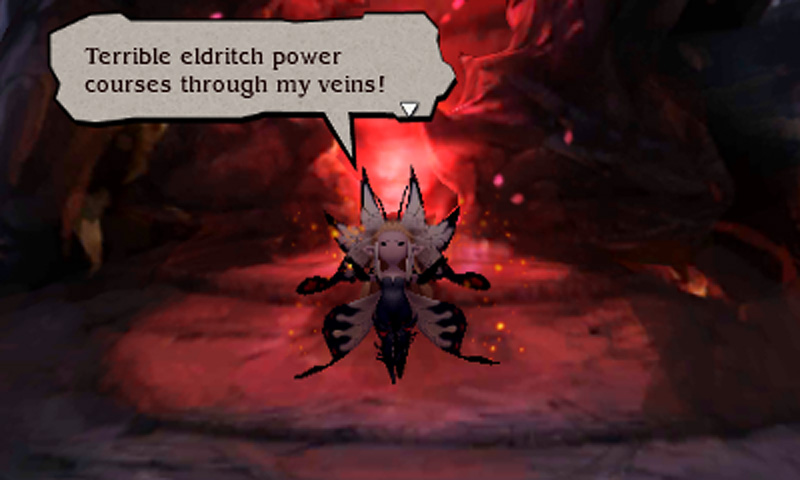
And, somehow, it gets even crazier on top of that. See, the grand scheme of Ouroboros is to suck the power from all universes so that he can invade the Celestial Realm, a world of infinite possibilities. What is the Celestial Realm? Well, as soon as Ouroboros explains it, he turns to stare out of the screen, the 3DS camera turns on, and a live video of you (yes, YOU) begins playing. Ouroboros wants to invade the real world! This stuff is nuts, who comes up with this?
The writers of Bravely Default have, in essence, made a fantastic and unforgettable story that challenges almost all conventions you might hold about JRPGs. This high quality writing also continues into the characters and side quests, who are some of the best in gaming. From heroes like Edea and Ringabel, to villains like Kamiizumi and Mephilia, every character is richly developed and explored, especially with the addition of extra layers of development from the world loops you explore.
The side quests (of which there are many) are similarly engaging and exciting, and also exceptionally dark in tone (if not straight up depressing). In fact, Bravely Default is consistently oppressive and dark, to a startling degree. This is a violent game, and “happy” is about the last word I’d use to describe it. It isn’t so dour that it crushes your soul just to play, and the game knows when to loosen up for some tension reliving scenes, but it’s an impressive level of commitment to grounded realism for a fantasy JRPG.
It is absolutely to Bravely Default‘s credit that the entire game is fully voice-acted by a stellar, high-quality group of actors and actresses. This is one of the best JRPG dubs of all time, and each character is portrayed to perfection. On the topic of audio, the soundtrack (fully orchestrated and recorded by a live musical group) is phenomenal. Truly, it’s an unbelievably good soundtrack, with nary a single lackluster track in the whole bunch. After all, my favorite song (not just video game song) of all time comes from this game!
Bravely Default is hardly only revolutionary in its storytelling and characters. It’s gameplay is arguably even more groundbreaking, and totally shook the established conventions of turn-based battle RPGs. The breadwinning innovation in gameplay is the Brave and Default system (of which the game is, obviously, named after).
In battle, your characters can do basic RPG-type stuff. You can attack, cast spells, use items, and so on and so forth. However, you can also Brave or Default, two unique actions. By Braving, your character can act multiple times on one turn, but as a consequence, their stamina is lowered into the negatives, and they cannot act again until they have waited the number of turns they preemptively took. On the other hand, you can Default, which stockpiles stamina for use later, in exchange for doing nothing but guarding on your turn.
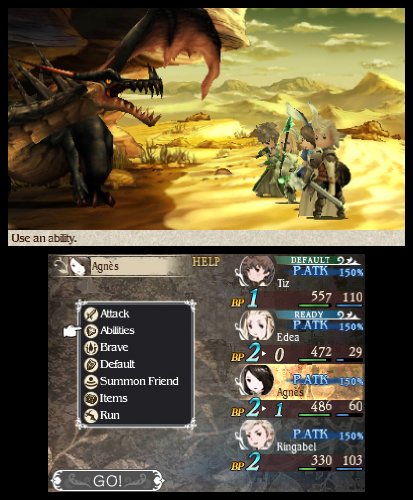
This creates such an incredible “push-and-pull” flow to the combat of each and every enemy encounter. Do you launch an offensive blitz, Braving every character into negative stamina territory, hoping the enemy is dead before you take a retaliatory pounding? Or, do you stockpile your stamina by Defaulting, then launch a safe, measured offensive, with the tradeoff being that you spent several turns letting the enemy have their way with you? Maybe you use a half-and-half approach.
This game-changing battle mechanic is supplemented by the staggeringly customizable job system. Every character can choose a job, and also a sub job. These jobs are akin to classes, and affect your character’s abilities. However, upon mastering a job ability, you get to keep it, permanently. This means that, with dedication, you can mix-and-match moves from every job in the game, creating hybrid classes tailored down to the littlest detail exactly to your specifications. The possibilities are, without exaggeration, endless.
Bravely Default also includes a hefty amount of QOL (quality of life) mechanics that most other games of its ilk are hesitant to even think about including. You can raise the encounter rate of enemies out in the wild, or straight up shut them off entirely. You can change the game’s difficulty on the fly, and also how much experience and job points you earn. You can speed up or slow down the flow of battle, in accordance with whether or not you like to blast through foes or think things through methodically.
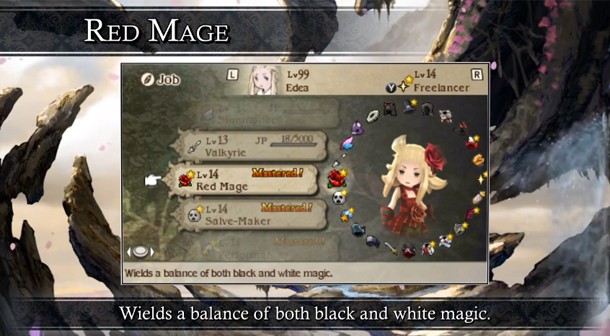
There is one aspect where you might consider going fast, however, and that involves your party members and their special moves. Every character can access special moves after fulfilling job-specific requirements (healers need to heal a certain amount of times, tanks need to block a certain amount of damage). These specials are monstrously powerful, and on top of being huge attacks, they give your party a big stat buff, but only for as long as each character’s unique theme music is playing. Not only are the individualized theme songs amazing (and guaranteed to get stuck in your head), but the frantic rush to make the most of your short-lived buff is quite the rush!
But what if you’re tired of all the fighting? Well, Bravely Default has your back! There’s a fun little minigame where you help to rebuild a small town, and you do so by recruiting allies from online and delegating reconstruction tasks to them. In the process, you unlock new shops, special moves, and a few bonus bosses. There is also a compendium filled with page after page of richly detailed lore and world-building. If you forget about it for a while then come back to do some reading, you could legitimately have hours of content to parse through.
This is also a good time to mention that there are a few other neat little online gimmicks that players can mess around with. You can use a spatial crystal to record one of your strongest attacks, then send the memory of that attack online, where other people can download and use it themselves. You can also sync your heroes with your friends’, allowing you to borrow abilities and skills they have learned but you haven’t yet.
Bravely Default isn’t a perfect game, but boy is it close to one. There are a few scenes, particularly in the early game, that are a bit TOO silly for the rest of the game’s tone. The difficulty curve of later game bosses is a bit unbalanced, some enemy designs are reused a bit too much, and for as amazing and unexpected as the “Airy being evil” twist is, I’m less a fan of the “evil god from nowhere” cliché that follows.
Regardless, Bravely Default is worth every second of your time. I loved this game long before I ever saw the credits roll, and I eagerly awaited a potential sequel. Eventually, I got my wish.
9.5/10
Bravely Second – The World Moves On
Bravely Second, released a few years after the original, takes place in the exact same world with the exact same characters. The world has moved on, and two and a half years have passed since all of reality was saved by the four heroes (Agnes, Edea, Ringabel, and Tiz). Agnes has been promoted to the position of Pope of the Crystal Orthodoxy, and Edea is now in an impressive position of leadership of the Duchy. These two factions are working towards a united peace treaty, and for the most part, the world has been at peace.
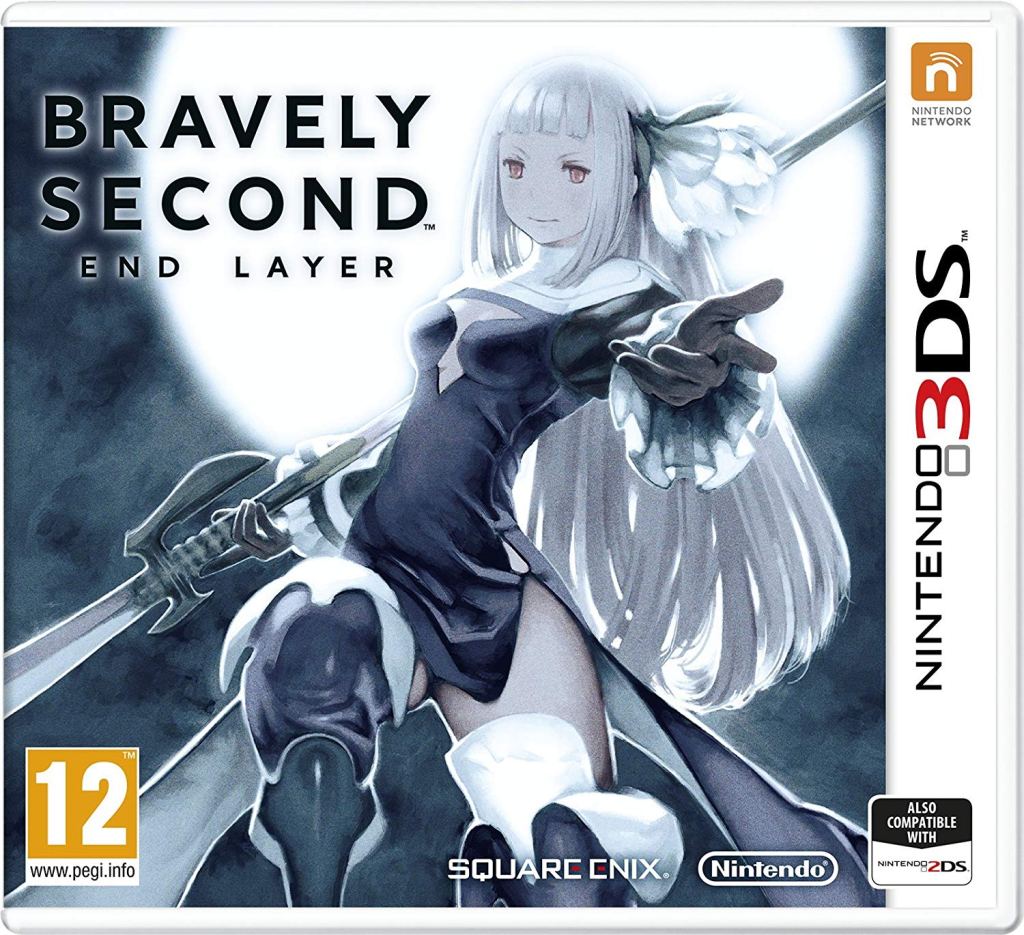
Not everything is perfect, of course. Tiz gave his life to defeat Airy and Ouroboros at the end of the first game, and Ringabel was sucked through time in his efforts to de-link the universes. There is also the surprise appearance of a new threat in the form of the Glanz Empire, a technologically advanced military force led by an enigmatic man named Kaiser Oblivion. Even worse, by Kaiser’s side is yet another fairy companion, this one named Anne.
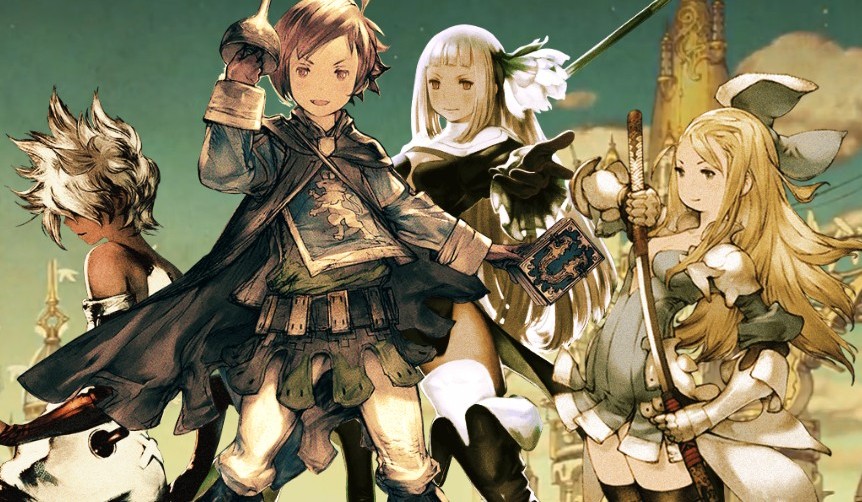
Obviously, the fates of the heroes has necessitated a shake-up in the roster of four heroes this time around. The central protagonist is a young boy named Yew, who is the head of Agnes’ Royal Guard, and is spurred into action after Kaiser Oblivion kidnaps Agnes before the peace treaty can be signed. Yew is joined by Edea (ready and raring to go on another world-saving adventure), Magnolia Arch (an enthralling warrior who claims to be from the moon), and a mysteriously revived Tiz (who questions his sudden gift of renewed life, but nonetheless swears to save Agnes). Thus, the sequel begins!
What’s most impressive about Bravely Second is that it loses absolutely nothing in embracing its sequel nature, unlike lesser sequels of similar nature. The game does not treat its player as dumb, nor does it hold someone’s hand through the world. It expects you to have played the first, and it rewards those fans who have stuck it out. It tweaks pre-existing mechanics in interesting and inventive ways without ruining what made the first game special, and it innovates in its own areas. It manages to be decisively the sequel to the first game, and yet also possesses its own identity.
Like a good sequel, Bravely Second maintains the perfect balance of new and old when it comes to the world and characters. You meet a bevy of memorable and zany new characters, and visit exciting and exotic new locales. You also reunite with basically every character from the first game, as well as most major cities and locations, and you get to see how they have been shaped and changed over the past two and a half years since the Duchy war ended.
The writing and voice acting is still as top-notch as it was in the first game, so there’s no need to worry on that account. Much of this really comes into play in this game’s side quests, which are framed as moral dilemmas where your choice genuinely matters, and affects the outcome of the quest. There are plenty of dark, shocking moments the series is known for, and a few jaw-dropping twists. I mean, you might’ve guessed that the little fairy Anne turns out to be the main villain, but would you have guessed that the final boss reaches outside of the game itself and tries to delete your save file in order to win? It’s nuts!
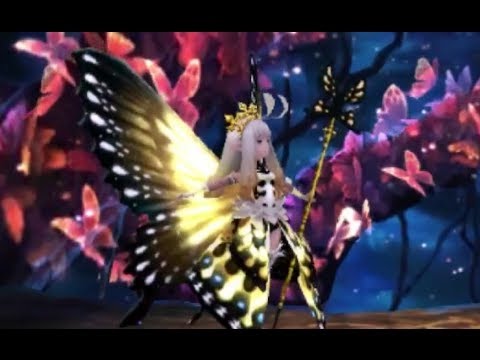
Like the story and characters, the gameplay is only further enhanced from the original. The Brave and Default mechanic is here in full force, and joined by the ability to chain battles together to increase the risk and reward. More jobs have been included alongside those available from the first game, increasing the already sizable customization options. All of the QOL features have carried over, and even the town-building minigame is intact, alongside a simpler but still addictive plushy-knitting factory game (um…don’t ask).
Like the first game, Bravely Second also has a few issues here or there. There’s a somewhat distracting tonal issue when compared to the first game, and this entry has a harder time balancing its humor and dark tragedy. Occasionally, there are a few set pieces or character interactions that feel derivative of the first game, and the overarching plot is slightly less engaging than the first game. The ending hours also get a bit too convoluted for their own good (though I adore the surprisingly wholesome happy ending).
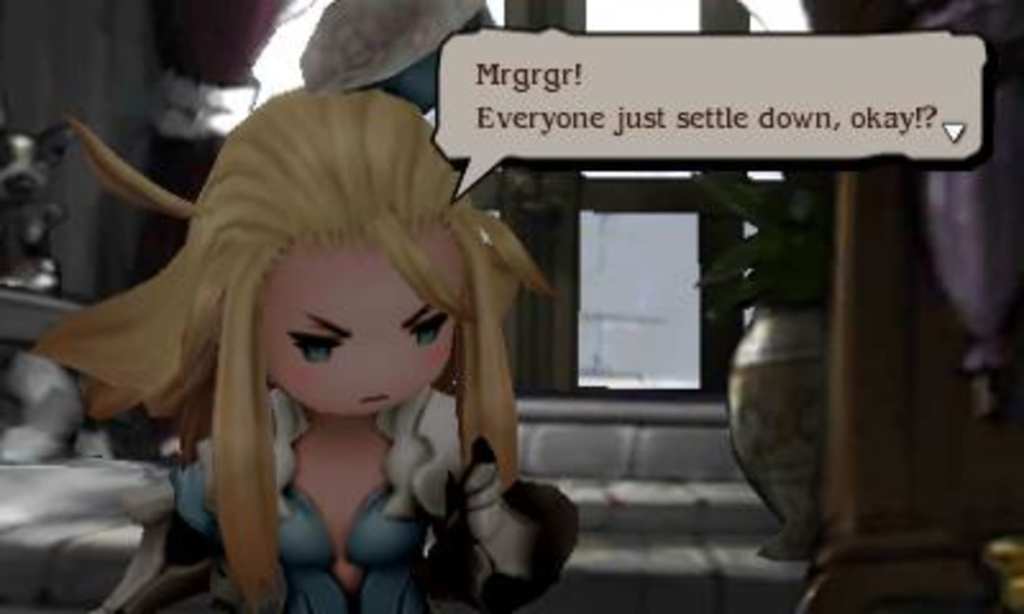
In a lot of ways, Bravely Second is a repeat of the first game, but it offers so much new alongside the old that I can excuse the infrequent “samey” feeling. Honestly, I only have slightly more problems with Bravely Second than the first game, so I’d overall say that game is marginally worse but still amazing. If you loved the first game, you 100% need to grab this JRPG gem as soon as you can!
9/10
Conclusion
At the end of the day, there’s simply no denying the obvious: Bravely Default and Bravely Second are exceptional games worth every second of your time. If you own a 3DS and are even remotely a fan of the RPG genre, you owe it to yourself to pick up these two gems and give them a try. If you are anything like me, your perspective on the RPG genre, and what games it that genre are capable of, will be forever changed. Trust me, you won’t regret playing these two unforgettable adventures!
But hey, that’s just my opinion!
 The Contrarian Corner