

I’d happened to catch the trailer for Bullet Train before the film came out, and I didn’t particularly think much of it. While I can’t remember all of my thoughts, they were probably something along the lines of “huh, that looks neat, I guess”. I mentally filed it away as something that I would watch someday if the opportunity presented itself, and assuming I hadn’t forgotten about it.
Well, lo and behold, Bullet Train came to Netflix just recently, so I decided to give it a watch one evening. I’m super glad I did, because not only is this movie awesome, but it’s also one of the smartest and tightest written films I’ve watched in years. It’s the magical sort of film that immediately makes you want to go out and be a filmmaker yourself. A film like this is a rarity.

But what exactly makes it so special? Well, the highlight of the film is undeniably how it never wastes even a single second of runtime.
The concept of “filler” and “padding” is not one foreign to the film industry. After all, it can be difficult to fill up a standard theatrical runtime. Bullet Train does not have this issue. There’s not a single scene or line of dialogue that wastes time, insults the audience’s intelligence, or contributes nothing to the story. In fact, for a movie filled with quite a bit of comedy, even the humorous bits serve their purpose in furthering the plot, subtly foreshadowing future developments, or enrich the characterization.
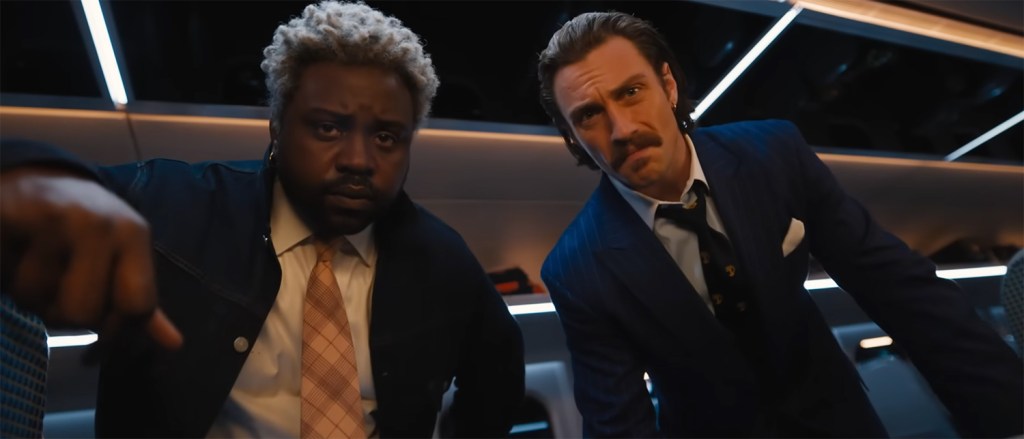
The cut-away “jokes” are perhaps my favorite part of the film. For example, near the beginning, Lemon and Tangerine reminiscence on the surprisingly brutality of “The Bolivia Job”, remarking that their efficiency on that job is what led to them being hired for this bullet train mission. In any other movie, that might feel like foreshadowing or clunky exposition. However, Bullet Train cuts away to an entirely different scene, costumes, and props for what amounts to a five-second bit of dark comedy. That “joke” nature of the scene immediately lulls you into the belief that you have now experienced both the setup and payoff of this bit, only to be slammed with the realization later on that it actually was foreshadowing all along!
A lot of these subtle details practically necessitate multiple viewings, because it’s basically impossible to catch every little detail and clever writing technique in just a single viewing. All of these coincidences piling up together into one massive congested gambit on this train would feel contrived and unearned in a lesser film, but Bullet Train earns each and every plot twist, character revelations, and frantic set piece due to how masterfully it weaves subtle character work and smart writing into its spoken dialogue and unspoken design.
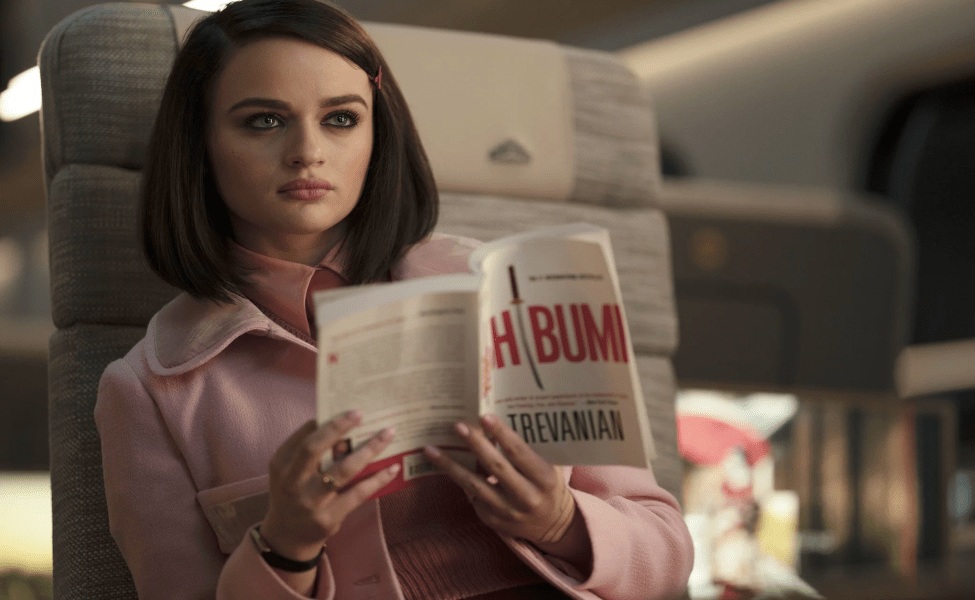
As just a tiny snippet of what I’m talking about, let’s look at my favorite character in the film, Prince.
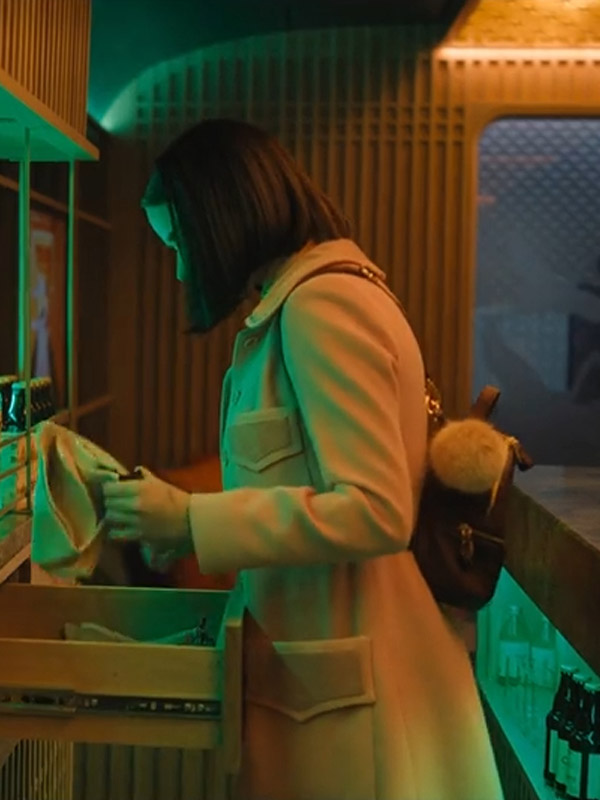
In one of Prince’s earliest scenes, she talks about how carrying a loaded gun makes it difficult for her to pass off her “innocent girl façade”, so she passes the gun onto her hostage for a while before taking it back later. However, it’s that exact loaded gun in her purse that tips Lemon off that Prince is the lying mastermind of the entire train ordeal when he notices it sitting in her purse while she’s trying to pass off her “innocent girl façade”. The exact scenario Prince described earlier comes back to bite her, but unlike other movies, Bullet Train doesn’t draw attention to this. It doesn’t point a giant arrow and flashing sign to clue the reader into its “clever” and “witty” writing. It just respects you enough to expect you to keep up.
So much of the writing also centers around the film’s central theme of fate, luck, and agency. Throughout the film, the question is constantly posed about whether luck is truly something that someone can possess, and whether fate leads people along their lives or if it even exists in the first place. Instead of hammering home some decision answer by the climax of the film, this question is instead left to linger in the viewer’s mind as the credits roll.
Take, for instance, the inherent dichotomy between Ladybug and Prince. Ladybug has self-professed terrible luck, while Prince takes pride in “always being lucky”. And yet, look at how their luck actually plays out.
Ladybug steps into a puddle and ruins his new shoes, but the shock of the muddy water causes him to narrowly avoid being run over. He continuously gets into fights, and yet always survives through some sort of accidental fluke. He runs out of extinguisher fluid to combat a fire, but ends up perfectly unharmed in the ensuing train crash thanks to colliding with a massive plush mascot. His ride home is destroyed in the final scene, but then he finds a pack of his favorite wasabi peas on the ground.
On the contrary, Prince has everyone wrapped around her finger for the entire story. Even if it isn’t in the original manner that her grand scheme detailed, every bit of Prince’s plan works out for her. She happens to stumble across the briefcase of money, she happens to pick just the right man to crack open the case, Lemon just so happens to pass out from the sleeping drug before he can shoot her, Ladybug just so happens to rescue her from Tangerine right before she dies, and her father just so happens to kill himself using her gun, like she’d always hoped. It’s only after all of her plans come to fruition that she’s finally dealt a karmic blow that takes her down for good.
That sort of segways right into the issue of fate. Fate is a concept that some of the characters don’t believe in, but others cling strongly to. The Elder is a firm believer, and he has credible evidence backing him up. After all, it’s only because of Prince and the White Death’s contradictory plans coming together that all of the pieces are pushed onto the board, and the Elder is allowed to exact his revenge. There’s also the fact that Ladybug is only present due to a fluke by filling in for the intended asssassin, and then there’s Prince’s death at the hands (or hood, rather) of a tangerine truck. Can everything that plays out really be considered coincidence?
It’s interesting stuff to think about, and Bullet Train manages to interweave these more philosophical topics into its narrative without ever trying to force a message or grinding its pace to a halt.
Rest assured, there’s plenty to love in this film even aside from my abject adoration of how smartly the film is written.
It might go without saying, but both the cast and performances in this film are spectacular. I don’t go into movies with the intention of latching onto familiar actors, and I certainly don’t pick the movies I watch just because of who is starring in it. But, Bullet Train‘s diverse and star-studded cast do the film wonderful favors, and everyone turns in spectacular performances. If I had to specifically praise anyone, I’d point to Brad Pitt, Joey King, and Aaron Taylor-Johnson.
The action scenes are continuously inventive and lend more and more unique and creative oomph to an already stacked movie. There’s the up-close fight scene that is constantly interrupted by a curmudgeonly old woman, the comedic struggle between Ladybug and Wolf while Ladybug tries to place where he knows his would be assassin from, and the (literally) off-the-rails climax. There’s never a dull moment in this film, which sort of ties into my whole point of how excellently Bullet Train uses every single second of runtime.
And (because it wouldn’t be a Contrarian Corner article without mentioning it) the soundtrack is also pretty good. The film’s original score is upbeat and exciting during the set pieces, a few characters get memorable unique themes (such as Prince), and the licensed music is downright awesome (several popular songs are reprised but in Japanese).

Overall, this movie wholeheartedly gets my recommendation. I can admit that the concept (and perhaps even the execution) might not exactly be everyone’s cup of tea. At its core, Bullet Train is still an action comedy that more-or-less plays things by the book in ways that won’t exactly surprise seasoned movie goers. But, even if the genre isn’t your typical cup of tea, I’d still recommend giving this movie a watch if only to see what it’s like to consume an entertainment product so impeccably and smartly written from start to finish.
In a modern era of samey blockbusters and films that treat their audiences like children, Bullet Train is a fast-paced race to the finish that firmly trusts its viewers to keep up.
9.5/10
But hey, that’s just my opinion!
 The Contrarian Corner