

QS stands for “Quickshot”, a series of short form review/preview/opinion articles.
Continuing on with our month-ish of spooky related articles, let’s take a quick look at a sci-fi/horror manga series that I just recently finished reading on a whim, Summertime Rendering.
It’s really, really go—–
…..
Continuing on with our month-ish of spooky related articles, let’s take…wait, what? Haven’t we been here before?
Jokes aside, Summertime Rendering, which focuses heavily on timeloops, is really, really good! I knew absolutely nothing about it (aside from the timey-wimey shenanigans) before jumping into it, and I’m super glad that I did! It’s one of the best manga series that I’ve ever read, and an incredibly complicated but concisely plotted, intricately detailed, and mind-blowing journey with some fantastic twists, amazing characters, and very high-quality art.
I might typically be a fan of the Shonen genre (categorized by long runtimes, flashy fights, and more eye-rolling melodramatic ridiculousness than you’d think possible), but there’s really something to be said about a well-written shorter story that knows exactly how long it needs to be in order to tell what it wants to tell. Across six (admittedly larger-than-normal) volumes of manga, Summertime Rendering crafts a story that really shouldn’t be missed by any fans of sci-fi, horror, or both.
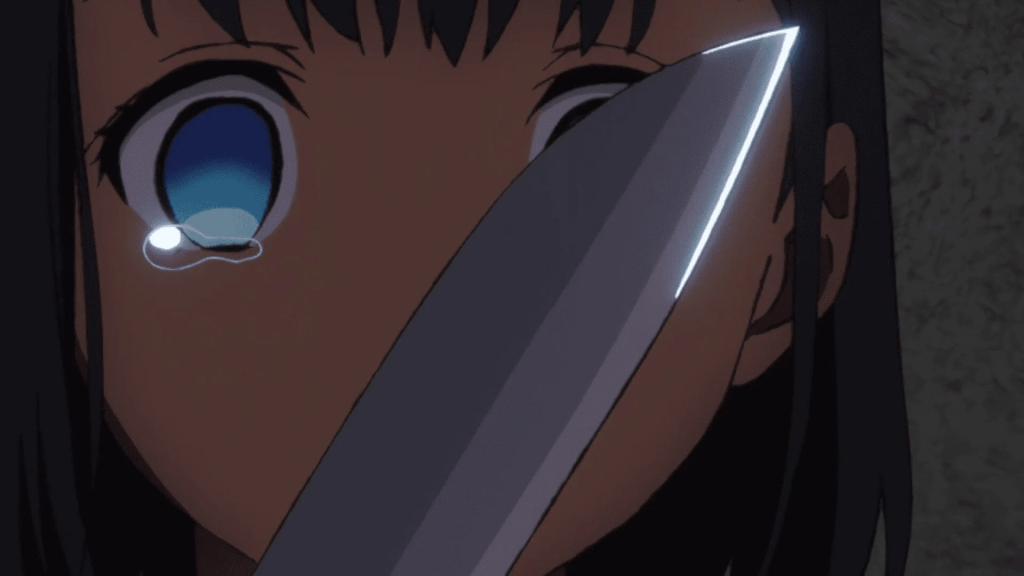
The horror aspect of it all kinda took me by surprise (and it was far from the only aspect of the series to do so), but it was a welcome surprise in my book! There’s only so much terror you can wring out of pictures on paper, but some of the grotesque imagery will definitely stick with me for a while. There’s also a lot that can be said about the existential dread of being trapped in a timeloop, and the despair of seemingly unwinnable odds. To say nothing of the event horizon and being erased from existence, and all that other psychological dread! It’s great stuff, and doesn’t fall back on cheap scares or gross-out tactics just for the sake of it.
Summertime Rendering follows the story of Shinpei Ajiro, a teenager with a penchant for examining life’s many choices through a ‘bird’s-eye view’, returning to his hometown (Hitogashima Island) after the sudden passing of his childhood best friend, Ushio Kofune. It’s a somber affair, but at least it gives him the chance to get reacquainted with his friend’s younger sister Mio Kofune, and his other childhood friend, Sou Hishigata. To say nothing of the enigmatic Hizuru Minakata, apparently on the island for her own reason.
Things get weird when Shinpei hears about apparent indications of strangulation marks on Ushio’s neck, despite the doctor’s diagnosis that she drowned. Things get weirder still when Shinpei hears rumors around town about some sort of old superstition about shadow creatures that kill and replace humans without anyone knowing. Things get weird beyond belief when Shinpei is attacked by none other than Mio, even though another Mio is right by his side! And the Mio who attacks him kills him!
And then Shinpei wakes back up on the boat he arrived at the island on, kicking off the first of many mind-bending timeloops to come.
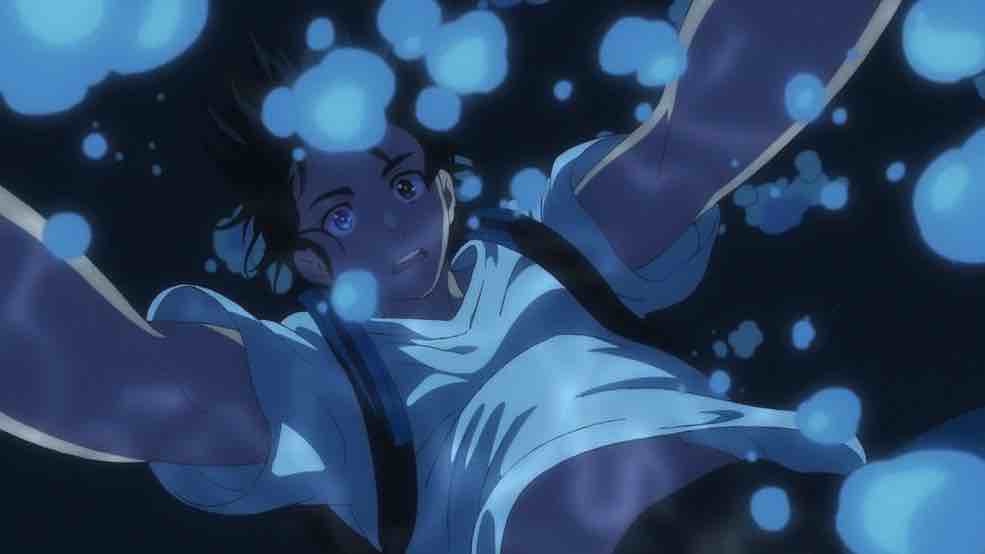
Time-travel and timeloop storylines have always been a big favorite of mine, and this story is no exception. In fact, Summertime Rendering is the first timeloop story I’ve read that really delves into the science and logical workings of it all (even if it necessitates dipping into pseudoscience, of course). Multiple pages are dedicated to the characters simply trying to figure out how the timeloop functions, what caused it, and how it can be stopped. An extra wrinkle is thrown in once the loop begins to start anew later in the day than the previous loop, slowing locking time into place and cutting down on precious minutes for Shinpei to turn the situation around. It’s pretty ingenious stuff!
That’s actually one of the biggest ways in which I can praise the entirety of Summertime Rendering. It remains consistently smart throughout, and always goes above and beyond. What really sold me on the series was when I was about thirty pages into one of the early volumes, and was presented with a multi-page journal instead of the standard picture comic book manga format. The journal was written as if by the main character’s own hand, complete with spelling mistakes and hurriedly-scribbled notes. There were even some doodles too! The journal depicted the protagonist’s efforts to remember as much as possible about each timeloop, and what consequences his decisions led to.
It was really engrossing stuff that, while theoretically unnecessary, supremely aided in my enjoyment of the overall craft of the story!
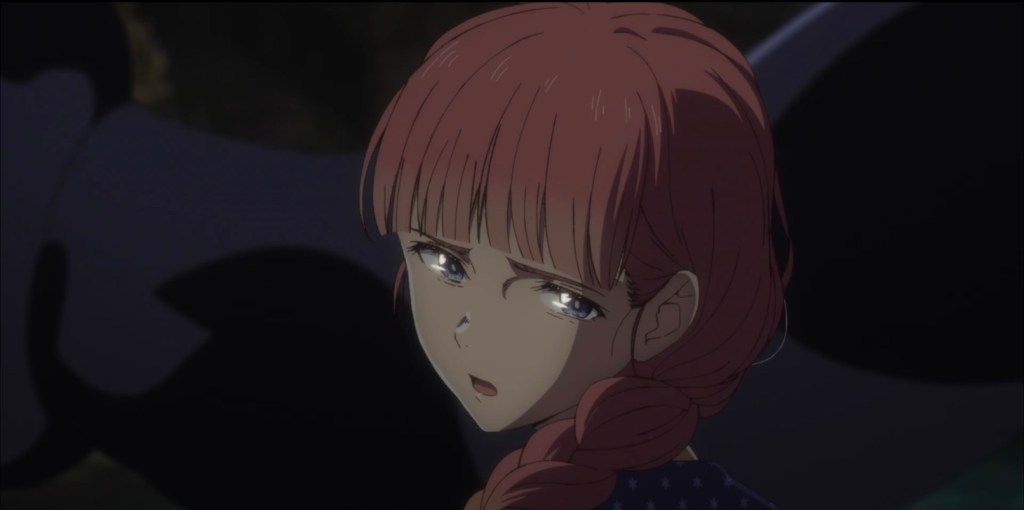
The characters are a really big highlight too, and it helps that no one exists simply as set-dressing to further the plot. Everyone has their own personal stake in the conflict, their own flaws, and their own unique quirks. No one feels wasted, and everyone gets a chance to shine…even the villains! It’s a very solid cast that I will fondly remember for a long time to come! My favorite characters would have to be Tokiko Hishigata (Mio’s close friend and Sou’s sister), and a certain shadowy figure that would be a bit too spoilerific to get into!
The pacing really flows well too, keeping your eyes glued to the page for far longer than you should probably be reading in a single sitting (it was a mistake to binge this series each night before bed during a work week). What always helps draw your eye to the page is some immaculate art and illustrations that remaining a visual treat throughout. Thanks to the longer-than-normal page count of each volume, plenty of time is devoted to dialogue and action scenes alike, ensuring nothing feels too rushed.
Honestly, I don’t have too much to complain about. There’s a few moments near the end of the story that get a little too “tropey” (but that doesn’t impact the shockingly great and satisfying conclusion). Some humor bits don’t land as well as they should, and there is a minimal but still eye-rolling amount of unnecessary fanservice, especially near the beginning. The large cast that is introduced in very rapid succession early-on can be overwhelming too, though things become clearer the longer you read.
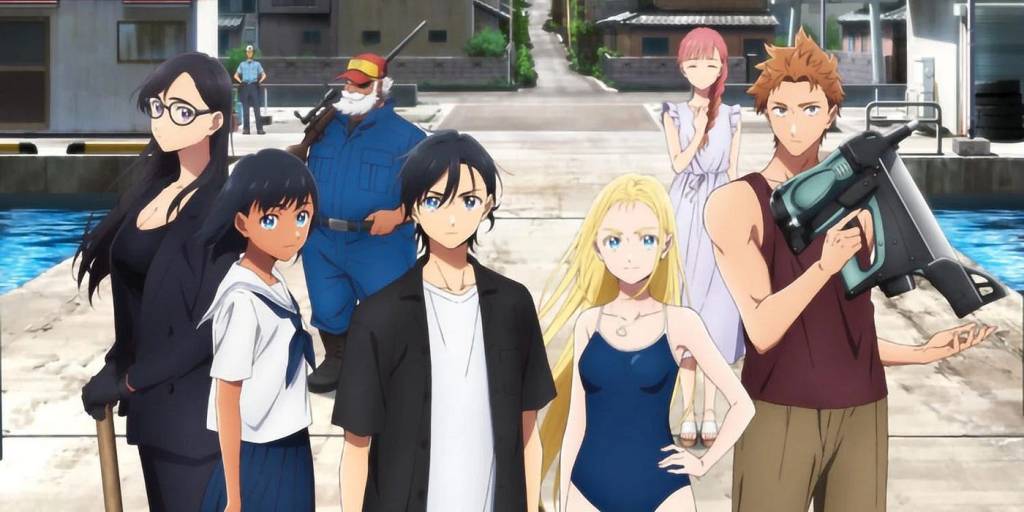
In short, Summertime Rendering is an amazing piece of sci-fi/horror manga that is more than worth your time. I highly recommend giving this series a try. And, if you’ve got an active Hulu subscription, you can even watch the animated adaptation of the manga too! Most of the pictures in this article came from said anime adaptation, simply because high-quality photo uploads of the manga itself are so rare!
9/10
 The Contrarian Corner