

So, I just finished The Legend of Korra a little bit ago (after some Christmas-break-induced bingeing). Despite what a vocal minority on the internet might want you to believe, the show is fantastic, and a more-than-worthy successor to the original The Last Airbender series. I’ve actually got a whole slew of Korra-related articles prepared for the next few weeks, and I wanted to kick things off with a more general overview of my favorite characters in the series! This was a tough list, as Korra has a huge cast of awesome characters, but somehow I managed to wrangle it down to ten!
Let’s get into it!
10) Tenzin
You’ve always got to have that “Voice Of Reason” type of character in a team-focused world-saving show like this, and when that character is as great as Tenzin is, you’re in for a treat! Buoyed by one of J.K. Simmons’ most affable and endearing performances, Tenzin is a consistently memorable hero through each season of Korra. He’s always the first to dish out the sage advice or throw down some true mastery of Airbending, but he’s also not above his own little quirks and oddities (like his secret love of the pro-bending sport). His arc of recognizing the ways in which his daughter has surpassed him is one of the show’s most grounded.

9) Mako
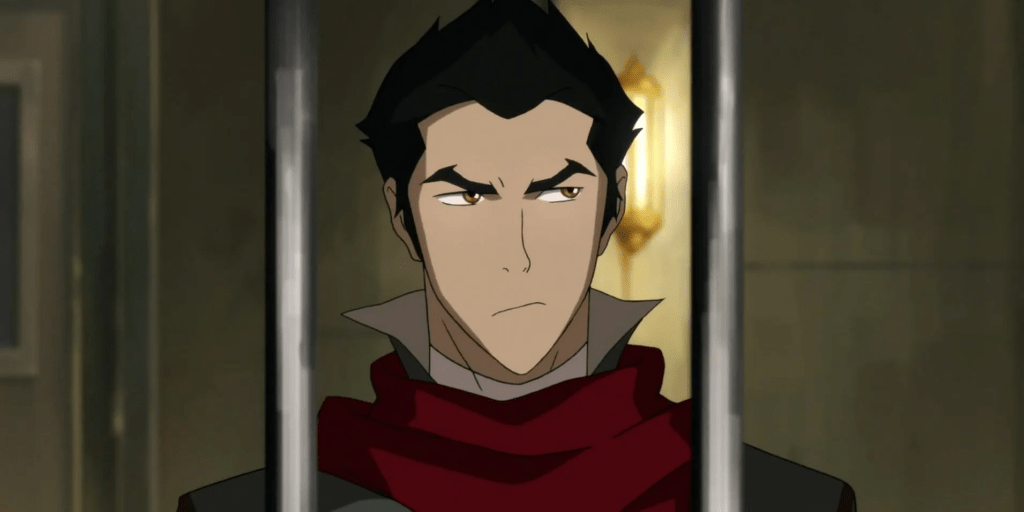
A polarizing character if ever there was one, I am nonetheless a Mako fan and defender. Maybe it’s his smooth vocal performance, his consistently great fight choreography and Firebending skills, or his killer fit (I adore the scarf and long coat combo). I find it easy to overlook his shortcomings (like being the densest man in the world when it comes to relationships), because he’s always just so cool. Whether dominating the pro-bending court, chasing down thugs as a Republic City detective, or nearly sacrificing his life to save the entire nation (one of the best scenes in the entire show), Mako proves that he’s willing to do anything for the people he cares about, and also look good doing it!
8) Jinora
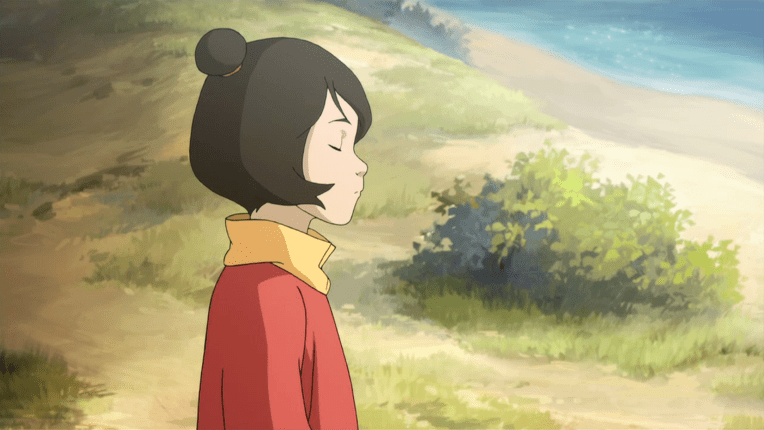
Jinora, like all of Tenzin’s kids, spent Season One in the background, and I (like many) had no clue of just how cool she was going to end up being once elevated to supporting status in Season Two. But then she demonstrates her absolute mastery over the spiritual side of Airbending, is critical in the defeat of both Season Two and Season Three’s main antagonists, and continues to be a stalwart ally for the rest of the show. She’s one of those remarkable child characters who isn’t constantly depicted as a nuisance or a goofball, and instead demonstrates the sincerity and capability all children have when they’re treated right by the adults around them. Her ending scene in Season Three is still my favorite scene in the entire show.
7) Varrick
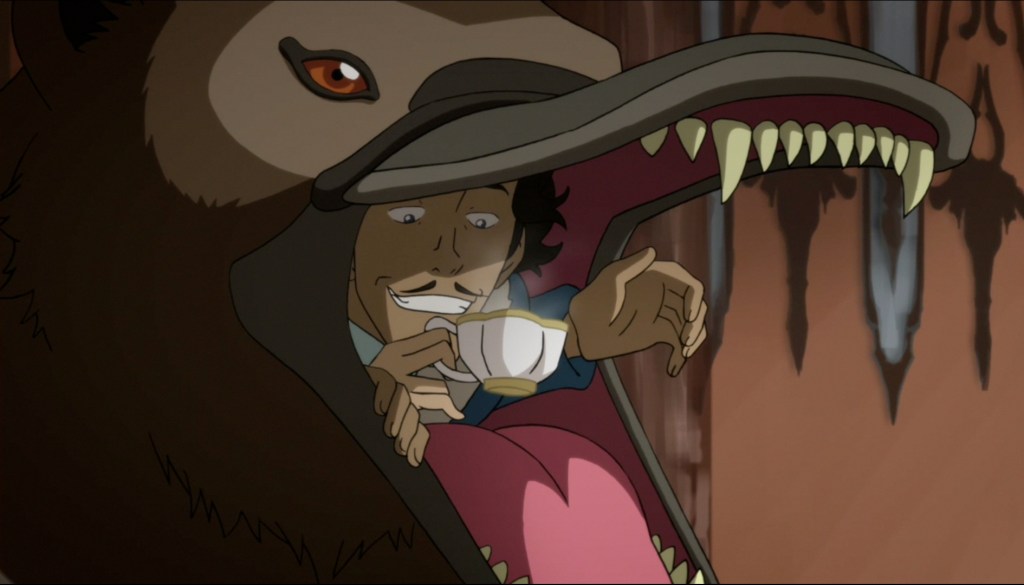
Whether you love him or you love-to-hate him, Varrick is a consistently unpredictable and hilarious character who throws a wrench into any episode he’s a part of. One of the most unapologetic depictions of Chaotic Neutral that I’ve ever seen (especially in a kid’s show). Varrick is well-and-truly on no one’s side but his own, and whatever scheme can make him the most money is the one that he’s pursuing. A (mad) genius inventor, Varrick’s many quirks and devil-may-care attitude lead to some of the show’s best jokes, and his pivot into a more nuanced character in Season Four somehow still manages to feel earned despite his track record of crimes and shenanigans!
6) Bolin
It isn’t easy to write a character who primarily exists for goofy comedic relief while also being a competent member of the team, but Bolin nails the role with aplomb. Most of the credit has to go to his vocal performance, which just might be my favorite in the entire show. His actor (P.J. Byrne) perfectly nails the tone of a lovable and awkward goofball, and his natural deliver of each line sells the punchline every time. More than just a walking meme machine, though, Bolin’s steadfast loyalty and desire to help his friends is always a joy to see, and his genuinely impressive fighting skills are the icing on the cake. Whether he’s pro-bending, acting in a film series as infamous hero Nuktuk, or taking down baddies on Team Avatar, Bolin is always a treat!

5) Zaheer
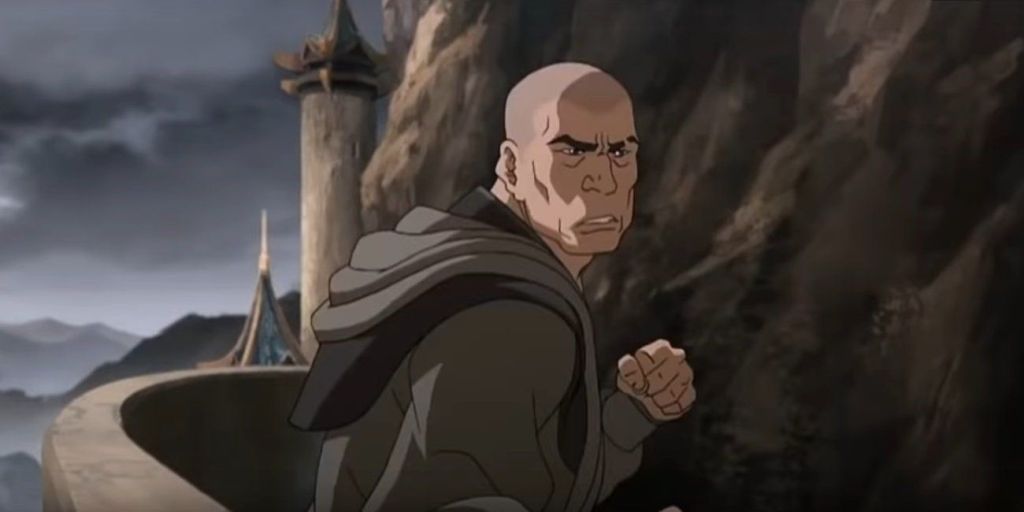
It’s not often that what is ostensibly a children’s cartoon (perhaps a teen cartoon, actually) includes a villain so charismatic and anti-generic-evil that you almost end up rooting for him as much as the good guys! And yet, that’s exactly what the writer’s managed to accomplish with Zaheer (and by extension, all of the Red Lotus faction). While clearly not good people (they are violent anarchists), Zaheer and the Red Lotus’ plan to take down genuinely corrupt leaders and put power back into the hands of the people is one that makes sense from his perspective. It helps that Zaheer is such a smooth-talking and affable man who respects his enemies even during battle, and even graciously gives soul-searching advice to Korra in Season Four when the two end up having a common enemy. Also, he’s one heck of an intimidating foe in battle!
4) Lin Beifong
On paper, a character whose defining trait is just being awesome is a recipe for an entertaining but ultimately boring character. Lin Beifong is anything but boring. From her first scene as a tough-as-nails cop who takes none of Korra’s sass, Lin quickly establishes herself as a veritable force of nature. With Metalbending prowess not seen in the Avatar universe yet, Lin starts flying through the air with her metal grapples, beating down Equalist baddies with impeccable hand-to-hand, and tearing entire airships from the sky. But she’s also not all jaw-dropping spectacle, as we see through her strained relationships with Tenzin in Season One and her extended family in Season Three and Four. Her backstory episode is also one of the show’s best, and I like her begrudgingly motherly rapport with Mako when he joins the police force.

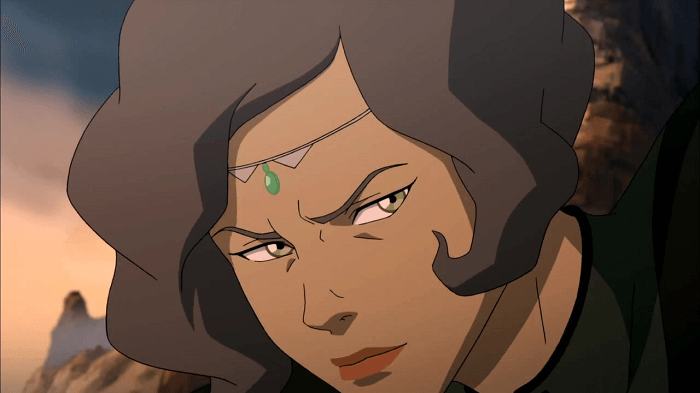
3) Suyin Beifong
And yet, for as much as I love Lin, I can’t help but give the nod to her younger sister, Suyin Beifong, instead. Suyin has a lot of positives going for her, despite only joining the cast in Season Three. Despite her mostly pacifistic nature, Suyin is no less capable of laying the smackdown on any enemy who threatens her family, with a graceful dance-like style of Metalbending. Her big fight scene in Season Four might genuinely be the best animated clash in all of Avatar. She’s got an engaging personality and a fun familial dynamic with her children and with Lin, and she’s willing to do whatever it takes to keep those around her safe.
However, one of the most appealing facets of her character are her flaws. She’s a deeply hypocritical woman, and this point is both shown and thrown in her face multiple times. She practices pacifism, and yet openly condones violence if she feels her family has been threatened, but she also has no problem telling others what to do and not wanting to act upon those same words herself. She gets called out by this more than once (her adoptive daughter and son both betraying her, and her advisor figuratively stabbing her in the back at another point), and her backstory with Lin does not paint her in a good light. All this to say, she’s a wonderful depiction of how truly flawed human beings often are, and how that complexity is not a bad thing at all.
2) Kuvira
What’s this? A strong, competent, awesome, nuanced, sympathetic major female antagonist shows up in a high-scoring position on a Contrarian Corner article? Say it ain’t so! I’m not sure if you’d even believe me, but I promise I don’t actively try to do this…
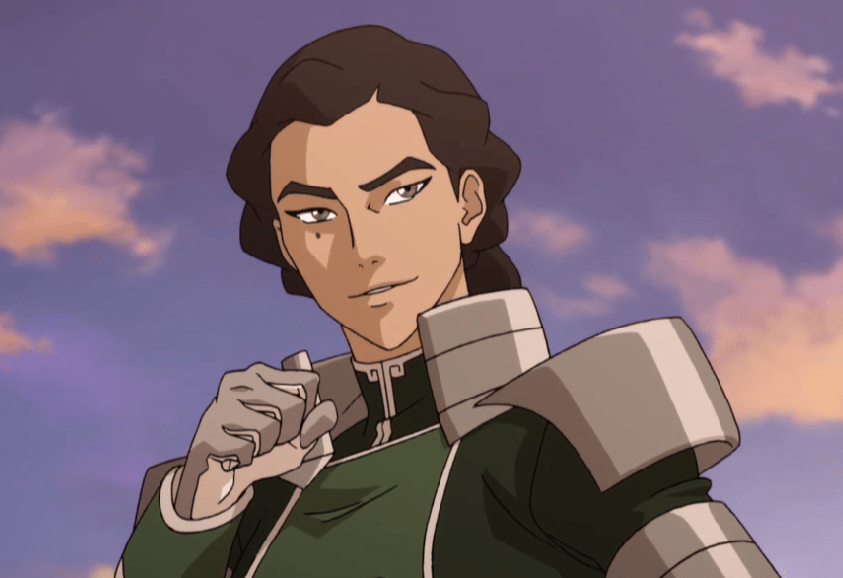
Regardless, Kuvira is amazing, and a pitch-perfect villainous sendoff to a show already stacked with awesome baddies. From her humble beginnings that border on being a cameo in Season Three (she takes part in a few background fights that show her skills, saves Korra’s father’s life, and has a few lines of dialogue introducing herself), Kuvira becomes the main and final antagonist of the show in Season Four. Her grit, determination, and charisma are second-to-none, and the effortless and intimidating way in which she wields her prodigy-tier Metalbending is the stuff of legends. It’s arresting to stuff to watch her go to work, even if its on one of our protagonists.
But, like I mentioned above, Kuvira is far from a one-note two-dimensional villainess. Even from her first episode, it’s clear the Kuvira legitimately believes in the goodness of her actions, and that what she’s doing (uniting the separate city-states of her nation under one banner, forcefully if needed) is for the good of all. As the season goes on, her increasingly desperate pleas for even a single person to acknowledge her actions as righteous is some super engaging television, even beyond a “children’s animated show”. And, of course, what really buoys her is a award-deserving performance by the great Zelda Williams!
1) Korra
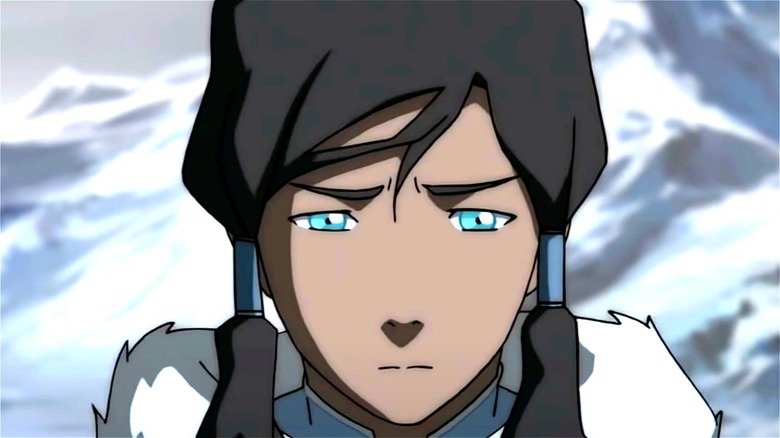
Wow. What a protagonist. Honestly, I’m not even sure where to start I don’t think there’s a single box of my physically non-existent checklist of Preferred Protagonist Characteristics that Korra doesn’t check-off.
For starters (and this is one of her biggest positives), she’s deeply flawed in the beginning of the show, and even throughout its four seasons. I’m not about to come out and tell you that Aang is a bad character, but he’s far from the most developed and nuanced of the first Avatar‘s cast. Korra, very decidedly, is not Aang, and she handles entirely different struggles than what he had to face, and in entirely different ways. Raised on a compound with no other children until she was 17, Korra is a mess of poor social skills, even poorer control over her temper, and no practical idea of the weight her title of “Avatar” carries.
Especially, as she comes to find out, when she finds herself in a world that progressively seems like it does not need an Avatar. Unlike Aang and the more simple worldstate he thrived in, Korra was born into a technologically-advanced society growing more modernized (and more separate from spirituality) by the day. Combined with a slate of villains who each believe they can, in their own ways, do the job of the Avatar better than the Avatar themselves (a fantastic thematic through thread for each season), and Korra is constantly barraged by feelings of inferiority and imposter-syndrome.
It’s no wonder Season Four deals almost entirely with Korra’s PTSD and depression (an extremely heavy, but relatable and critically crucial topic for a show with this age demographic). This show really puts Korra through the wringer, and it isn’t hard to constantly have your heart aching for the struggles she goes through (and I could write an entire article about the emotionally devastating closing shot of Season Three). And yet, your heart is just as likely to soar with excitement and pride as Korra battles back against demons internal and external, and more than proves her worth as both her own take on the Avatar and the continuance of an incredible legacy.
One could even say, a Legend…
But hey, that’s just my opinion!
 The Contrarian Corner