

QS stands for “Quickshot”, a series of short form review/preview/opinion articles.
I think the first RPG video game that I ever played was Paper Mario The Thousand Year Door, which came out in 2004 for the GameCube. I was a goofy little kid who just wanted to play a new Mario video game, and had no idea what I was getting myself into with regards to quests, and a plot bigger than just “rescue Peach“, and stats, and consumable items, and leveling up, and party members, and turn-based battles, and all that craziness!
Obviously, it’s a kids’ game at the end of the day (so it isn’t all-together impossible to understand, especially for a genre veteran), but it took me forever to wrap my mind around it all back then, and it was a really special experience playing it. I’ve enjoyed the game immensely ever since, and still re-visit it from time to time.
It is also, at best, an 8/10 game. That’s controversial among this game’s fanbase, so before I get disappeared by stalwart supports of this game, let me explain.

The Thousand Year Door (hereafter TTYD) is a game that goes to great pains to be accessible to all ages, while still staying within the guidelines of the RPG genre. As such, some of its compromises don’t pan out the way I think the developer’s intended.
The story is decent-ish for a Mario game, but that isn’t saying much. It’s certainly not bad, but it’s a far cry from a legitimate RPG like Final Fantasy or The Witcher. It also isn’t even the best Mario story, losing out to fellow RPG Super Paper Mario, and even some platformers like Super Mario Galaxy. And as any RPG fan knows, it really sucks to have a lackluster story. The writing is good, for sure (very sharp, witty, and clever), but the plot won’t stick with you long after the credits roll.
The battle system is kind of a Catch-22. It’s easily the most iconic and innovative area of the game. It’s turn-based battles but with action commands (button prompts you need to time with your moves, like QTEs before QTEs existed). And then there’s the whole aesthetic of being themed after a stage production, with battles taking place before a crowd and utilizing sets and props. It’s a very memorable battle system that doesn’t really get any less fun as the game progress.
But what it does get is a little stale. See, this game is easy. Really easy. And while the difficulty of a game has never been indicative of its enjoyability for me (easy games are fun, and hard games are fun, but extremes in either direction don’t influence my opinion of them), TTYD is, like, too easy. There are thousands of combinations of moves, equipable gear, and useable party members in battle, but a single combination can get the job done. Once you find a set-up that works for you, there is zero incentive to ever change for the entire game. It’s still fun, but it can get old.
Another side effect of being too easy is that it’s the sort of easiness that I don’t think the developers intended. It’s not like this game has a selectable easy mode or anything. It has a single designed difficulty, and I really don’t think playtesters pushed the limits as much as they should have. It takes minimal effort to discover over-powered and broken tactics, and it’s a breeze to beat bosses in two or three moves. Doing this skips dialogue, entire phases of fights, and so much more (which is why I really can’t believe it’s on purpose that players are allowed to do this).
And without a single doubt, the biggest issue with TTYD (and even its biggest fans can admit this one) is the backtracking. This game is riddled (and some argue ruined) by the worst backtracking of any video game that I’ve ever played. Because it’s not just unnecessary backtracking. It’s backtracking used as padding solely for the purpose of extending gametime with no benefit.
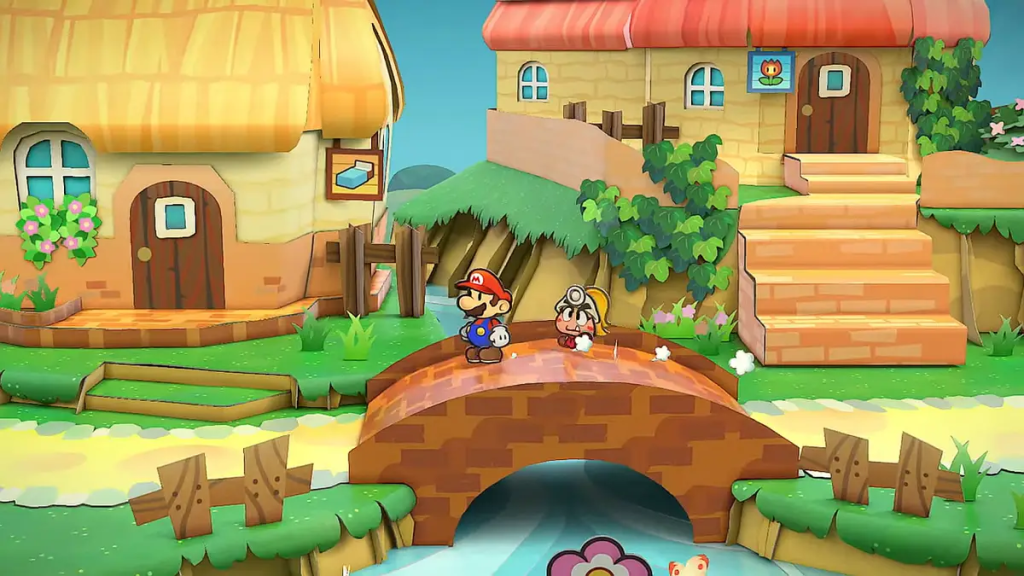
Let’s take the infamous Chapter 4, as an example. You run through a big forest to reach Creepy Steeple, confront the boss, and get your body stolen. You then return to town, partner with Vivian, and learn that the secret to beating the ghoul who stole your identity is back at Creepy Steeple. So, you run back and learn the secret, and then need to return to town once more to battle the ghost. Except, after realizing you know his secret, he runs away. Where does he run to? Creepy Steeple, necessitating a fifth trip through the forest (and forest that, I should mention, is filled with hard-to-avoid and hard-to-beat enemies that takes close to five minutes to traverse).
I could go on and on with examples of backtracking. Chapter 5 has a jungle that you have to run through about five times, Chapter 2 has a forest that you go back and forth in for a bit, and Chapter 7 has a notorious quest involving scouring the world for a missing NPC, requiring re-visits to each area of the game by using TTYD‘s limited and oft-useless fast travel system. Another huge offender is Hooktail Castle from Chapter 1, which isn’t so bad on the first visit in the story, but is the place you need to go for three side quests later on…in a game where you can only accept one side quest at a time!
It’s baffling, and it’s infuriating. My brain struggles to comprehend how the developer’s possibly thought that all this backtracking was fun. Because it isn’t, not even remotely. It’s a stain on the game…which is especially sad because TTYD is genuinely good under its flaws.
I know that could sound false given all I’ve been talking about, but TTYD is legitimately a very good game (8/10 really isn’t a bad score, friends). The combat is super fun even if it can grow repetitive, the world and characters are super charming, the writing is fantastic, the quick pace makes it very addicting to play, there are secrets galore to explore, and the soundtrack is one of the best in the history of the Mario franchise. It’s a solid game that Mario and RPG fans should absolutely check out.
And that rings especially true given that, less than a month ago, a full-on remaster of TTYD released for the Switch! And it’s one of the best remasters of all time! There’s a lot you can say about Nintendo, but their content is always high-quality. With this TTYD remaster, Nintendo has set a new bar for the quality standards of remasters, and it’s a tough challenge for future developers to rise up to!
Graphics have obviously been improved across the board, loading times have been improved, and the sound quality is enhanced. Standard stuff for remasters. Some improvements have been made with inconsistencies in the writing, some tutorials have been added or made more clear, the game autosaves at periodic points, and a modernized control scheme helps your controller to breathe (the less button-heavy GameCube controller had to double-up duty with certain buttons). Expected stuff, but appreciated.
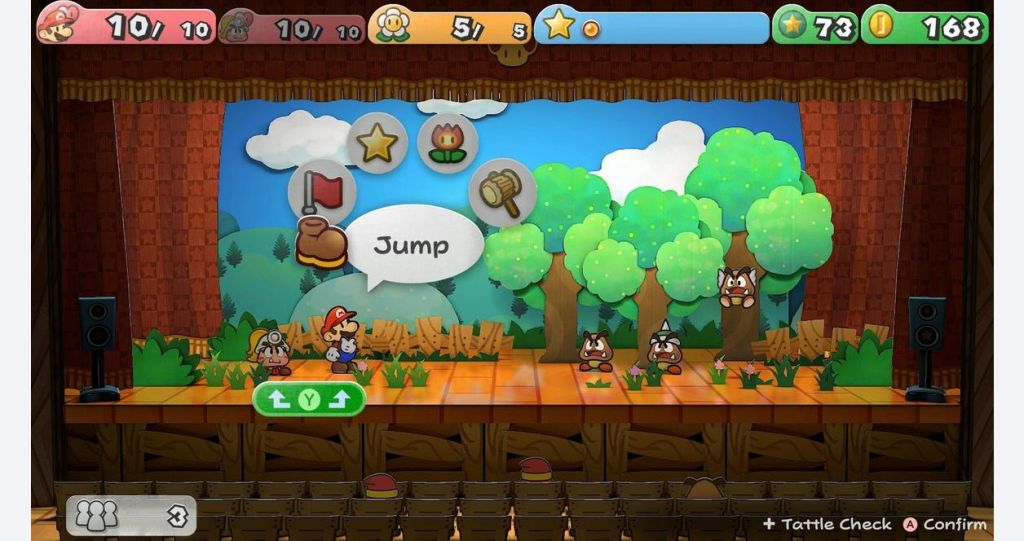
And then we move to the quality of life improvements. Coins are much more plentiful, making shopping and item usage easier to justify. You can run from battle with less difficulty, helping lessen the strain of re-visiting old areas. You can swap partners with a button tap instead of opening a menu. Goombella’s tattle log is easier to rely on, as are other context-sensitive pop-ups in battle. You can re-battle enemies in the Glitz Pit if you missed them while going for 100% completion. You can skip cutscenes you’ve already seen, like evolving party members or resting at an inn.
Backtracking was nipped in the bud rather fiercely, which is such a glorious change. A pipe was added to Creepy Steeple, cutting back on the forest trips from five to three. A spring was added to the Chapter Five jungle, allowing you to bypass three enemies on your trips through it. The fast-travel system was completely re-vamped into the amazingly convenient warp room, making completing quests and finding that Chapter 7 NPC a breeze.
Then, they even went and added entirely new content! Not all remasters do that, so it was amazing to see here! There’s a few new cutscenes and lines of dialogue sprinkled into the story, and pre-existing cutscenes now have dynamic camera angles. Biggest of all is the inclusion of two new superbosses in the post-game. They are tough as heck and more than a challenge even given this game’s reputation as being laughably easy.
But it’s the music where this remaster really blows all others out of the water.
See, most remasters tend to, well, remaster the soundtrack. Better sounding instruments, crystal-clear sound quality, that sort of thing. And this remaster definitely does that…and so much more.
To begin with, a large portion of songs are less remasters and more reimaginings. Leitmotifs have been sprinkled into relevant songs, and entire new chunks have been added to a lot of tunes. What is really crazy, though, is the fact that this remaster includes new music. A lot of new music! Like, nearly half of the soundtrack is brand new music created just for this remaster!
Cutscenes that previously re-used earlier music now get their own tracks. All of your party members now have their own theme songs instead of a generic party-member theme. Additional songs play in thematic moments of the story to heighten the drama or emotions. And, biggest of all, the battle themes. Oh goodness golly, the battle themes!
In the original game, there was a single battle theme for the entire game, and then each boss had their own theme (though if you fought a boss more than once, the theme was re-used). In the remaster, every single chapter has its own battle theme, taking musical inspiration for each new world to remix the standard battle theme (like strings in the ghost chapter, or big band jazz in the train chapter). Then, every single boss now has their own theme, including repeat fights! Lord Crump as three fights in the game, and all use the same leitmotif with dramatic but sensible alterations for each variation (his standard theme for the first fight, a high-seas shanty for the pirate battle, and a hi-tech jam for the sci-fi moon base clash). Obviously, the new superbosses also have unique themes that fit right in with the established musical identity of TTYD.
Even with all this gushing, I don’t think I can stress enough just how magical the remaster’s soundtrack is. It’s perfect, it’s incredible, and it has surprisingly become my single favorite thing about the remaster. And, for the icing on the top, die-hard OG fans can’t even complain, because a single button press in the menu turns all the old music on and off! I can’t imagine what kind of crazy person would miss out on all these amazing new tunes, but the option is there!
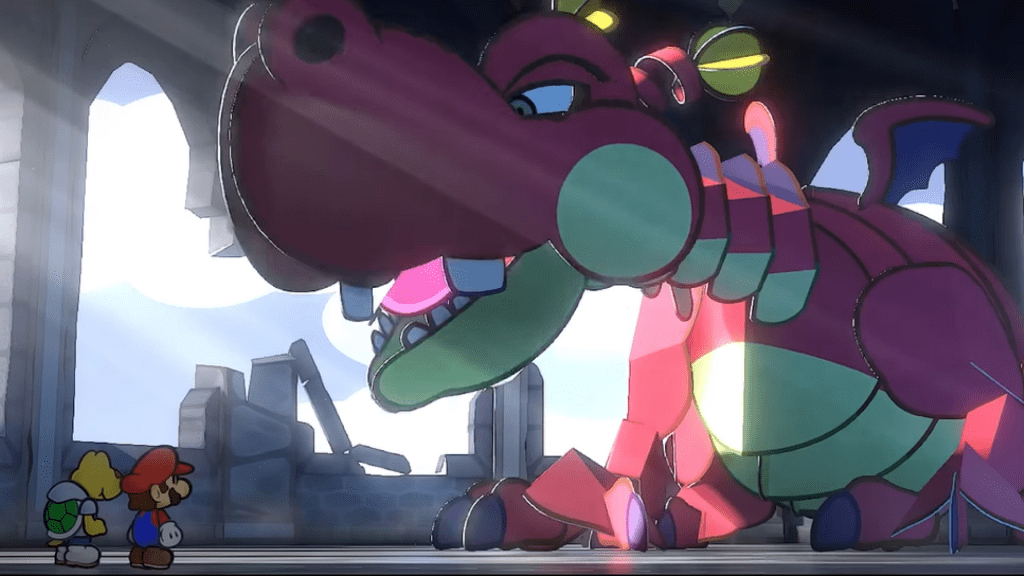
At the end of the day, it’s still Paper Mario The Thousand Year Door. Even with all the improvements, I can’t justify bumping the score up that much higher. But again, I must stress, it’s still a high-quality and very fun game that comes very much recommended. Give it a shot, and maybe Nintendo might finally return to making amazing Paper Mario games again (when is my Super Paper Mario remaster, Nintendo?)!
8.5/10
 The Contrarian Corner