

QS stands for “Quickshot”, a series of short form review/preview/opinion articles.
I’ve talked about my love for the YA trilogy ‘A Good Girl’s Guide to Murder‘ on at least a few occasions on this blog. It’s one of the biggest modern classics of the YA genre, and it has inspired waves of new murder-mysteries and thrillers that either follow in its footsteps or sometimes just straight-up copy the premise. It’s a fantastic trilogy (especially the unforgettable first book and the almost-nauseatingly-tense third book), and I hope people who have never read it give it a try some day.
But hey, if reading isn’t your thing, you can just watch it instead!
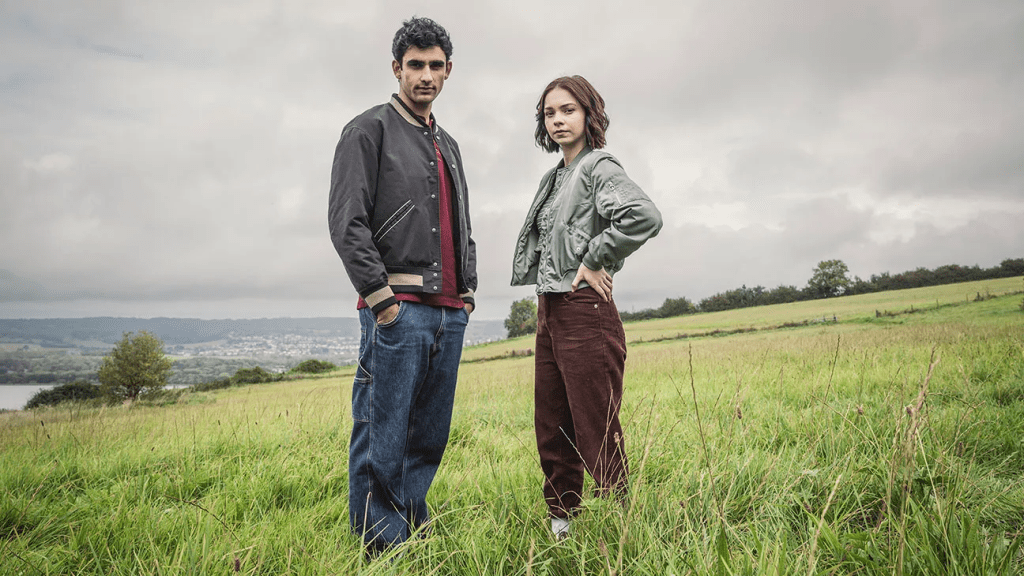
Released a few months back, A Good Girl’s Guide to Murder (available in the US through Netflix) chronicles the events of the first book, acting as a relatively faithful but also more streamlined adaptation of that novel. It’s six episodes long, each episode is about forty-five minutes, and it’s an exceptionally bingeable experience. It’s also, thankfully, quite good…presuming you aren’t a person of a certain disposition, that is.
Okay, fine, let’s get the annoying stuff out of the way first before we get into all the fun and enjoyable aspects of this show.
If you’re somebody who enjoys nitpicking every little detail of a television/movie adaption of a book, someone who stubbornly refutes the idea that adaptions can make creative choices, or someone who only enjoys adaptations when they are rigidly one-to-one recreations of the source material…yeah, you probably won’t like this show. You may enjoy some of it, but you’ll have a laundry list of ‘errors‘ and ‘mistakes‘ that the showrunners made in adapting this novel. To you, it’ll ultimately be a lackluster adaptation.
Now, I don’t want to tell people the right or wrong way to view a show…but what I will say is if you are the type of person that I listed above…I just sort of feel sorry for you.
Imagine being unable to enjoy something because you’ve got such rigid, unyielding demands/expectations that are so sky-high that they are ultimately not met, which means you are unable to enjoy a piece of media. I just can’t imagine being that nit-picky all the time. It just sounds miserable. Critiquing something is fine, and poking fun at plot holes can be worth a laugh, but full-on analyzing every single piece of media to some impossible standard just sounds exhausting. Is it really fun to consume media like this?
Now, do not think for a second that I am not a fan of the novels. I am. A huge fan, in fact. I love the trilogy dearly, so what I’m saying about this adaptation is not coming from a place of naivety. I’m just as passionate a fan of these novels as everyone else…and yet I’m still capable of divorcing this show from the novels. It’s not a one-to-one mirror of the novel, and so what? It’s an adaptation of the novel better suited to the screen, and despite what some people seem to think, these changes weren’t maliciously made, and these alterations weren’t lazy mistakes. The show is simply a different telling of the same story. It’s like if you visited a theater and saw Romeo and Juliet by three different acting troupes. It’s the same essential thing, but different in each iteration in unique ways!
Fun fact: the existence of new material in an entertainment franchise does not invalidate previous material. Do you prefer the original game to the sequel? Cool, that’s awesome! Is your favorite book in a trilogy book two instead of three? Awesome! Do you like the original version of that movie instead of the reboot? More power to you. Heck, do you still think of the old Star Wars material as canon instead of the Disney-era content? Good on ya, pal, keep enjoying it and having fun. News flash: no one is stopping you!
(Also, though I think this should go without saying, I’m not trying to give a blanket pass to bad adaptations. Bad adaptations do exist, brought about by creators who have clear disrespect/disinterest in the source material. My mind always goes to the live-action Artemis Fowl which changed the character of Commander Root from a man to a woman. This wouldn’t be a big issue if not for the fact that Root being a man made it so that Holly is the only female officer, and it added a theme of societal sexism to her character arc. With Root as a woman, this sexism angle is dropped, which leaves Holly missing a major character arc that isn’t replaced by anything to account for this. She’s a flat character because of this bad decision made for the adaptation.)
Ultimately, I think I’m just really exhausted by the modern-day internet ‘critic‘ philosophy of ‘it isn’t for me, thus it is bad‘, which has supplanted the actual correct philosophy of ‘it isn’t for me, thus it’s for someone else‘. There’s this pervasive idea that because you didn’t like something, that thing is objectively bad. This is ridiculous. There is a world of difference between how you personally feel about something and it’s objective quality. It’s called ‘subjectivity‘, or rather, ‘having an opinion‘. I’m tired of people trying to present their opinions as facts. It’s exhausting.
Okay…deep breaths. Let’s move on.
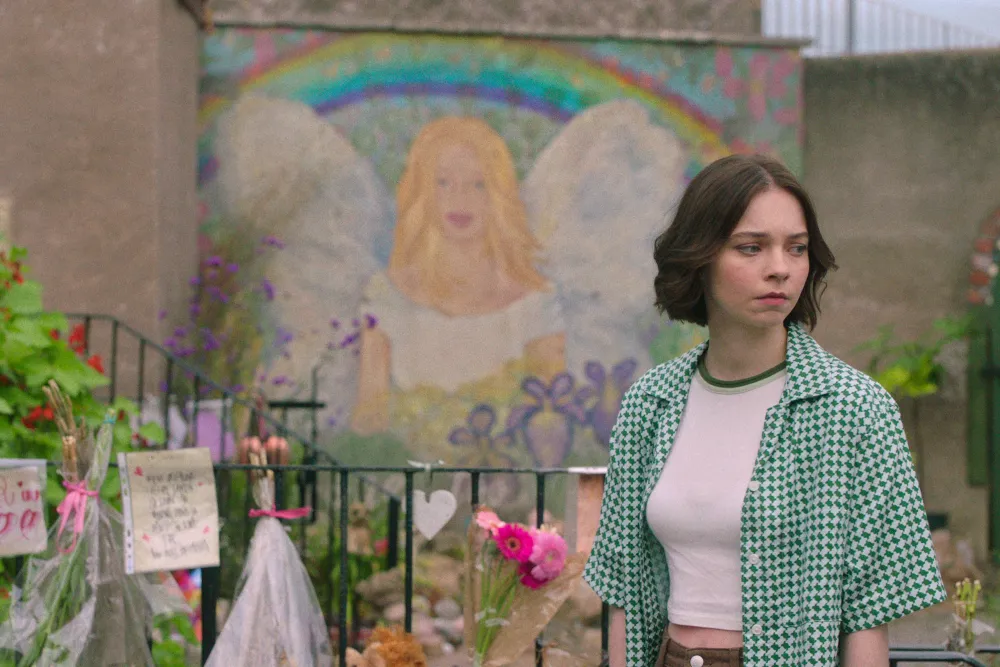
As I said, this show is super enjoyable, and I have a lot of aspects that I’d like to praise.
First of all, the plot is as engaging as the book’s was. It focuses on a high school girl named Pip who becomes convinced that a murder from five years ago (Andie Bell at the hands of her boyfriend Sal Singh) was not as open-and-shut as the police made it out to be. She believes Sal is innocent, so she makes solving the murder the focus of her end-of-year school project, teams up with Sal’s brother Ravi, and tries to make sense of the complicated web of evidence, testimony, and lies to get to the bottom of things. It’s some riveting stuff, but also not too high-level that you can’t watch it as a pleasant binge.
I also really have to mention the acting. It’s extremely solid across the board, and there wasn’t a single performance that I didn’t enjoy. Quite a few of the actors managed to wring a plethora of emotions out of me. Emma Myers as Pip is the highlight, without a doubt. I absolutely adored each of her scenes. Asha Banks as Cara was my second favorite performance, and then Henry Ashton (Max), Gary Beadle (Victor), and Matthew Baynton (Elliot) all did great too. Obviously, so did plenty of others who I didn’t mention here. Just a really solid cast.

The soundtrack, of all things, is pretty superb too. There’s a unique and effective collection of licensed songs that play in a few key moments, but there’s also some original pieces at work too. Especially in the last two episodes of the show, I really found myself (or my ears, perhaps more literally) hanging onto the leitmotifs playing in the background. Some catchy and tense tunes in this show, and even if its not the most hummable stuff, you’ll definitely get into the right mood while listening to it.
In terms of cinematography, I thought it was all really solid work. Good, varied camera angles, some very pretty shots. A few interesting techniques used during some flashbacks and a pulse-pounding underground rave scene. I liked all of the sets and the on-location filming. Really good costume design too, that lends the series its own uniquely authentic look and style. It’s a pretty comfy show, all things considered, though do keep in mind that it covers a few more-serious subject matters as it progresses.
The writing does a really good job of conveying the intention of the original novel but in a new form. Yes, some minor character changes have happened, but the creators were smart enough to never remove characterization without replacing it with something new to bolster the writing. It’s perfectly fine if you prefer the novel version of Pip (a bit more analytical, while she’s a bit more emotionally vulnerable in the show), that’s perfectly fine. But there’s nothing wrong with the show’s version of her, or of any other character. In fact, there’s been some trimming of some side plots in this adaptation that I genuinely think enhance the overall experience.
Yes, let’s quickly address the elephant in the room. A Good Girl’s Guide to Murder is famous for excellently merging mixed media into a single package. The conceit of the book is Pip creating a podcast as her final school project to figure out the mystery, and so typical prose pages are interspersed with hand-drawn note pages and transcripts of Pip’s interviews. It’s neat stuff. In the show, Pip doesn’t do a podcast at all, and outside of a few brief interviews, it’s mostly a story that takes place in real-time as Pip tracks down leads and tries to figure things out.
Is it marginally less unique because of this? Sure, yeah. Is the story ruined because Pip isn’t doing a podcast in this version? No, not at all. Honestly, I think it just would’ve been difficult to go for the podcast angle as a live-action show. Maybe if they did a radio drama adaptation of A Good Girl’s Guide to Murder, it would work, but as is I think it was smart of them to shift the storytelling device for the adaptation.
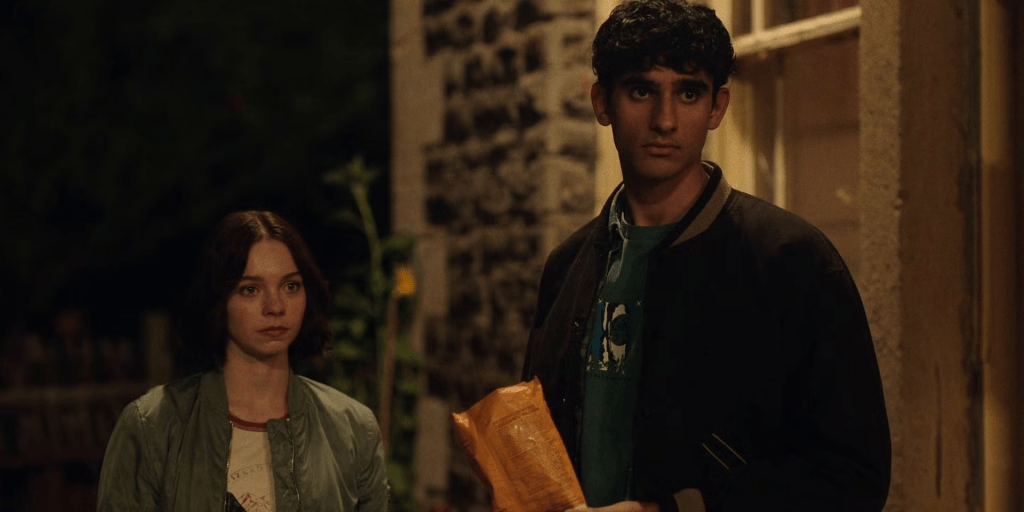
At the end of the day, Netflix’s A Good Girl’s Guide to Murder is some extremely solid, enjoyable television. If you like the original novel trilogy, please give it a watch with an earnest attempt to enjoy it. And if you’ve never read it before but have an interest in mysteries, thrillers, and the like, definitely check it out! It’s good!
 The Contrarian Corner