

For our next installment of ‘Remembering The…‘, we’ll be taking a chronological leap backwards in order to cover the console that I, in my own experience, played with second in my life. Like I mentioned last week, we won’t necessarily be moving in an order you might expect, just in the order that I found myself able to play with these systems.
So, let’s dive into taking a look at the Sega Genesis!
The Console
Sadly, there’s not a whole lot of special things to talk about when it comes to this console itself. I mean, just look at it. It’s a pretty standard ‘game console‘.

For instance, compared to the N64, it only has two controller ports instead of four. It also doesn’t have much room for plug-in accessories and the like. It’s compact frame is pretty neat, but there’s not too much special. Also, I have to note that the console doesn’t use AV cables to plug into televisions, which does limit the devices you can hook it up too. The completely black-and-white color scheme is pretty cool too, I guess.
Most of the console’s unique points come from the games themselves, and what the system can do with them. For example, the Genesis liked to use something called ‘Blast Processing‘, which was really just a fancy way of saying that Genesis games would never look better than the competitor’s games (SNES), but they’d run faster! Also, who can forget the iconic Genesis soundchip, which is just filled with crunchy bass and grungy noises that create some fantastic head-bangers.
The Controller
Maybe this is just me, but I’ve always found the Genesis controller to be exceptionally cool. Still not up to the level of modern controllers in terms of comfort and ease-of-use, but the Genesis takes the cake for unique functionality.
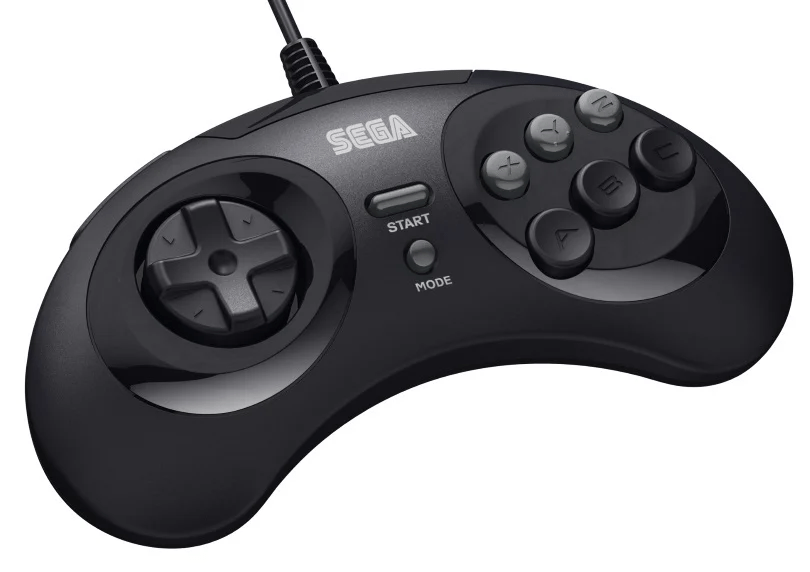
Just look at that controller design! Sure, the original models of controllers only had three buttons, but then there were the cool versions with six! What a unique layout for a controller, and the slight-curve shape of the controller actually evokes modern-day controllers and helps with the overall comfort layout. It’s also a controller that just gets to the point, making it easy for a gaming newbie to grasp the concept.
When on the three-button version, I do like the idea behind the A-B-C control scheme. It’s very uniquely Genesis, and the games for the system took advantage of this by pretty easily translating gameplay to this button layout. Again, as I mentioned above, simplicity is sort of the name-of-the-game with the Genesis, which makes for a refreshing take on gaming.
Cultural Impact
Say it with me everybody: Sega does what Ninten-don’t.
This catchphrase alone encapsulates the entire cultural impact of the Genesis. It can be hard to remember, but there was a massive gaming war between Nintendo fans and Sega fans back in the day, and it was all because of this duel between the SNES and the Genesis. SNES games looked better and sounded a little more clear in quality, while Genesis games were faster, more energetic and ‘mature‘, and had a more unique sound style thanks to the soundchip. Everyone who played games had their own opinion on who was superior, Mario or Sonic.
And speaking of Sonic, it can’t be understated how much of a behemoth Sonic is in the realm of gaming. I mean, the third Sonic movie just released a few weeks ago, and Sonic got his start here on the Genesis! Phantasy Star, Shining Force, Mortal Kombat, and more all had their genesis (sorry, couldn’t help myself) on the Genesis too. It’s a pretty heavy-hitter system, even if the games are rather quaint compared to today’s standards.
Favorite Games
(FYI, if you didn’t notice it last week, I’m trying to use this section to highlight some of my favorite games that also didn’t appear on my ‘Top 10 Nostalgic Childhood Video Games’ list.)
Admittedly, many Genesis games I played on PC ports, or in more modern collections and re-releases. Even still, they’re Genesis games through-and-through, so I’m mentioning them here anyway. And hey, some of these I did play with original hardware!
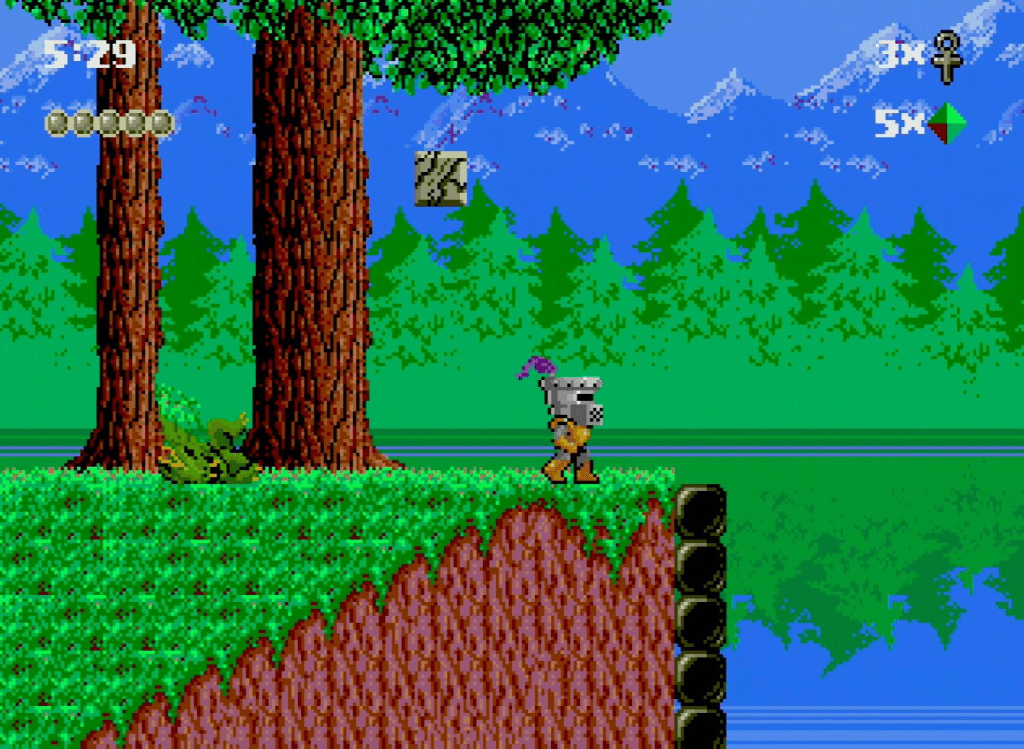
Kid Chameleon
Arguably the most sprawling platformer of all time, Kid Chameleon is not for the faint of heart. It’s unflinchingly difficult (to the point of basically being unfair at times), and it’s not interested in any of your lost time derived from Game Overs (if you run out of lives, it’s back to the very beginning of this long game with you). And yet there’s still something so addicting about this game, even in the face of the fact that it really doesn’t feel like it likes you as a player. There simply isn’t a platformer as secret-packed and replayable as this one.
Like, there’s over a hundred levels in this game, and on top of that there’s a mind-boggling array of twisting exits and pathways you can take through the game. The secret exit in Level 6 warps you to Level 10, but if you stick it out to Level 8 you can find a path to Level 30, not to mention the bonus area in Level 12 leading to Level 13 and 14 which can only be found through this method (I’m making these specifics up, but seriously, there’s a whole web-like map that connects it all). Add in funky masks that give you new powers, and some very hummable tunes, and you’ve got a great game. Maybe just play it with modern save states!
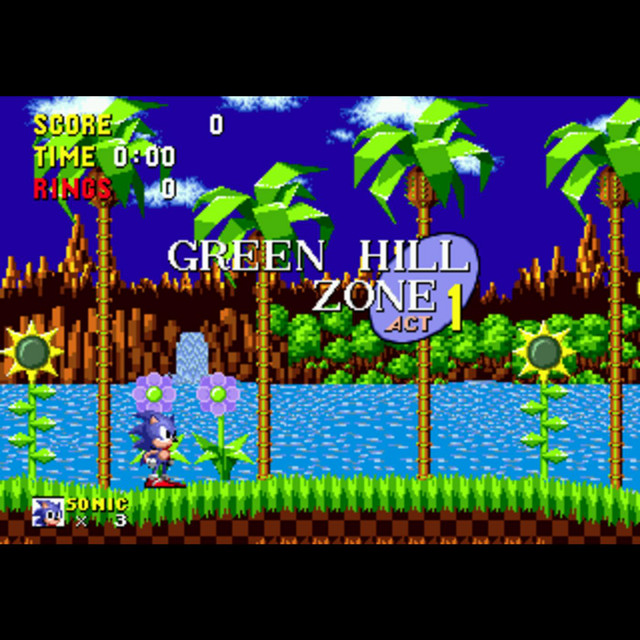
Sonic the Hedgehog
Look, while it may easily be the worst classic Sonic game ever made, there’s still something charming about this original installment and its inherent simplicity. There’s barely any zones overall, each zone has three acts (a decision all-but-dropped in future games), and the gameplay mechanics are kept to a minimum (you can’t even spin-dash for crying out loud, that’s practically Sonic’s whole shtick). And then there’s whatever trippy drug mess is going on with the nauseatingly-spinning bonus stages!
But, you can still see the vision here. Rolling around on loops is still fun, collecting rings is still addicting, and busting baddies to free the innocent animals trapped inside is still rewarding. Doctor Robotnik feels more menacing than he does in later installments, and the traps and obstacles you have to overcome here are some of the hardest around (Labyrinth Zone, anyone?). Sonic 2 might be the better game in every conceivable way, but this first installment still got some things right.
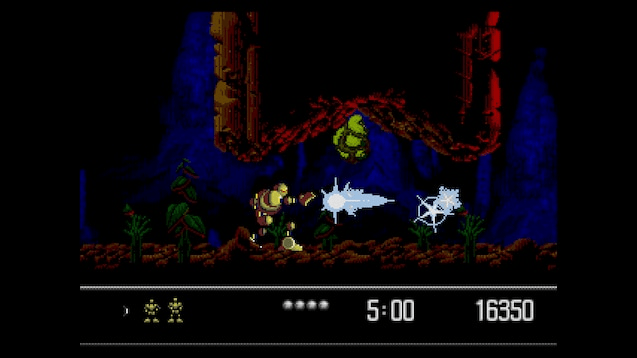
Vectorman 2
I won’t try to say that I’m any good at this game, but Vectorman 2 is still consistently one of the first games I think of when I think of the Genesis. I think it just has a very Genesis-core style to it, from its grungy graphics to its crunchy tunes, to it’s ‘cool space dude shooting aliens’ vibe, Vectorman 2 is extremely 90s-coded. It’s also a bit of a mess of a game, but that’s kind of the charm too!
In my childhood, I was only able to progress via a level-skip cheat code, though nowadays I’ve played the entire game through the correct way. It’s a journey-and-a-half, though, owed to the confusing maze-like level design and unrelenting enemies and bosses. But you’ve got a plethora of weapons and transformations on your side to even the odds, and blasting screen-flashing explosions left and right is certainly really fun, as is controlling Vectorman’s very weighty self.
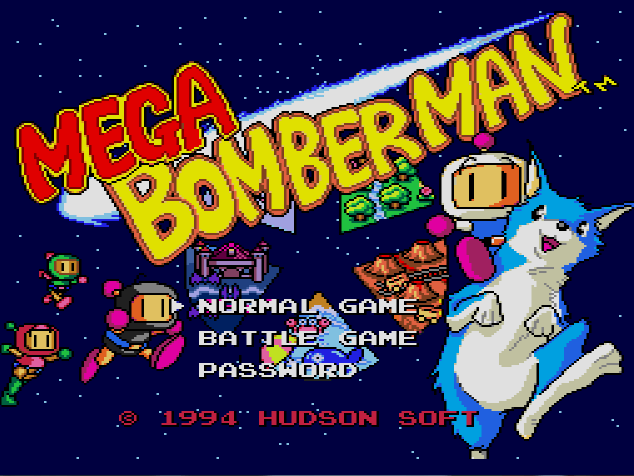
Mega Bomberman
By far the Genesis game I put the most time into on its original hardware, with many a fun afternoon passed duking it out with friends and family in this multiplayer classic. I mean, it’s classic Bomberman! You run around on grids, drop bombs to try and trick/outsmart your opponents, and hope to not get blown up yourself! It’s a formula that’s worked for practically the series’ entire existence, though for my money this installment nailed it the best.
I think it’s the small details the win me over the most here. There’s a huge array of maps, as well as goofy customization options to change what your character looks like in battle. Then there’s fun new items too, and I especially love the variety of little bunny/kangaroo buddies you can hatch from eggs and ride around, each with their own powers. And if all of that still isn’t enough for you, there is an entire full-length story mode complete with sprawling levels and challenging boss battles!
Genesis Memories
Basically paired right alongside the N64, I have a lot of early, formative gaming memories about the Genesis.
I remember constantly forgetting and then re-remembering the infinite lives cheat code for Sunset Riders, that makes that incredible but merciless game actually doable! I remember mashing buttons as the goofy long-armed skeleton character Bones in Double Dragon V: The Shadow Falls (ogre-like Jawbreaker gets an honorable mention). I remember falling into watery Tibetan pits and being crushed by clockwork gears in Young Indian Jones. I remember having no idea whatsoever as to what I was doing as a young’un trying to wrap my head around Star Trek: The Next Generation.
I remember zipping around at fast speeds and comically splatting onto the ground in the Looney Tunes adventure Desert Demolition. Speaking of deserts, I remember trying a failing to protect my troops as an apache helicopter in Desert Strike. I remember consistently crashing on the big loop in Hard Drivin’, and dying somewhere around level two of the beat-em-up Comix Zone. I remember finally completing the lengthy runtime of puzzle-platformer Flicky, and of course I remember returning to Shining Force years later to finally save the world from darkness.
Conclusion
At the end of the day, the Genesis is a lot like any other older video game system. It’s got a lot of incredible games, a whole lot of charm, and a musical styling all its own. But it also, of course, comes with the caveat that all retro games do, which is to make sure you know what you’re getting into (tough-as-nails games, unrelenting unfair difficulty, constant Game Overs, relatively simplistic gameplay, and the like). If you can look past that, the Genesis shines. Or, you know, use modern emulation or the Genesis app on the Nintendo Switch to access nice features like save states!

 The Contrarian Corner