

(Writing Talk is a type of short-form article centered around conversations about various aspects of writing/authorship. These aren’t usually long reads, but I think it’s fun to jot down some of my thoughts about the writing process as someone who loves the art of it all.)
(If the title of this article is confusing, trust me when I say it’ll make more sense as we go along.)
In this installment of Writing Talk, we’re going to be dipping back into a topic that is of great importance to me personally: the gradual degradation of media literacy and reading comprehension in our modern era.
I’m not sure if cell phones and dwindling attention spans are to blame, or just a society-wide increase in anger, snap judgements, and a profound lack of empathy and attempts to understand before being consumed by emotions. Probably a combination of all of these traits, but a side effect of it is that people’s media literacy has just been declining more and more with each passing year.
Someone will play a Metal Gear Solid game and say that it isn’t political (you know, the famously anti-war game series), or will read Animal Farm and think it’s really just about some pigs and a horse. For someone who cherishes literacy and storytelling as much as I do, I feel like it kills a piece of my soul everytime I see this complete and utter failure to actually engage with a text and understanding what it’s trying to say.
One of the areas, in particular, where this really specifically bothers me is with hateable characters. That is, characters who are written to be hated. Not to be confused, of course, with characters who you end up hating because of extenuating circumstances, usually a fault of the writing.
Here, I’ll explain both types, then give a more in-depth example of each.
A hateable character is someone who is written to do heinous or evil things…and yet you just can’t bring yourself to hate them. This trope is frequently described as “Love to Hate“. Sometimes villains, sometimes morally-grey characters, but always entertaining even when they’re doing things that are objectively despicable. This trope is even easier to pull off outside of the realm of books, because you can add the charm and charisma of an actor behind these characters to make them just that much more appealing.
Of course, there’s a secondary type of these hateable characters, and that’s actually the type that speaks more to me on a personal level. These hateable characters are ones that the audience honestly doesn’t really like…but that’s the point. The are evil, or misguided, or blinded by loyalty, or any other number of negative traits…but that’s intentional on the part of the author. They are written this way in order to serve the narrative, advance the story’s theme, present a reflection of our main character, or any other purpose. You, the reader/viewer, end up hating the character, but you are meant to. That is the appropriate reaction, not some fault of the writer. You hate how the character is because they are written well to evoke that feeling in you.
As for hated characters, it’s essentially the inverse. This is a character that the author wants you to like, sometimes rather fervently wants you to like. And yet, through some sort of combination of factors, you don’t end up enjoying them at all. You end up hating a character you were meant to like, and therein trigger a sort of cognitive disconnect between yourself and the author. Depending on the significance of the hated character’s role in the story, this can severely impact your comprehension and enjoyment of the entire plot and themes the story is trying to convey.
Let’s get into more specific examples, starting with a recent example of a hated character.
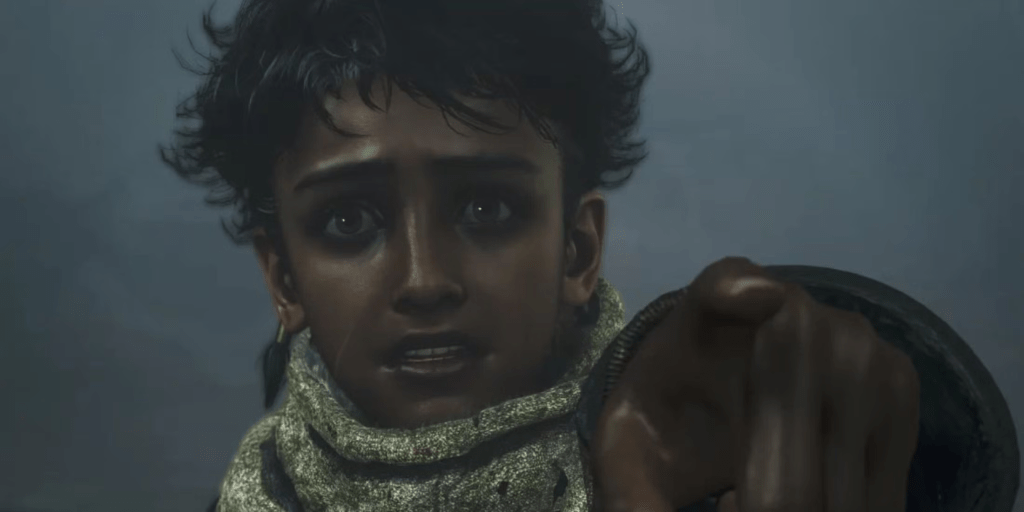
This is Nata, from the recently released Monster Hunter Wilds.
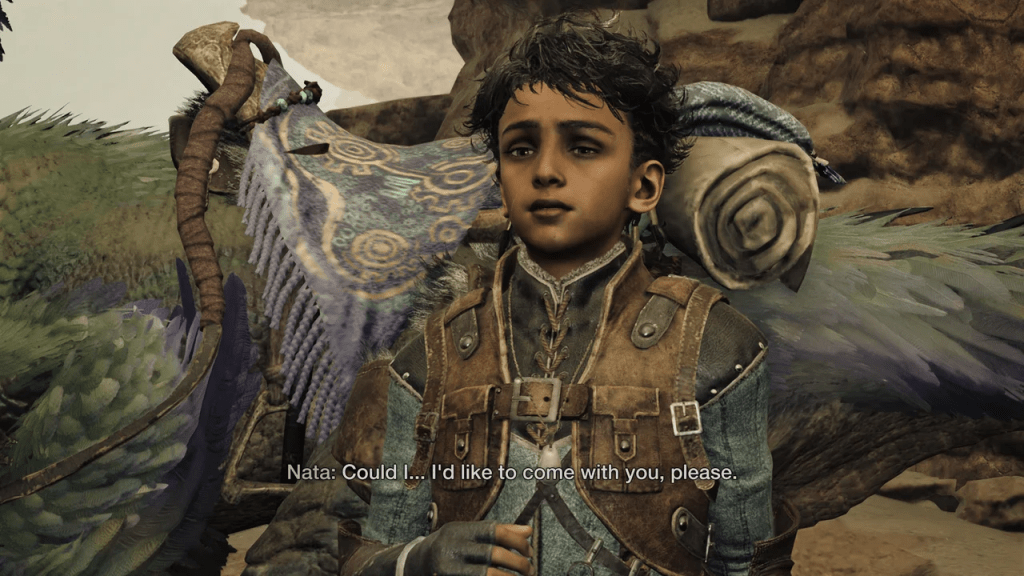
He’s basically the main character, as while your personally-customized Hunter protagonist is the one doing everything, he’s the one emotionally tied to the plot the game is trying to convey. Problem is, he’s an absolute mess, writing-wise. He’s whiny, he makes rash decisions, he’s impulsive, he’s reckless, and he develops a strangely concerning obsession with the artificial death demon monster at the game’s end (trying to make some flabbergasting argument that he and that monster are similar because they’ve both been on ‘journeys‘).
Now, I don’t want to blame him too much personally. The game’s breakneck pace is primarily to blame for Nata falling flat as a character. Also just the general nature of Monster Hunter as a series means characters never really shine too brightly. Then there’s the fact that he’s a kid, which explains his negative traits…however I won’t let that get him fully off the hook. Children characters are always tricky, but they can be handled by showing how they learn and grow (often with the influence of an adult/role model). Nata doesn’t get this, and so he ends up being someone who is all flaws and zero growth, despite the game’s bizarre insistence that he’s changed and improved, or some such nonsense.
What you end up with is a character who is grating and annoying, and those downsides are intensified by the realization that the game clearly does not mean for you to feel that way about him. There are these grand moments, these sweeping scenes with soft piano music playing that are clearly attempting to squeeze out some sort of emotion from the player…but it doesn’t work. They have no connection to Nata, aside from irritation. The writers have failed the players and they’ve failed Nata, producing a hated character.
Now let’s turn to a specific example of a hateable character.
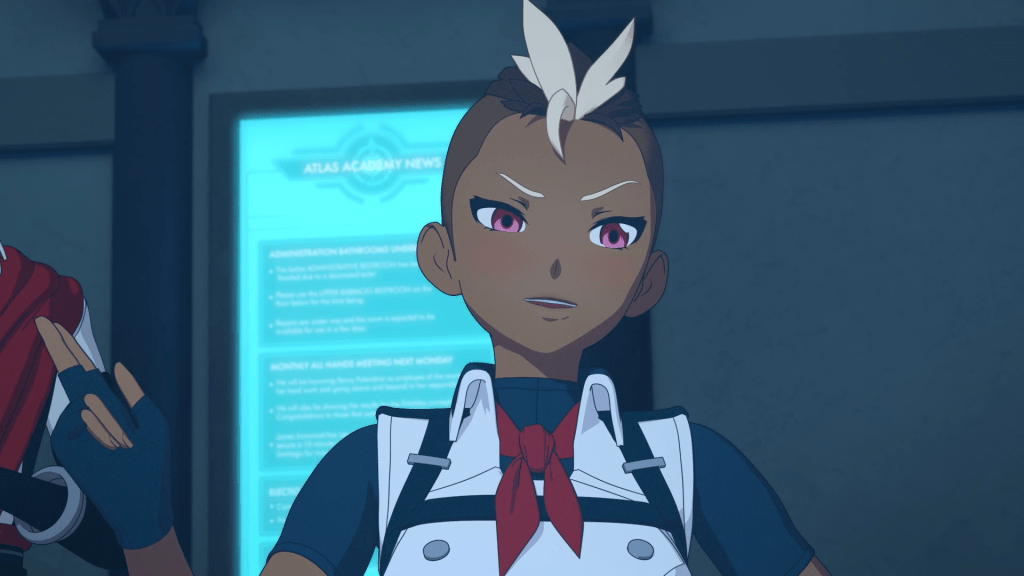
This is Harriet, from the latter seasons of RWBY.
She’s a supporting character who turns into a major antagonist in Volumes 7 and 8 (particularly in 8, as she really steps up into a central antagonist role, especially in the climax). Harriet is confident, cocky, extremely talented at fighting…but she is loyal above all. Blindly so. Zealously so, even. Harriet’s defining character trait is being obsessed with following orders and never questioning authority, no matter what lines she has to cross in order to do so. If a superior commands her to do something, she does it, and this puts her squarely at odds with our main heroines and their allies once they are branded as traitors and Harriet is tasked with hunting them down.
Harriet is the type of character who evokes a lot of passionate responses from viewers. Online discourse gets pretty heated too. I’ve heard a lot of comments along the lines of “ugh, she’s so annoying“, or “why can’t she just talk things out“. The hate-levels for her character on the internet are sky-high. I’d honestly imagine most viewers come to dislike her character. Her stubbornness can be grating, and her constant refusal to face facts in lieu of just blindly following orders is legitimately exhausting. You just want to reach into the screen, grab her by the shoulders, and violently shake her around until she snaps out of it.
But here’s the crux of it, friends: You’re supposed to feel that way.
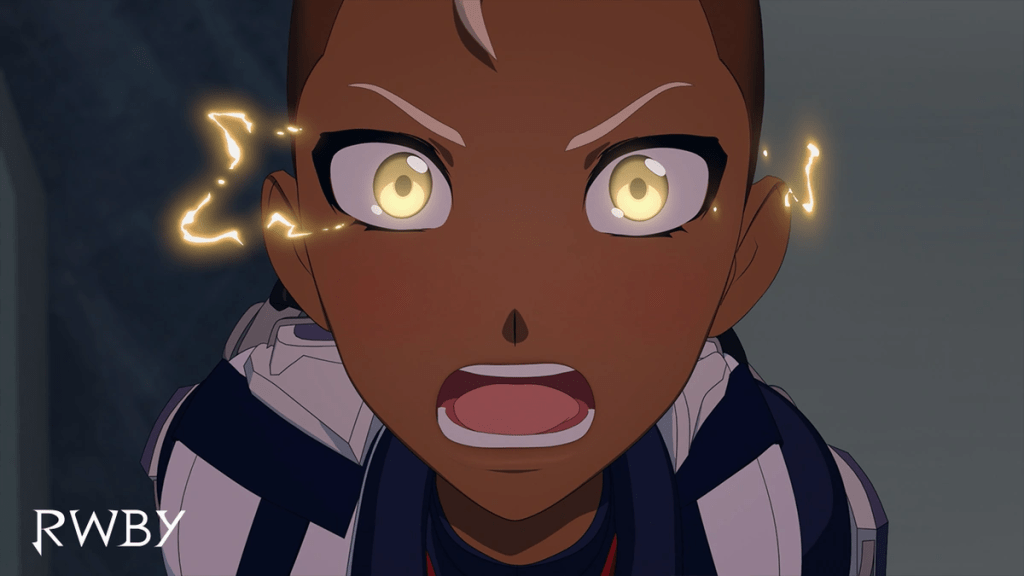
If you hate Harriet, you’re feeling the right emotion. Unlike Nata, whose writing-based failings led to him being disliked even though you were meant to like him, Harriet was designed intentionally to be hated. For those of you out there who hate Harriet…congratulations! You’re feeing the right emotion…maybe. See, here is where it gets tricky. There’s a difference between hating a hateable character because that’s what they were written to evoke in you, and hating them because you erroneously blame the writers for some sort of perceived shortcoming.
I’ll put it another way, and reveal another truth that often goes forgotten in our modern era when it comes to storytelling: Happiness is not the only emotion a story is meant to convey.
It’s okay to get angry when reading a book. It’s okay to get sad when watching a movie. It’s okay to feel passionate about a world and it’s characters when playing a video game. And it’s certainly okay to feel hatred towards a fictional character while watching a show (within reason, para-social relationships are no joke). Stories are meant to showcase the entire spectrum of emotion! The recent trend of stories that play it safe, simple, and inoffensive are killing creativity (and by ‘inoffensive‘ let me make it 100% clear I’m talking about stories that push emotional/thematic boundaries, I’m not giving my consent to stories that actively harm people or push insulting narratives).
So, what does this mean for Harriet? It means that she’s a character who was written to be hated, and that’s a good thing! It’s okay to hate her! The story wants you to! It’s kinda the whole crux of her narrative arc!
Harriet’s zealotry contrasts with both the main heroines, and with her solider partner, Winter. While Winter and the others slowly come to realize the folly in blindly following orders, Harriet stubbornly persists down this path. Her decisions show the audience the consequences that await someone who makes the mistakes she does. And why does she do this? Because she’s angry and upset about the death of her friend (and maybe someone she had feelings for, her old commander Clover). Clover died because he prioritized orders over the greater good too, and so Harriet blindly keeps doing the same because to do otherwise would admit that Clover was at fault for his own death, and she can’t reconcile the grief of that realization compared to the rest of her typical temper and recklessness.
(You know, maybe I just oughta do a Harriet U.I.C.S. one day…)
And you know what else? It’s okay to dislike her even if you acknowledge that she’s meant to be hateable. If that’s not your jam, that’s fine! It’s okay to dislike things, and it’s okay to like things too! Not everything in this universe has to be blandly acceptable to all people all at once! Some people don’t like Romance films, some do. Some people enjoy comic relief characters, some don’t. If something doesn’t appeal to you, that isn’t a failing on the part of the creators/writers. It’s called personal taste! Just accept something isn’t for you and move on!
I’ve now gotten a little off track, but this is an area I really am passionate about. As someone who habitually finds themselves enjoying these hateable characters (probably because, as a writer, I can really respect the difficulty that goes into crafting such a character, because it is a really tricky balancing act), it really exhausts me to see people rant and scream and foam at the mouth online about “this character sucks so much” or “I hate this character, they are written so terribly“. That lack of media literacy and understanding really hurts me, as a writer.
Hopefully, little by little, we can help right this ship. If even one person reads this article, reflects on it, and starts asking themselves “you know, maybe I’m meant to feel this way about this character” the next time they’re tempted to get angry, I’ll consider my work here successful.
Keep on writing, friends!
 The Contrarian Corner