

Well, those wizards over at Nihon Falcom didn’t drop the ball.
I’ll admit, I wasn’t completely convinced they could keep it up. Trails Through Daybreak, despite being the eleventh mainline entry in the long-running JRPG series, was a shockingly refreshing blast of engaging gameplay, fantastic characters, and surprisingly great writing. This series is known for faltering with the sequels though, so I went into the recently-released Trails Through Daybreak 2 hoping it would be at least half as good as the game that proceeded it.
And is it better than the original? No, I guess not. But it’s really dang good anyway, and not at all the drop in quality I’d been fearing!
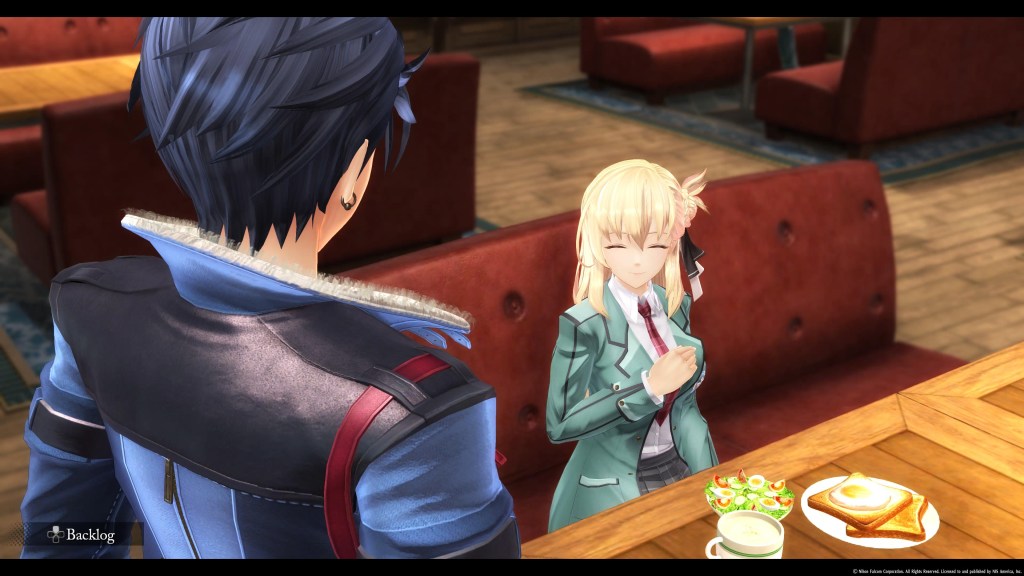
The game picks up right where the original left off, about a few months down the line (just to give time for the dust to settle since the climactic conclusion of the previous game). The short break allows for a bit of the status quo to shift for our characters, and makes it so that when we meet back up with the returning cast it still feels fresh and exciting, and not long a drawn-out foregone conclusion. It does a good job of reintegrating the player to the characters, the world, and the plot threads left dangling from the first installment.
There’s a big shake-up to the plot this time, which is that we follow two perspectives instead of just one, and each act of the game is broken up into chunks because of that. One the one side we follow the original game’s protagonist, Van, as he continues to help Agnès look for the magical Macguffins her grandfather left behind (and rest assured, Van and Agnès are still the main characters of the story). But on the other side we follow Nadia and Swin, two characters from Trails Into Reverie, who pick up hometown protection duties from Van after he departs. I adore Nadia, so getting to see her again was awesome!
Actually, let me just take this moment to praise the characters in general.
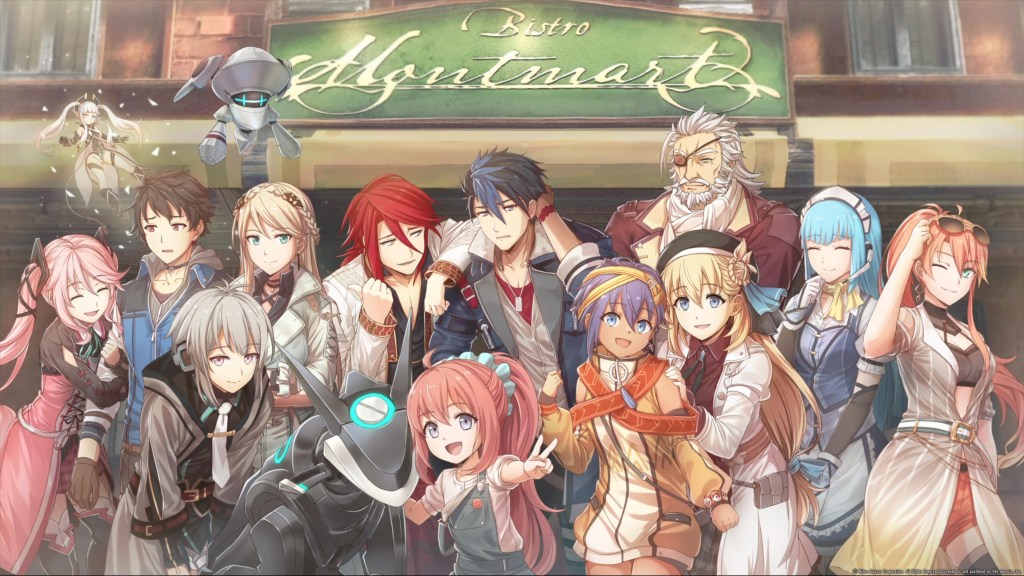
The original Daybreak already had an extremely good cast, and I’m happy to report that that level of quality has continued into this sequel. Van is a really solid protagonist, and while he doesn’t have as much of a central arc as he did in the last game, he’s still extremely entertaining. Agnès continues to be fantastic, and far outpaces many of the previous female leads who have always lagged behind their male counterparts in this series. Nadia is as great as I remember her being in Reverie, and my personal favorite party member, Feri, gets a whole lot of chances to shine in this game, alongside a phenomenally unexpected moment in the late game.

There really isn’t a single lacking character in the entire game, both major and minor. Everyone feels like they have a purpose for existing, and everyone is given at least some sort of minor character arc or notable moment to shine. Even characters introduced late in the first game get their chance to grow in this installment. I was worried that trying to add Shizuna, Celis, and Leon to the main group would lead to them feeling underdeveloped, but they are all pretty fantastic actually, especially Celis and (much to my begrudging admittance) Leon. Quatre, who I felt middling towards at the end of the original Daybreak, also finally gets his big hero moment too.
Really, a lot of this has to do with the writing. I don’t actually know the background specifics here, but speaking from an outsider’s perspective, it really feels like the developers brought on a new writer to inject some much-needed freshness to the series with this Calvard Republic arc of the story. There is just some quality to the writing that feels more improved, more mature, more nuanced. Yeah, some tropes and clichés still exist (power of friendship speeches, and all that), but it’s nowhere near as noticeable as it’s been in previous games. The writing is just a step up across the board.
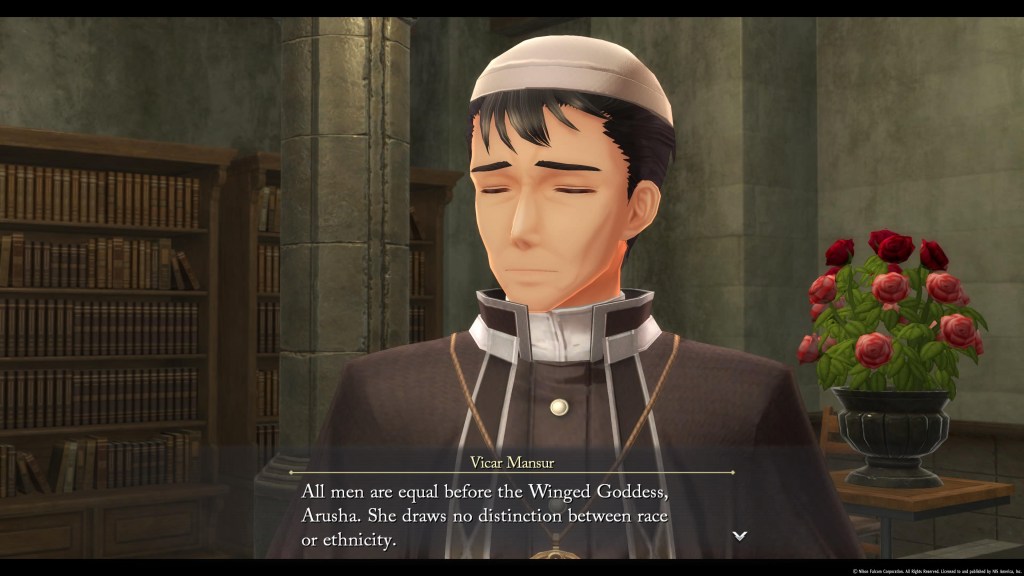
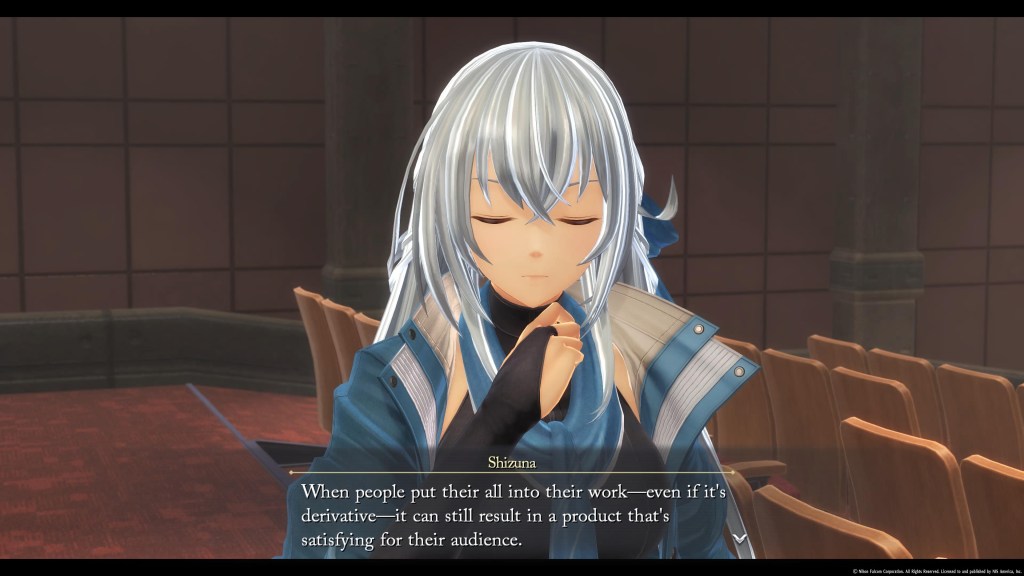
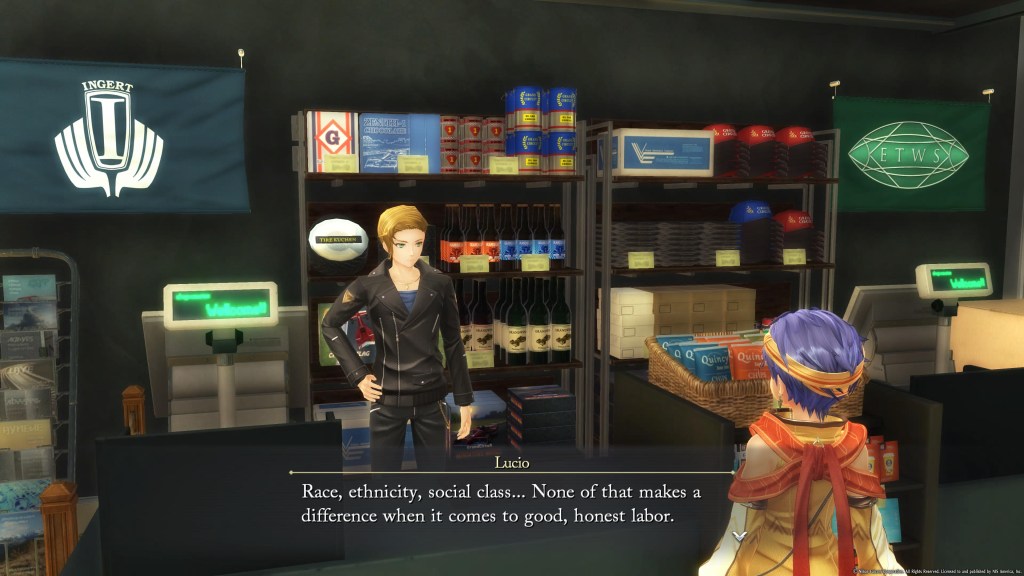
I know a story isn’t instantly improved by talking about more complex topics and covering darker themes, nor do I think everyone will always love those sorts of darker stories. But Daybreak 2 (and the first Daybreak) do cover those more mature themes, and I appreciate it greatly. For as much as I love most JRPGs, there’s always some small kernel of me that recognizes they are ultimately pretty silly. I don’t really feel that way about these Daybreak games. They’re pretty hard-hitting, they don’t pull many punches, and a lot of the ground they cover is pretty topical, which I do love to see.
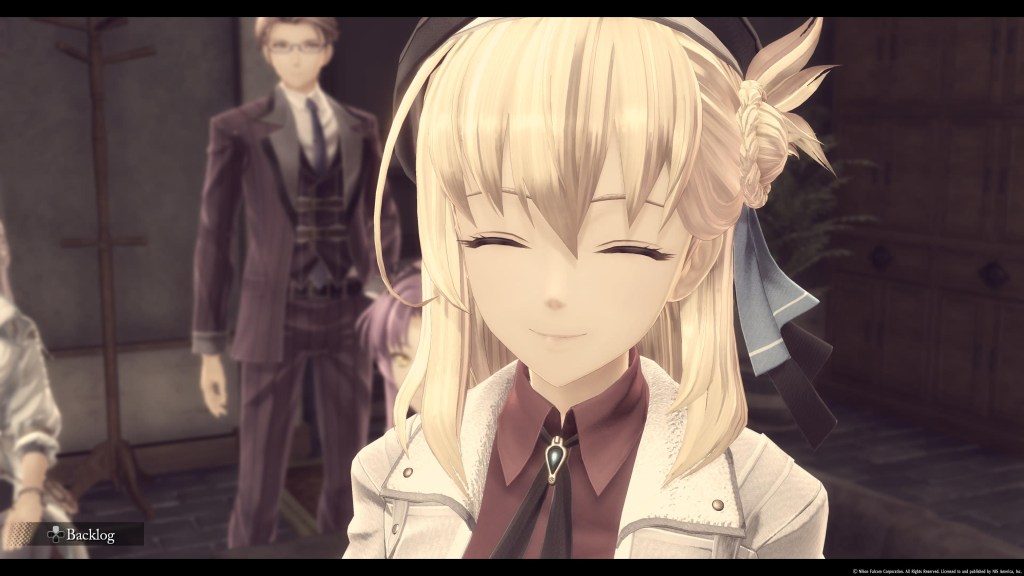
Here’s some screenshots of a few of my favorite conversations:

Another thing that really elevates the characters and the story is the voice acting. Now, Trails games have never had bad voice acting, but yet again I have to give the nod to these Daybreak games for managing to still stand even a notch higher than what came before them. There isn’t a lackluster vocal performance amongst the cast, and given the more serious thematic subjects being discussed in game, the cast is given a lot more to work with in terms of emotional moments or showings of vulnerability. This goes the extra mile in endearing the cast to the player. AmaLee’s performance as Agnès particularly impressed me over and over again, as does Howard Wang’s job as Aaron. I don’t know how that man manages to sound so effortlessly hilarious with every line delivery.
But enough of all that, right? This is a game, so it’s gotta have some gameplay, right? Yeah, it does, and yeah, it’s still really solid. Like all Trails games, the combat isn’t my favorite part of the experience, but it’s plenty enjoyable.
The first Daybreak introduced the ability to engage in real-time action battles, which is super fun. This game obviously continues that trend, but beefs it up a bit by introducing a counterattack system. In the first game, perfectly dodging an enemy attack was really cool…and it did nothing. In this game, it opens the enemy to a counter that deals massive damage, which is really rewarding. Also, when you transition from real-time to turn-based, enemies that you stunned in the real-time portion of combat can now be devastated with unique combo attacks between your party members, which are flashy and exciting.
The rest of the gameplay is your typical Trails affair, and while I’d imagine the formula gets old if you tried to binge the entire series in a row, the breaks between game releases allow for it to not get too suffocatingly stale. You have periods of free time where you wander around, talk to every living NPC who you can corner into a conversation, do a few side activities, hang out with your party members, and complete side quests (and I use the word “side” pretty liberally here, as you’re really kinda expected to do everything in the game). And then you alternate with chunks of story cutscenes, dungeons, and boss fights. Rinse and repeat until you beat the game.
The game does falter a little bit with a few of the minigames they decided to include this time around. The fishing minigame is largely functional, but repetitive. The hacking minigame is actually super fun, but visually bland and with a really bad camera. The card-playing minigame is a nightmare, makes no sense, and is entirely luck based. The stalking minigame (where you follow a suspicious target and try not to be seen) is neat in theory, but slow and tedious in execution. Lastly, the basketball minigame (why is there a basketball minigame) is…okay, I guess? It’s super easy and mostly inoffensive, but also very forgettable.
At the end of the day, this is a fantastic game that I only rank slightly lower than the first Daybreak because the overall plot isn’t as strong. The first game stands completely on its own, while this second game can feel a little bit like a middle chapter between its larger first part and an even more massive third part. It’s still a contained story (which I greatly appreciate), but it’s big moments didn’t quite hit as hard as they did in the first game. Of course, by nature of this being a part of the very-high-quality Trails series, even this game is still leagues better than nearly any JRPG out there!
9/10
But hey, that’s just my opinion!
 The Contrarian Corner