

Nostalgia is a very powerful thing, and it’s not exactly hard to see why. Memories themselves are a powerful thing too, particularly happy memories. The happiest memories burrow their way into our brains and stay there, sometimes forever. Years, or decades, later we reflect back on those happy memories and smile. Sometimes, those happy memories even compel us to pursue the same things that brought us joy back in the day, but in the here-and-now present.
You can be nostalgic for a television show you used to watch on Saturday mornings (as I feel about shows like Pokémon and Ben 10). You can be nostalgic for an after-school snack you used to chow down on as fuel before your homework (I will forever mourn the loss of Cheddar Fetti). You can be nostalgic for a movie you used to binge watch a million times until you ran the dang VHS tape into little more than dust (I can’t tell you how many times I’ve watched Bionicle: The Mask of Light). You can be nostalgic for the toys you’d spend hours playing with on long days during summer break (the aforementioned Bionicle toys, or these little skeleton guys I had).
You can also, of course, be nostalgic for video games. Except…this is where it gets tricky.
Because you can’t exactly “improve” a show, or a snack, or a movie, or a toy. You just make new ones (or reboots). But video games are constantly evolving and changing with new hardware and improved design techniques, literally becoming (technically speaking, at least) “better“.
So if that’s the case, how they heck are you supposed to discuss retro video games?
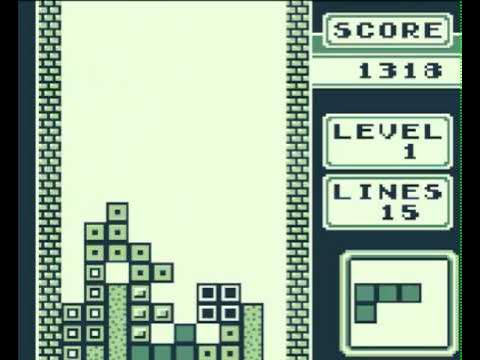
Think about some of the original variations of Tetris, like on the Game Boy. Simplistic graphics, minimalistic music and sound effects, and no frills. Compare that to the more recent iterations like Tetris Effect. Beautiful visuals, breathtaking music, plenty of bonus game modes…but it’s still Tetris at its core. Same basic gameplay ideas. It is therefore just an evolved version of what came before, and thus logically the superior version…right?
But what about people who still prefer the original? Uh oh.
See, nostalgia doesn’t often care about things like “technically better” or “logically an improvement“. With movies/shows/books, discussions are easier because this angle doesn’t play into it. People can like whatever they like. But with video games, an entertainment medium that demonstrably showcases growth and evolution in technology and design, rationalizing liking something that is “logically worse” can be a hard topic to wrap your head around. I should know, I’ve struggled with it for a long time (just ask my brother, who tends to like older games compared to my own tastes).
Well, there’s plenty of reasons someone might prefer an older, more retro video game. Many of those reasons are nostalgia-infused, of course. Perhaps a certain game brings back great memories, or it was a cherished/formative moment in the development of their love of gaming. Maybe someone has gotten so good at an old video game over years of playing it that they find the hypothetical obstacle of having to learn a brand-new game too high a mental barrier to overcome, and thus just prefer to stick with what they know. Or, maybe someone just likes the way older games were made, or the feelings they evoked in the player.
These memories tend to trump the more logical/rational arguments one could make about newer games on fancier hardware. Someone might not care that a game looks prettier or plays smoother, because the way their old game functions is totally fine to them. They might not be impressed by bonus game modes and optional features when the more limited content of their nostalgic favorite has never been disappointing to them. They might not be convinced to try something new when they can just turn back to their old comforts.
There’s absolutely nothing wrong with this, of course…but there’s an interesting trend I’ve noticed in certain corners of the internet. A trend of the subjectivity of nostalgia-fueled love of retro games being supplanted by an attempt at conveying these opinions as objective fact.
What do I mean by this? Well, just the other day, someone I subscribe to on YouTube posted a 40-minute video entitled “A Forgotten NES Masterpiece“, and it showcased them playing a niche game from their childhood. Within this video, they played the entirety of the game, every last drop of content within it, all contained in 40-minutes (actually a little bit less, since we have to discount the video’s intro and outro). The video concluded with the YouTuber proclaiming that, indeed, the game as a “lost masterpiece“.
I’m sorry…a masterpiece? A 40-minute game that, in the span of that video, was shown to be kinda buggy/glitchy, fairly repetitive in terms of gameplay, and genuinely nothing special in terms of unique features or standout moments (aside from a kinda neat pseudo-parallax background effect).
I’ve mentioned it many times before on The Contrarian Corner, but I really like drawing a distinction between “subjectivity” and “objectivity“. I find it really find to talk about my opinions, or other’s opinions, and share stories about the things we like or dislike. I also find it invigorating to try and be more objective and analytical, talking about facts and deep-diving into information presented before me without submerging it (too much) in my own thoughts or biases.
A few paragraphs above I talked about how totally fine it is for people to be nostalgic for old video games. That’s a valid opinion for anyone to have. But speaking more objectively…how can a retro game like that be considered a “masterpiece” when stacked up against modern-day contemporaries. How can any old game be a masterpiece in a competition like that?
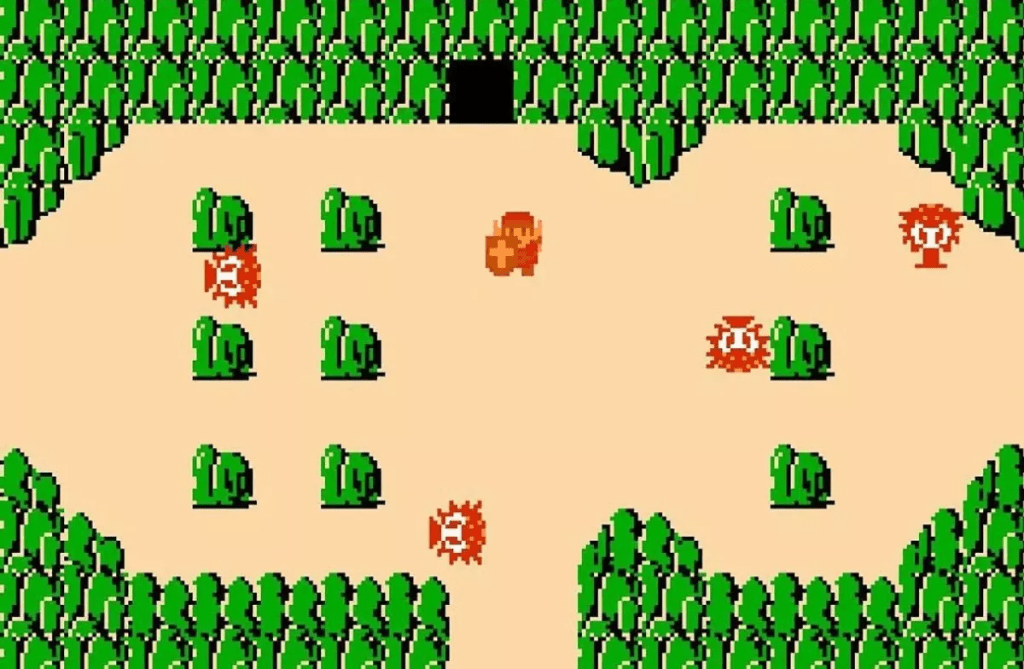
How could the original Legend of Zelda be a masterpiece when a game like Twilight Princess exists (or even Ocarina of Time, released barely a decade after the OG). In the original game you fumbled around, map-less, just hoping you chanced upon a dungeon you needed to clear for quest progression. Later titles blow the original out of the water in terms of scope, scale, visuals, sound quality, gameplay mechanics, and length.
Super Mario Bros 3 is generally agreed upon to be a pretty great game. It’s aged quite well for itself…but it still looks and sounds worse than a game like Super Mario 3D World, has only a fraction of the latter game’s level count, contains way fewer unique mechanics and powerups, doesn’t have four-player multiplayer (where each character has their own quirks), it can’t be played online, and it can be beaten in two-to-three hours. Maybe it was decent when it came out, but nowadays it’s…
…uh oh.
We’ve accidentally stumbled onto another sticking spot when it comes to this whole discussion. Is it fair to compare retro games to modern games? Or rather, is it fair to ignore a retro game’s existence at the time of its release, and it’s impact on the gaming world therein?
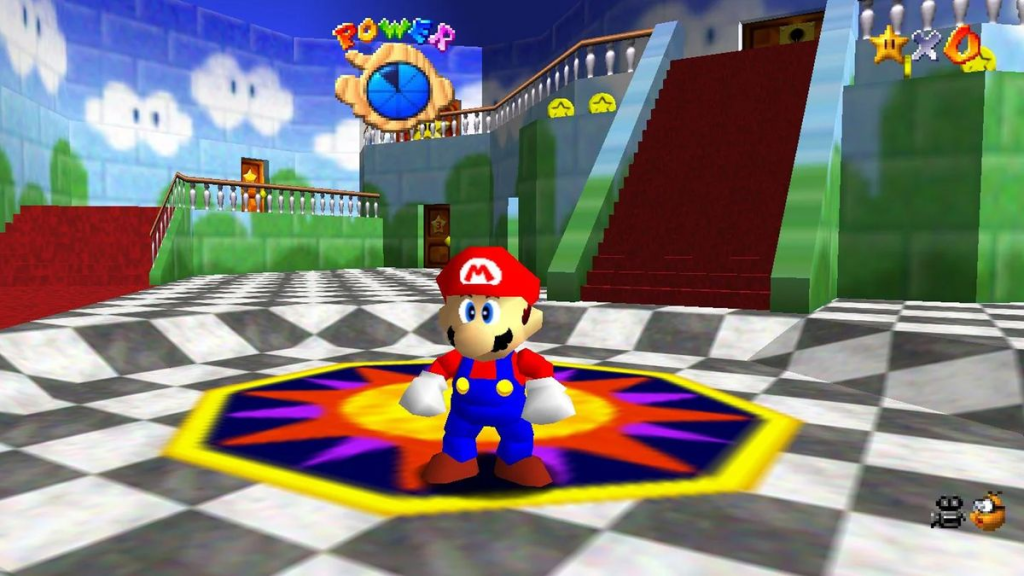
Super Mario 64 is still one of my all-time favorite games (it was my first video game, after all), and while I love it to bits, there’s elements of it that haven’t aged amazingly. Mario can be a bit wonky at times (especially trying to do wall-jumps or backflips), and the camera is less than ideal. So, obviously, it’s a worse game than something like Super Mario Galaxy, right? Because that game looks better, sounds better, and controls better!
The issue is that Super Mario 64 was THE revolutionary 3D game. It’s very existence brought video games into the world of three-dimensions, Nintendo proving that such a move was to be the future of gaming. Video games as they exist today…basically wouldn’t without Super Mario 64. And the reason why Mario controls a little weird and the camera is iffy? It’s because Nintendo was breaking entirely new ground! This stuff had never been done before, because they had to invent the dang tech in the first place!
Plenty of retro games are equally as revolutionary, completely shaking up the gaming landscape upon their release. Plus, they didn’t have bigger/better/bolder newer games to compete against, because they were the “newer” games. It’s totally unfair to compare a retro game to a modern game. The whole discussion is pointless…right?
See, I think the issue lies in some people using the defense I just explained above as an excuse to hold retro games to some sort of pristine pedestal. Retro games consistently get called “masterpieces“, while newer games languish in overly-intensive criticism and scorn. And I think that’s folly, because on a fundamental level I genuinely believe that technically-and-mechanically-speaking almost any newer video game is better than a retro video game.
I’d never in a million years try to say that a retro game is inherently bad because of its age. Nor would I ever disparage someone’s nostalgic opinions and cherished memories towards classic games. Neither would I stubbornly refuse to acknowledge how great a game may have been when it first released. Those are all important pieces of the puzzle to keep in mind.
But if you’re trying to look me in the eye and tell me with a straight face that the NES Punch-Out is an objectively better game than the Wii Punch-Out, or that the first Metroid game is better than something like Metroid Prime or Metroid Dread, I’ll know that’s your bias speaking. If it’s your opinion, or your nostalgia speaking, that’s fine. But I cannot actually fathom your argument if you truly believe that statement to be true. Like…seriously. Just take a step back, divorce yourself from your nostalgia, and think about this a little harder.
Is this a controversial take? Maybe, but I really don’t think so. Especially because, as I’ve stressed a hundred times over, I’m not trying to invalidate anyone’s personal feelings or opinions. You want to be nostalgic for your favorite games? Go for it! You prefer retro gaming to modern titles? Whatever floats your boat!
But if we’re trying to do objective analysis, if we’re trying to stick to the facts…I think we need to be a little more honest with ourselves.
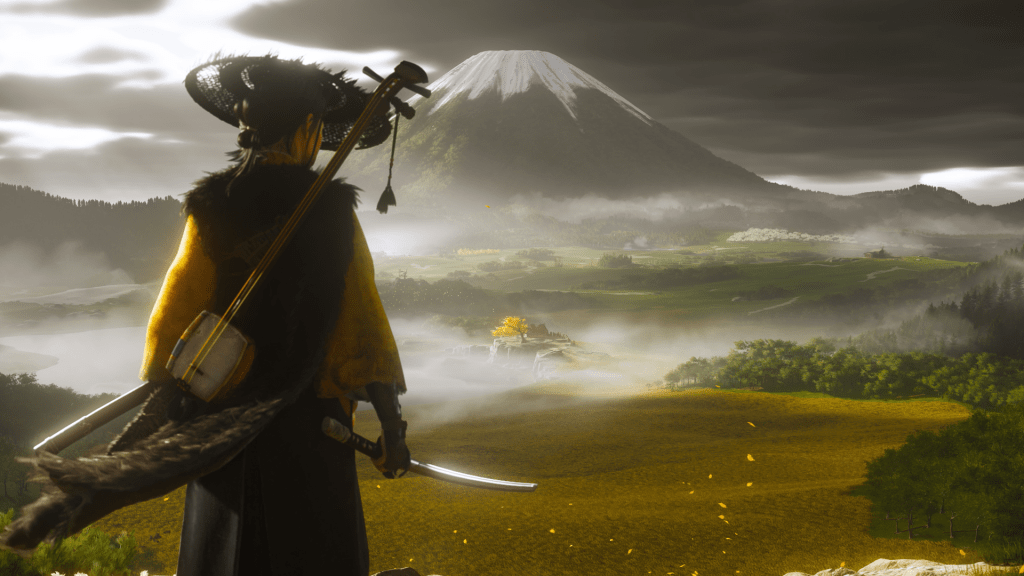
I think acknowledging a game’s standing upon release is important, and highlighting it’s accomplishments is crucial…but so is addressing an older game’s faults and flaws, and talking about all the ways more modern games follow in its footsteps but do just about everything better.
But hey, that’s just my opinion!
 The Contrarian Corner