


I’ve been playing a handful of Nintendo 64 games recently, courtesy of the N64 library on the Nintendo Switch. It was the first console I ever had experience playing games on, so of course I have a decent amount of nostalgia for a ton of N64 games. With the benefit of save states and even a rewind feature, experiencing these games on the Nintendo Switch is extremely awesome, and I’ve actually been leaning surprisingly retro with a lot of my video game playing in 2026 so far.
However, the more time I spend playing some N64 games, the more I’ve started to realize some interesting things about this era of video game history. Chiefly, I’ve noticed that a lot of N64 games are really weird, or at least have certain aspects or moments that are unique and strange in a way that most modern games aren’t.
To a certain point, I know that this has to do with graphical capability. The N64 represented the first true steps into the world of 3D gaming, and while it really panned out in the long run, there were certainly some growing pains. It was to be expected. What feels less expected is seeing (and experiencing) just how strange so many N64 games are, whether it’s the entire concept from start-to-finish, or something more subtle.
It’s honestly the subtle things that stand out to me the most, because I find they provide a little spark of magic that we just don’t see too often in gaming these days. Now, this isn’t me getting on a high horse about retro gaming elitism, as my previous articles on this blog should make it quite clear that my stance is the exact opposite. I do, however, want to admire the unique weirdness of the N64’s library, and give credit where credit is due to those little strange moments that we just don’t see much of anymore.
For example, let’s look at Super Mario 64.
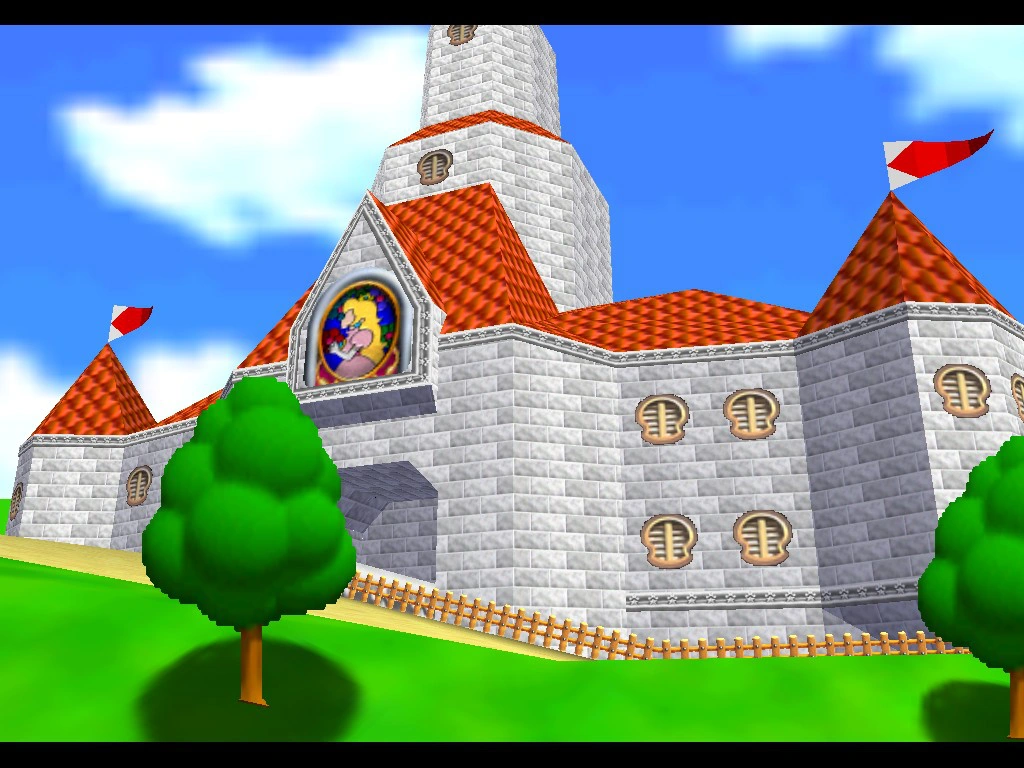
Most people remember exploring Princess Peach’s castle, jumping into paintings, collecting coins, and gathering the Power Stars. Most people, I think, don’t remember all too much about the outside of the castle. Which is somewhat strange, considering that’s where you begin the game. Mario pops out of a pipe, lands on the ground, and the game just…starts.
The castle grounds do hold the entrance to a secret level. A singular secret level. And yet, despite that, there’s a plethora of grass and trees, a few bridges to run along, a moat to swim in, a waterfall, and even a huge pond. All of these features contain absolutely nothing except being pretty set dressing to walk around in (or swim around in).
A video game is, of course, allowed to have little superfluous areas and moments in it. They add charm. But I can’t help but look at things from the perspective of the game designer themselves, and wonder why these elements were added in. Peach’s Castle does a fine job on its own being a veritable playground for the player to explore and learn the controls in. Why add such a large outdoor area and yet fill it with nothing that provides a tangible reward. For the fun of exploration itself? Maybe.
The weirdness extends to the inside of the castle, and the painted worlds beyond. Who would think to jump into a stained glass window of Peach to find a secret slide level? Who would think to run a few circles around a stump to spawn coins, a technique I’m pretty sure is necessary in some levels to obtain the 100-coin star. Who would think to ground pound a butterfly to turn it into a 1-up mushroom, except sometimes it turns into a bomb that explodes on you instead? Actually, better question: who would think to even program that in the first place?
If you couldn’t tell from the direction my discussion has gone, the concept of ‘secrets‘ was huge in the era of N64, and increasingly rare in our modern times. The idea of putting something into your game even though you knew the vast majority of players may never find it was simply the way games worked back then, and the technique, unquestionably, leads to a ton of weirdness. To an extent, though, that weirdness adds an air of ‘mystique‘ to the game too.
The N64’s library is much bigger than just Super Mario 64, of course, so let’s extend this article to some other games.
We could talk about the uncanny flat-yet-realistic faces put onto every character model in Goldeneye. We could talk about the desolate loneliness of flying around planetary tracks in Star Wars Episode I: Racer, driving along these huge-yet-empty expanses either in silence, or to the score from the film ripped completely from the movie and dropped into the game. We could talk about the charming goofiness of those early polygonal character models, or we could chat for hours about the catastrophic mess that is Superman 64.
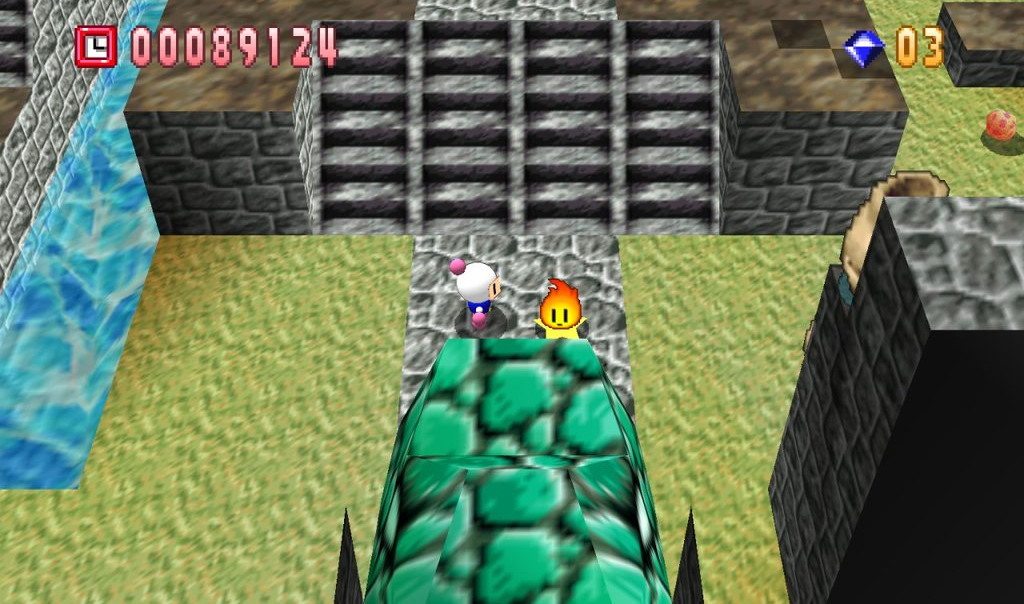
Bomberman 64 is a game that I played a ton of in my childhood, and has always stood out to me for having a strange sort of vibe. Something about the extremely limited camera, combined with the confusing and esoteric level design really broke my brain as a kid. It’s another game that just didn’t quite know what to do with this new-fangled third dimension, and you have to give it points for trying even if the execution was a bit lacking. And that’s to say nothing of how puzzling the game’s design was, again leaning into that weird focus on ‘secrets‘ and such that dominated this era.
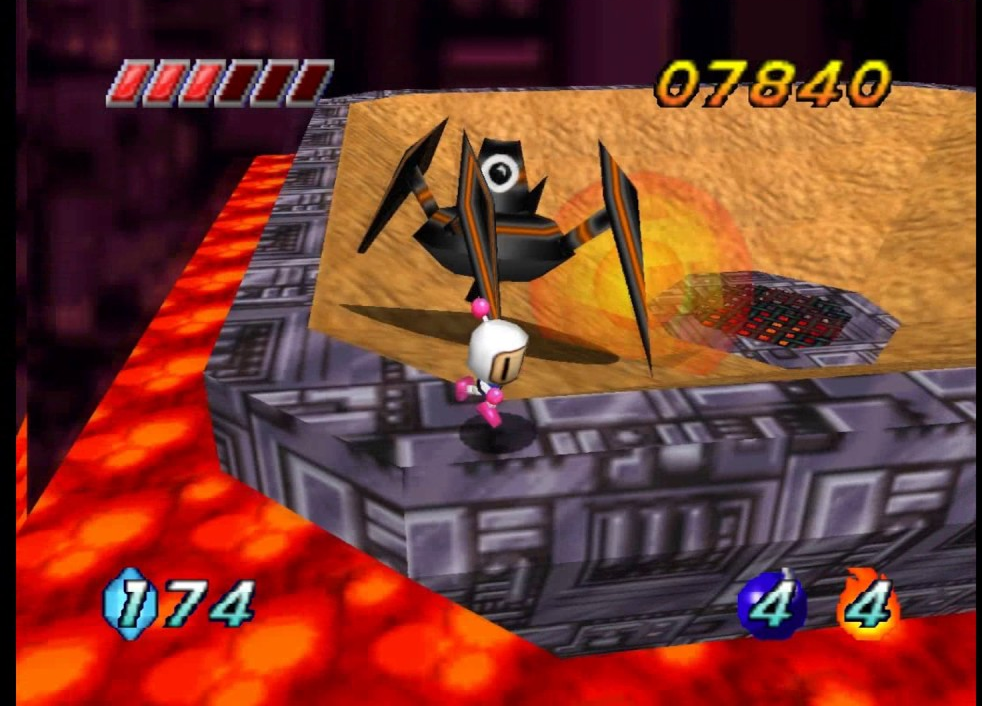
And then another game in the series game out just a bit later, called Bomberman Hero. Some of this extends past the strangeness of the N64 and into a larger recognition of the unique qualities of Japan-developed games, but Bomberman Hero has to take the cake for some of the wildest and wackiest designs for levels and enemies. The whole game feels like you’re on a trip, if you catch my drift, and it threatens to short circuit my brain when I try to think about why the developers would even inject this much weirdness into their title.
You even had games that proved to be on the opposite side of the spectrum from the console’s earlier titles, bringing their own brand of unique weirdness on an almost meta level.
For example, Super Mario 64 was filled with a ton of open areas, flat paths, and blocky shapes. The advent of 3D necessitated that unique sort of emptiness. But then, just a few years later, we’re getting a game like Conker’s Bad Fur Day, which is so stuffed with content and impressive visuals that the weirdness comes from me not being able to understand how the game even runs on the N64 at all! It barely feels like you’re using the same console when you’re playing Conker. How did those people make it?
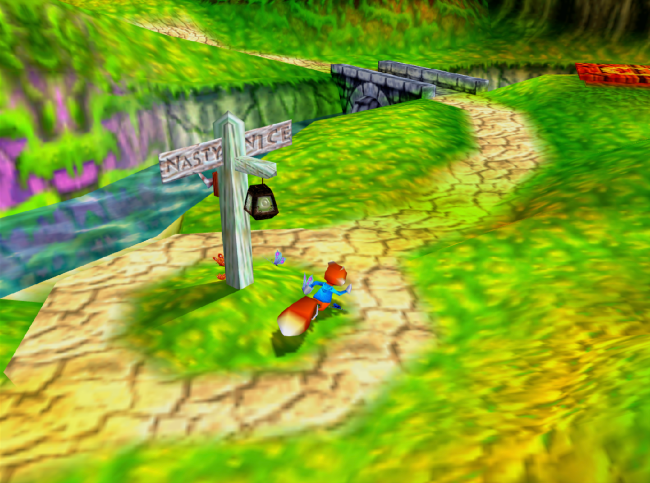
And speaking of Conker, it illustrates another unique quality of the N64, which was the extreme emphasis on multiplayer. Not inherently ‘weird‘ in the traditional sense, but it is unique to sit back and look at just how many titles for the console were either entirely multiplayer focused, or otherwise featured multiplayer in a noteworthy capacity (even when one might not consider it).
In the case of Conker, you could shoot your friends as a group of rodent gangsters, or take turns hunting each other as either cavemen or dinosaurs. There were also the strange minigames added into both Pokémon Stadium titles, a weird choice given the games already feature multiplayer in the form of traditional battles. Banjo Tooie had a multiplayer mode that was a first-person shooter, extremely weird in a game that is otherwise a standard platformer. And who could forget the bonkers and insane Beetle Adventure Racing!, a racing game entirely about the Volkswagen New Beetle!
Is there a point I’m trying to make with this article? Not necessarily, it’s more just for fun and casual awareness. But I do think it’s interesting to look back on the console that defined the arrival of the third dimension into the world of video games, and recognize just how much weirdness existed in the games of that era. It’s not a bad weirdness (and not, by law, good weirdness is every case either), but it’s interesting all the same.
There’s definitely a not-quite-quantifiable vibe that these older games had that we just don’t quite get in the polished, refined, and hyper-detailed world of today’s gaming.
But hey, that’s just my opinion!
 The Contrarian Corner